
Tokyo’s Kissaten Culture: A Time Capsule of Coffee and Comfort Food


As you stroll through Tokyo, you may be drawn to a quiet little café filled with vintage furniture, warm lighting, and shelves of old coffee cups. These are Japan’s unique retro cafés, known as Kissaten.
A Kissaten is more than a place to grab a coffee. Fifty years ago, it was a refuge for office workers and students, a calm corner to rest, read, or think. It also became a space that shaped the creativity and diversity of Tokyo’s food culture.
Today, time-capsule Kissatens are gaining attention from international travelers. They feel like time capsules—spaces where you can experience a slice of Tokyo’s past and taste its long-loved flavors.
What makes them truly special is the distinctly Japanese coffee culture that evolved inside them, along with the one-of-a-kind food menu. Expect carefully hand-brewed coffee and dishes prepared with surprising attention to detail that captures a uniquely Japanese approach to café life.
Coffee, Napolitan Pasta, Toast, and Cakes: What Makes Kissaten Menus So Irresistible?

Cheesecake from Café Bach, a legendary coffee roastery cafe in Taito City, Tokyo
The word kissaten originally meant “a place to drink tea,” but these cafés quickly became something different: quiet hideaways where workers could enjoy a cup of coffee while reading, thinking, or chatting in low voices.
Through Japan’s rapid economic growth in the 1950s and beyond, kissaten continued to evolve, adapting to the diverse needs of local communities. Many of these kissatens are still standing today, each shaped by its neighborhood and its regulars. If you’re planning to explore Tokyo’s kissaten scene, it helps to know that there are three main types of kissaten you’re likely to come across.
Classic Retro Café (Jun-Kissa)
These are traditional cafés that do not serve alcohol and focus purely on coffee and light meals. They’re the most standard style of Kissaten, and many still preserve the atmosphere of Japan’s economic boom years from the 1950s to the 1970s.
Jazz kissa
A Kissaten where jazz records and CDs play throughout the day, creating a space designed for quiet listening while you enjoy a cup of coffee. These spots have recently become popular among music-loving travelers from abroad.
Coffee Roastery Café
A type of Kissaten that roasts its own green coffee beans in-house. You’ll often be able to choose your preferred bean variety and roast level before your coffee is brewed, offering a more personalized cup.
Each type of Kissaten has its own charm. To make the most of your time in Tokyo, it helps to decide which style you want to experience before you start exploring.
Another thing that surprises many visitors is the wide variety—and impressive quality—of food beyond the coffee. These cafés originally served only drinks, but as customers began asking for “just a little something to fill up,” more shops started offering light meals.
Writer and café photographer Yoko Kawaguchi explains, “Most Kissaten dishes have Western roots, but were adapted and reinvented by the Kissatens themselves. She explains, “Kissaten dishes were created as low-cost meals that could be prepared and served quickly.”
Here are some classic dishes you should try when you visit a Kissaten.
Coffee
Coffee is the heart of any Kissaten. Enjoy a carefully brewed cup—often made with the owner’s personal roasting preferences—during a break from exploring the city. Kissaten coffee has largely remained the same to this day, with most shops still favoring a deep roast. This style became popular because regulars loved the rich bitterness and depth of flavor. While some Kissatens now offer lighter, fruitier roasts, a classic dark roast is the best way to experience the traditional Kissaten taste.
Napolitan Pasta

A staple found on menus across countless Kissatens, Napolitan is a Japanese-born spaghetti dish with a ketchup-based sauce, created in the 1950s. To reduce food waste and speed up service, many Kissatens have long prepared the pasta by pre-boiling it and freezing it. This method gave the noodles a distinctive texture—one that unexpectedly became part of the dish’s charm and remains beloved today.
Toast
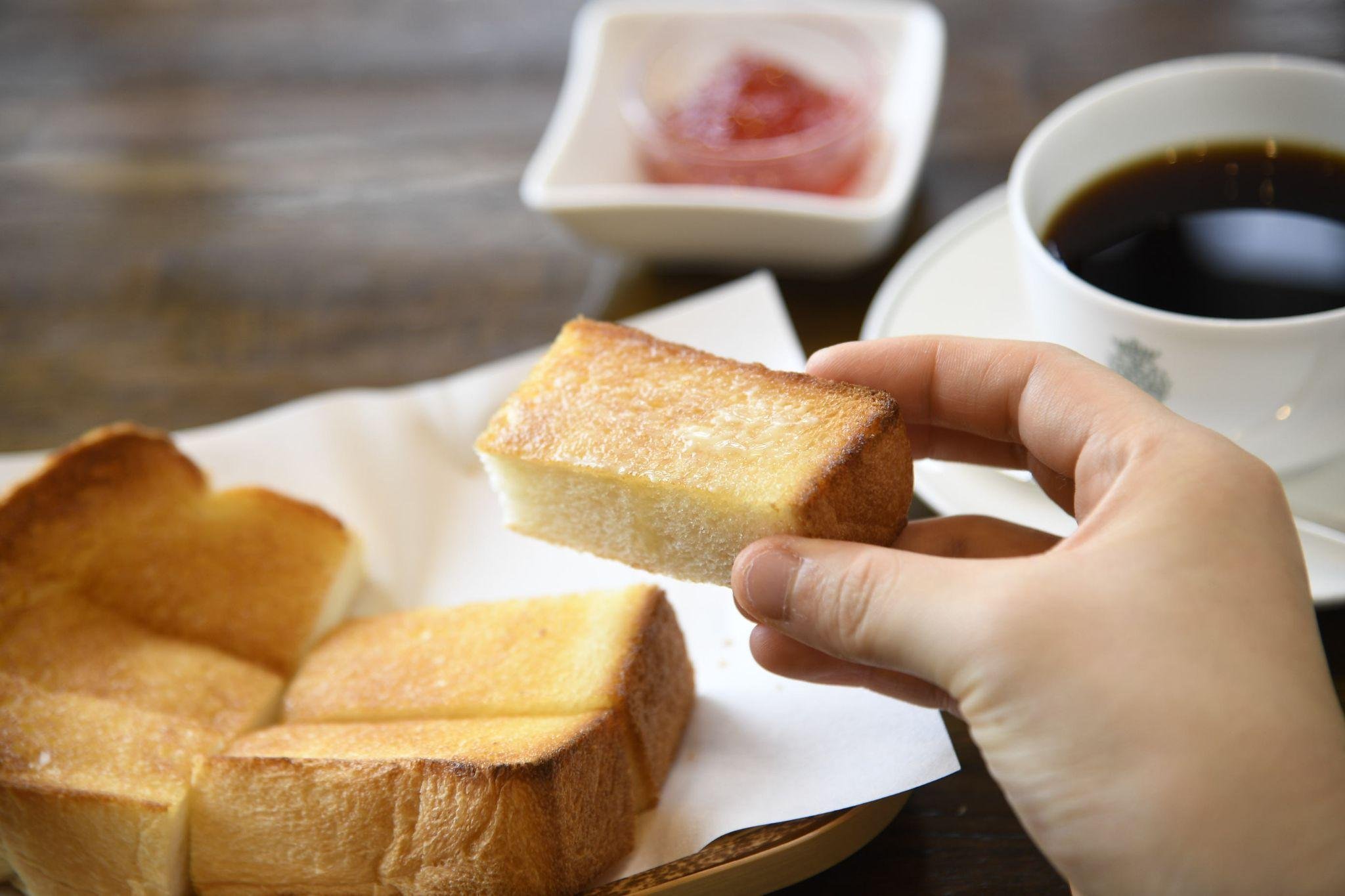
Many Kissatens open early in the morning and serve simple breakfast sets—usually toast, a boiled egg, salad, and coffee. Among these, toast is the item where each Kissatens personality really shows. The thickness of the bread, how it’s toasted, the amount and style of butter—every shop has its own approach. Some people even choose their Kissaten based entirely on the toast.
Cheesecake and Chocolate Cake

At coffee roastery cafés, the classic sweets are cheesecake and chocolate cake. Since coffee is the star of the menu, the desserts are intentionally simple—made to complement the flavor of the coffee rather than overpower it. Many Kissaten owners develop their own recipes, fine-tuning each cake to pair perfectly with the brews they serve.
In Japan’s food scene, where trends shift quickly, these Kissaten menus have stayed almost unchanged for decades. Ms. Kawaguchi explains that the reason is consistency: “There’s comfort in knowing that the taste won’t be dramatically different no matter which Kissaten you walk into. Even as food trends evolve, the old-fashioned flavors and the unchanging way they’re served evoke a warm, nostalgic feeling.”
Kissatens also embody a quiet form of sustainability. Ms. Kawaguchi notes, “Many Kissaten have a culture of taking care of what they own—furniture, lighting, dishes, even the building itself—maintaining and using them for decades. When ownership passes to a second generation, they often preserve the original interior created by the founder. Appreciating these carefully maintained spaces is part of the charm of visiting a Kissaten.”
Tokyo’s Kissatens: Evolving in the City with a Distinct, Nostalgic Charm
Kissaten culture flourished especially in major cities like Tokyo, and even today you’ll find countless shops still in operation.
Ms. Kawaguchi explains the background: “In Tokyo, kissaten were essential to city life. From the 1950s to the 1970s, the city was in the middle of rapid economic growth. Many homes and workplaces were small, and air conditioning wasn’t common. Kissatens solved those problems. They responded to the needs of each neighborhood and became community hubs—places where people could relax, chat, and enjoy good food together.”
Today, Tokyo’s kissatens have become popular among younger generations, who describe them as emoi—a slang word derived from “emotional,” used to express a mix of nostalgia and freshness. Ms. Kawaguchi describes these kissatens as “time capsules of Japan in the 1950s to 1970s.”
Ms. Kawaguchi also highlights how open and welcoming Tokyo’s kissatens tend to be. “Tokyo is a city built by people from many places, so kissatens naturally became spaces where anyone—not just locals—could feel comfortable. Compared with other major cities, it’s also common for people to visit kissatens alone, which makes them especially approachable for travelers.”

Exterior of Café Bach, one of Tokyo’s most renowned coffee roastery cafés
Tokyo’s Kissatens also played an important role in shaping Japan’s modern coffee culture. Traditional Kissatens often used dark-roast beans so that any coffee, no matter the bean quality, would taste rich and full-bodied. But some Kissatens began pursuing something more—studying roasting and brewing techniques to serve a wider range of flavors. This led to the rise of coffee roastery cafés, a genre that now defines Japan’s specialty coffee scene.
One of the pioneers is Café Bach in Taito. Ms. Kawaguchi explains, “Mr. Taguchi of Café Bach is known as a pioneer or father of Japan’s specialty coffee and home-brewing culture. At a time when many café masters kept their roasting and brewing methods secret, Café Bach openly showed customers how they brewed coffee at the counter and answered questions with care. This encouraged people to buy beans and enjoy Café Bach’s coffee at home.” Mr. Taguchi is also known for systematising the logic of coffee roasting and publishing books on the craft.


At Café Bach, the flavor changes depending on the roast level, even when using the same beans. It’s fun to compare light and dark roasts to find the one you like best.
Explore Tokyo’s Kissatens as You Wander the City

Even with the same beans, the flavor of coffee changes dramatically depending on the roast. At Café Bach, you’ll find a wide selection of beans offered across the full spectrum—from light to medium to deep roasts. Part of the fun is tasting your way through them to discover what you like best.
Tokyo’s Kissaten culture changes from neighborhood to neighborhood, each area offering its own atmosphere and traditions. The districts introduced by Ms. Kawaguchi below are some of the best places to experience the depth and diversity of Tokyo’s Kissaten scene.
Jimbocho
Jimbocho is known as the world’s largest district of secondhand bookstores, and its Kissatens are deeply tied to this book-centered culture. These Kissatens became places where writers, editors, students, and curious readers gathered—spaces of quiet intellectual exchange that reflect the spirit of the neighborhood.
Ginza
Kissatens in Ginza have a refined, elegant atmosphere that matches the district’s image as modern, upscale Tokyo. Many feature crisp white tablecloths and carefully designed interiors, offering a polished setting where you can enjoy classic coffee and Kissaten dishes.
Shinjuku
Shinjuku is the legendary home of the Jazz Kissa, the Japanese institution where music fans gather for quiet listening. The term “Jazz kissa” is now understood internationally, but in Japan it originally grew as a place where people could listen to new music at a time when records and stereo equipment were expensive. Today, some travelers visit Japan specifically to explore its historic Jazz kissas, many of which remain concentrated in Shinjuku.
Ms. Kawaguchi suggests that the best way to enjoy Tokyo’s Kissatens is simply to walk. “Classic Retro Cafés aren’t always on the main streets—many are hidden along back alleys—so take your time wandering the neighborhood.” In traditional, older districts like Jimbocho, strolling between Kissatens gives you a vivid sense of what Tokyo felt like in the 1950s.

Some roastery cafés let you watch the coffee beans being roasted right inside the shop.
Ms. Kawaguchi describes the value of the Kissaten experience for travelers in striking terms: “For visitors, stepping into a Kissaten is almost like experiencing the city’s own form of artistry.There’s something refreshing about sitting in a carefully crafted space, enjoying the quiet, reading a book, or simply sitting in silence.” Putting your smartphone away and giving your full attention to the space in front of you can even feel a bit like practicing mindfulness.
She also offers a few etiquette tips for international visitors. “Ordering at least one item per person is standard. Some Kissatens also prohibit photography or have specific rules posted on their official social media, so it’s best to check beforehand or ask the staff for permission.”
When you visit Tokyo, make time to stop by a Kissaten. Enjoy a cup of coffee and a classic Japanese café dish, and you’ll experience a piece of the city’s history and culture—an experience that may become one of your most memorable moments in Tokyo.
Café photographer and writer
Yoko Kawaguchi
Founder of Tokyo Café Mania. She supervises and contributes to café and coffee features in magazines, books, and newspapers.

The Comforting Atmosphere and Food of Tokyo’s Kissaten
To learn more about
you can press “copy” and paste on search engine