
Learning Japanese Dining Etiquette in Tokyo


Born from an appreciation for the blessings of the four seasons and deep respect for ingredients, washoku is a food culture Japan proudly shares with the world.
Tokyo—where tradition and diversity coexist—is the ideal place to experience its true appeal.
Here, we introduce the etiquette that deepens your enjoyment of washoku, along with the spirit of Japanese hospitality, omotenashi.
Dining Etiquette: Deepening Your Washoku Experience
Washoku—traditional Japanese cuisine—has been recognized as a UNESCO Intangible Cultural Heritage and draws attention from around the globe. Its appeal lies not only in flavor, but also in the care and beauty found in each detail, from the choice of tableware to its arrangement and the gestures of those who eat it.
Learning proper etiquette is not simply about memorizing rules. Learning proper etiquette can be a meaningful way to appreciate the chef’s intentions and the spirit of hospitality behind the cuisine.
Rather than a rigid set of do’s and don’ts, washoku etiquette is a way of respecting the culture and sharing a moment of connection. Why not discover these customs and enjoy washoku on a deeper level?

By learning the etiquette of washoku, you can connect with the chef’s intentions and the spirit of hospitality behind the food.
The Aesthetic Philosophy of Ichiju Sansai: One Soup, Three Dishes
The foundation of washoku is called ichiju sansai: one bowl of rice, one soup, one main dish, and two side dishes, all served in balance. The placement also carries meaning—rice on the left, soup on the right, and the main dish in the center. This layout is based on right-handed use of chopsticks and is designed to make dining smooth and natural.
A beautifully arranged setting shows respect for both the ingredients and the person who is about to enjoy them. This reflects the Japanese sensitivity to visual harmony.
When you notice the intention behind the positioning, spacing, and direction of each piece of tableware, you will feel the true depth of washoku. In this refined presentation, respect for nature and an appreciation of beauty exist side by side.
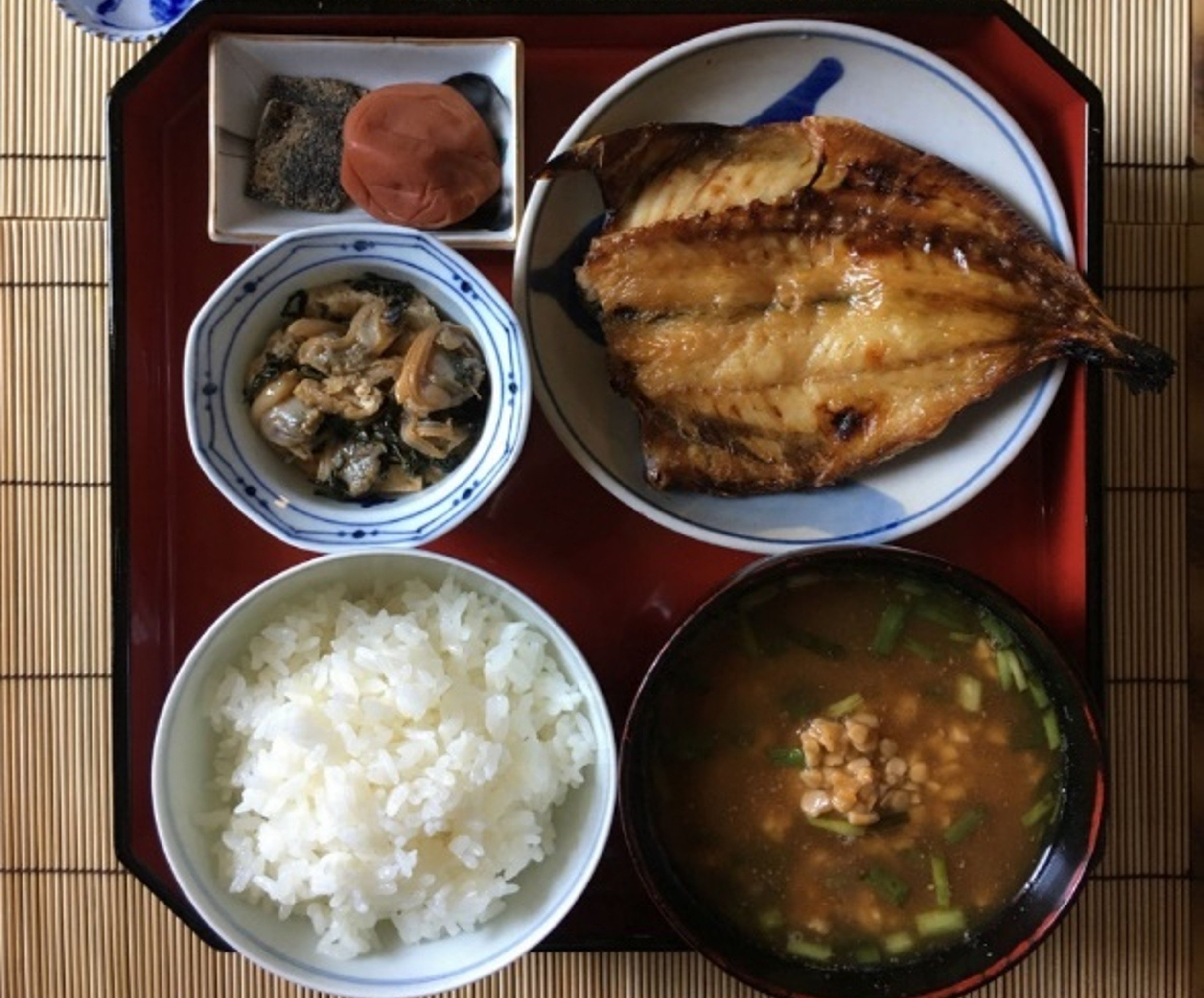
A traditional Japanese set meal. The beauty of the arrangement reflects the uniquely delicate Japanese sensibility. ©️ Edo Culinary Culture Institute
Chopstick Use: An Expression of Cultural Respect
Chopsticks are essential on the Japanese dining table, and how they are used expresses consideration and respect for others. Passing food from chopstick to chopstick (hashi-watashi), spearing food (sashi-bashi), or hovering uncertainly over dishes (mayoi-bashi) are generally discouraged in Japan. These actions are generally avoided in Japan, as they are associated with funeral customs and may seem inelegant.
In Japan, dishes are usually supported with the tableware rather than with your bare hand. When you’re not using your chopsticks, it’s customary to place them on the chopstick rest.
Small bowls may be lifted and held while eating, which is considered basic etiquette. With the exception of noodles, it is customary to eat quietly and with calm movements.
The way you handle your chopsticks and tableware is both an element of dining etiquette and an expression of respect for the culture itself.

From left: passing food between chopsticks (hashi-watashi), spearing food (sashi-bashi), and hesitating over dishes (mayoi-bashi). These actions are usually not considered good chopstick manners, and even Japanese people may do them unconsciously at times.
The Art of Enjoying Ma: Time and Space in Dining
In washoku, food is meant to be eaten while it is still warm. Holding bowls in your hands while eating is not considered rude in Japan; in fact, it gives an impression of polite and attentive dining.
Rather than eating everything quickly, take time to focus on each dish and savor it little by little. This allows you to appreciate the seasonal nuances and delicate balance of flavors created by the chef.
In Japan, eating too quickly is generally avoided. Instead, people value ma—the sense of space and pauses, not only in the act of eating itself, but also in the moments before a dish arrives, or in the gentle breaks in conversation.
Within this flow of time lies the Japanese aesthetic of cherishing food and the moment in which it is shared.

A quiet moment spent appreciating each dish. Enjoying ma is a unique aesthetic of washoku.
Gochisōsama: Gratitude Expressed Through Words
When you finish your meal, try not to leave any grains of rice behind, and gently place the dishes back in their original positions. If you have a small appetite, it is polite to let the staff know in advance so they can adjust the portion and help you avoid unnecessary waste.
Return your chopsticks to the rest and avoid stacking the dishes.
These careful gestures express gratitude toward the natural environment that provided the ingredients, the people who prepared the food, the staff who served it, and the companions who shared the meal with you.
Finally, saying “gochisōsama deshita” turns the meal from a simple act into a heartfelt exchange.

After the meal, express your gratitude to the ingredients and those who prepared the food by saying “gochisōsama deshita.”
Posture: The Key to a Beautiful Meal
In washoku dining, posture is also an essential part of a “beautiful meal.” In traditional tatami rooms, sitting in seiza (kneeling) is considered ideal, but you don’t need to force yourself into discomfort. Many restaurants now offer sunken floor seating (horigotatsu).
Please be careful not to step on the edges of tatami mats or on cushions.
At table seating, sit with your back straight and approach the meal calmly—that alone will change your experience of the food. Respect the timing of the chef’s work and the rhythm of the meal, and enjoy it at a relaxed pace.
Try not to rest your elbows on the table or let your free hand hang down while eating. When you hold your chopsticks with proper posture, your mind will naturally feel more centered, and the dining experience becomes even richer.

A dining scene in a Japanese-style room. Beautiful posture enriches the entire experience.
Washoku: A Culture to Be Savored with the Heart
Washoku etiquette is not so much about how to eat, but about expressing respect for the food and for those who created it. With just a little awareness, a meal can become a true cultural experience.
In the handling of chopsticks, the arrangement of dishes, and the way one sits, you can feel the Japanese spirit. Through your dining experiences in Tokyo, take a moment to sense the quiet connection of heart that lies beneath every bite.
You may come to realize that washoku is not simply cuisine—it is culture itself.

At the heart of washoku etiquette is respect for the food and those who prepare it.
With expert review by Emi Sunai
Founder and Director, EMI SUNAI School of Etiquette Offers lessons in etiquette, graceful behavior, conversation skills, social etiquette, table manners, and party protocol.
To learn more about
you can press “copy” and paste on search engine