
Dagashi and Senbei: Old Tokyo's Simple Treats


Tokyo has no shortage of sweets, from elegant wagashi to the latest pastry trends. Yet some of the city's most enduring treats are also its simplest. There is dagashi, inexpensive candy with roots among the common people of Edo (present-day Tokyo); senbei, rice crackers glazed with the soy sauce that became a pillar of Edo cooking; and mame daifuku, soft rice cakes studded with beans and filled with sweet red bean paste, a variation on the daifuku that became a favorite in late 18th-century Edo. For generations, these humble sweets have been part of everyday life in the city. Here, we visit a dagashi shop with roots in the Edo period and a senbei maker that still bakes its crackers by hand, to see how these treats are enjoyed today.
Tokyo's Ikebukuro neighborhood is a massive transportation hub whose main station serves over two million daily passengers. But just one subway stop — or a 15-minute walk — away from this bustling district of high-rise buildings lies a unique place that will make you feel as though you've stepped a century back in time.
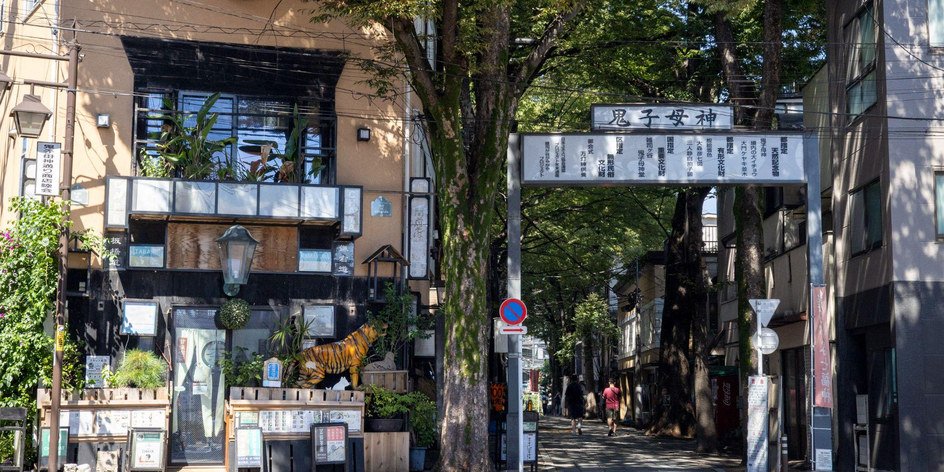
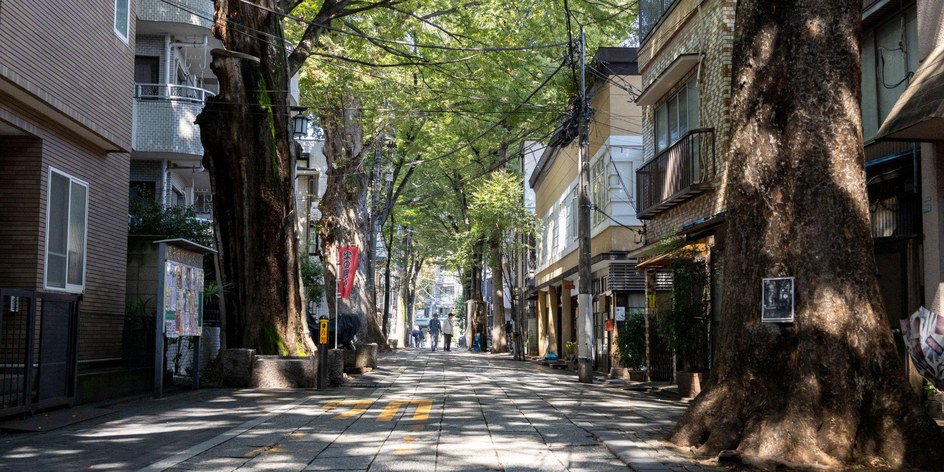
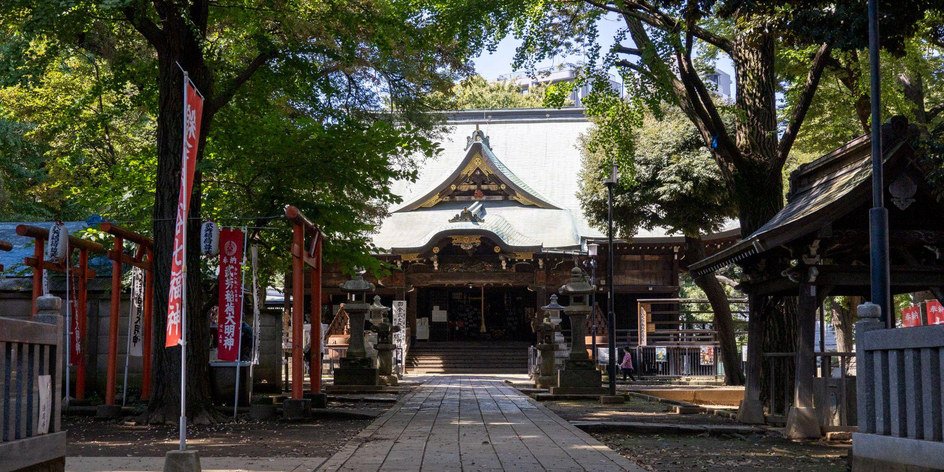
This is the Zoshigaya Kishimojin Temple (from here, the Kishimojin Temple), a historic 16th century site where the deity of safe childbirth and child-rearing is enshrined. The approach from Zoshigaya Station, the closest stop on the Tokyo Metro Fukutoshin Line, will lead you along a cobblestone street flanked with modest homes, old-fashioned shops and massive Japanese zelkova trees, some of which are hundreds of years old.
A Candy Store from the 18th Century
The Zoshigaya neighborhood and its eponymous temple largely escaped damage from both the 1923 Great Kanto Earthquake and the allied raids of World War II. On the temple grounds itself a large ginkgo tree — said to be around 700 years old — is carefully tended to. And also standing in the complex is “Kamikawaguchiya,” a single-story wooden candy shop whose history stretches back to the Edo period. This special place is a sort of portal to a nostalgic Tokyo of the past.
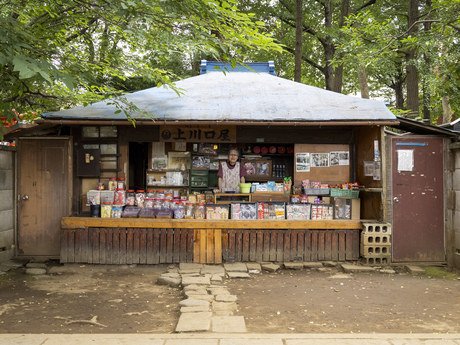
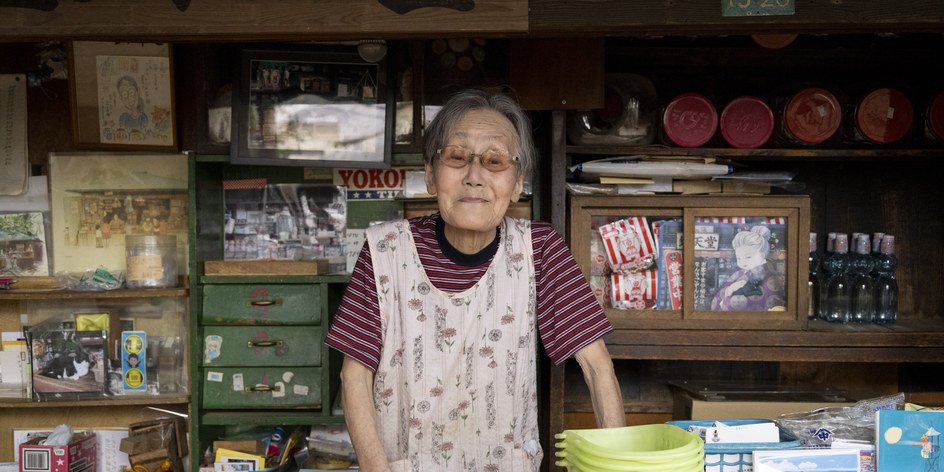
Kamikawaguchiya's roots are with a candy store established in 1781 on the Kishimojin Temple grounds. It is currently run by its 13th-generation proprietor, the 86-year-old Masayo Uchiyama. The current shop building, which has also been Uchiyama san's home since she was a child, is estimated by experts to be at least 150 years old.
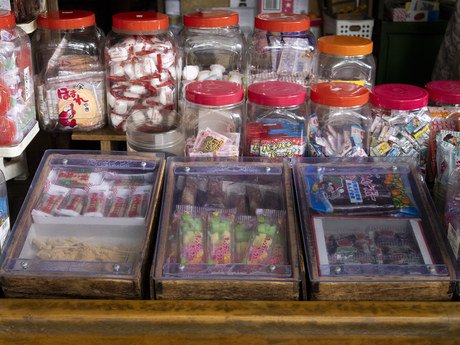
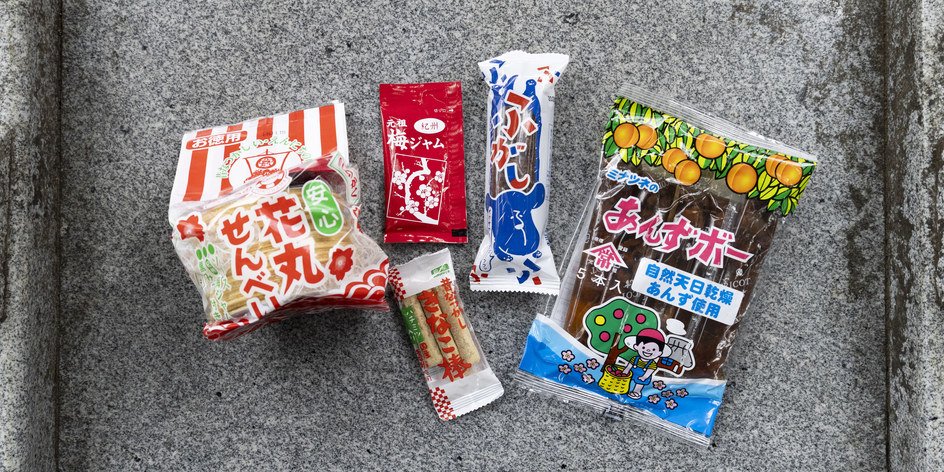
The shop itself is an open-air counter packed with traditional Japanese snacks in vibrant, colorful packaging to catch the attention of passersby. This manner of inexpensive snacks and sweets which children can easily purchase with their allowances are called “dagashi,” similar to American penny candy. Visitors to Kamikawaguchiya will see gum and gummies, hard candy, savory snacks, marshmallows, wheat-gluten confections, caramels, and even roasted squid delicacies — all small enough to fit in your palm and priced from around 20 to several dozen yen each at the time of our visit. The shop always stocks about 100 varieties, neatly compartmentalized and stacked into an enticing display.
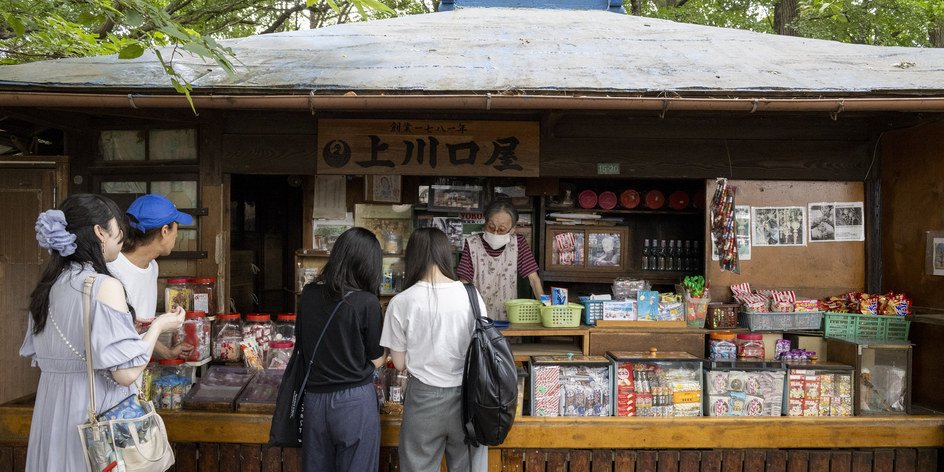
Deciding how to spend a handful of coins — this one or that one? — is part of the fun, and dagashi shops have long been places where children make these small choices on their own.
Everyday Sweets Since the Edo Period
The roots of dagashi go back to the Edo period. At the time, refined confections made with precious white sugar, known as jogashi, were luxuries. Ordinary people instead enjoyed simple sweets made from grains, starch syrup and brown sugar, sold for around one mon, the smallest coin of the day, which is why they were also called ichimon-gashi, or “one-mon sweets.” In contrast to jogashi, these everyday treats came to be known as dagashi. Their ingredients and appearance have changed over the centuries, but the idea of small, affordable sweets that anyone can buy has carried on. The modern dagashi culture grew rapidly during Japan's post-war economic boom, when candy stores were a common sight along routes near elementary schools and in residential neighborhoods. Children, clutching their allowance money, would flock to their local dagashi stores after school, buying candy with prize tickets attached and getting excited or disappointed depending on the results. For the first generation of children to experience post-war dagashi, the sweets had special significance as they were a sign of prosperity returning to Japan; during the war and postwar period till the early 1950s, sugar was a rationed, rare commodity.
Today, traditional dagashi-only stores like Kamikawaguchiya are a rare find. Many of the same items are still on the shelves, so adults may come across snacks they remember from their own childhoods.
Sweets That Come with a Prize, and Interest from Overseas
According to Uchiyama san, gummy candies are a frequent choice among children these days, while sweets that come with a prize and “su-ika” [a seasoned squid delicacy] have been enjoyed for many years.
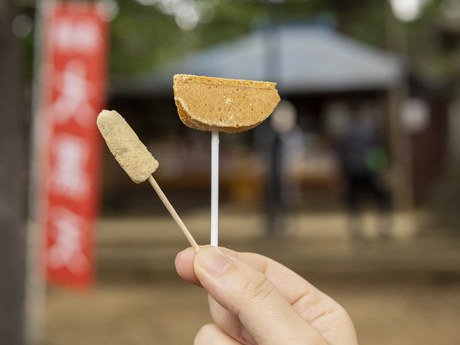
One long-loved staple is the “Kinako Stick,” a stick-shaped treat about the size of a pinky finger made by binding kinako (ground and roasted soybeans) with syrup and other ingredients. Soft and crumbly upon biting it, the toasty aroma of the kinako and gentle sweetness of brown sugar spread over your palate. Kamikawaguchiya's Kinako Sticks are made by a traditional manufacturer in Tokyo's Arakawa City with a history of almost 90 years, and use a homemade brown sugar syrup that gives them a distinctly Tokyo taste.
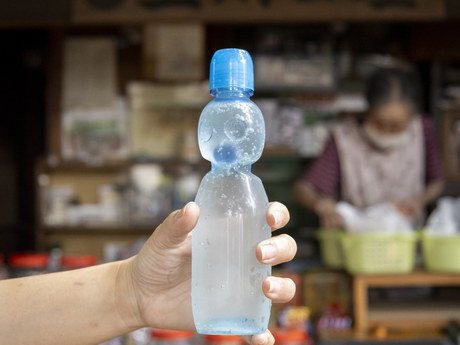
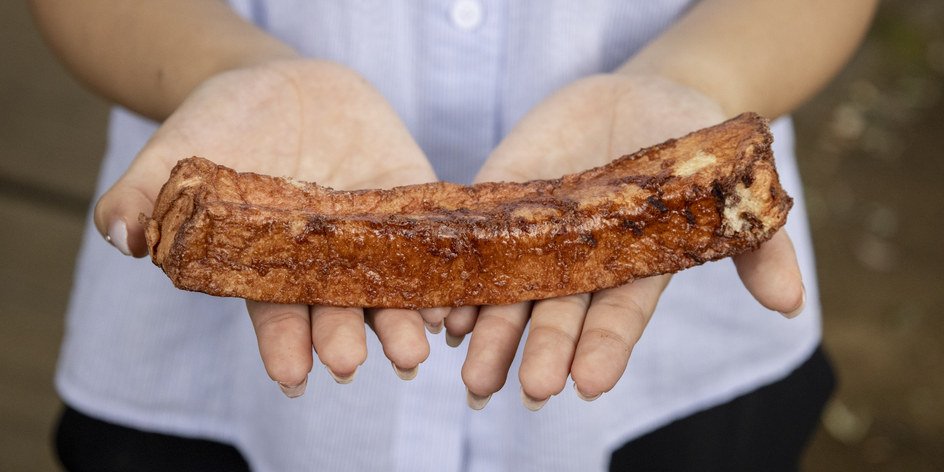
One of Uchiyama san's personal favorites is called “fugashi,” a wheat gluten confection coated in brown sugar that has a rich, savory flavor. And then there is the old-school bubble gum that comes with a prize ticket. If the word “winner” appears, you'll get another for free. The shop also sells karumeyaki, a light, crunchy candy made by heating sugar and puffing it up with baking soda. Long enjoyed alongside dagashi is ice-cold ramune, a Japanese carbonated beverage sold in a glass bottle fitted with a marble stopper. The marble must be pushed down to open the beverage, a small ritual that triggers childhood memories for Tokyo's adults.
The nostalgic pull of dagashi has led to Uchiyama san having more adult customers these days than school-age children, with the shop especially lively on weekends and during festivals, some of which are held right on the temple grounds. One curious fact — even though the Zoshigaya neighborhood is not a traditional tourist spot — is that about 60% of Kamikawaguchiya's visitors are now from overseas.
“The number of international visitors really started to increase a few years ago,” said Uchiyama san. “At first, we saw people from China and other parts of Asia. And then, the shop was featured in overseas media, and it also seems that people abroad saw coverage of it on Japanese TV programs. Now we have visitors from various countries — France, Sweden, the Netherlands, Switzerland, Austria, Italy, and others.”
According to Uchiyama san — and somewhat surprisingly — the traditional Japanese snacks international visitors choose are not much different from those Japanese customers pick. Many from overseas, it seems, want the authentic dagashi experience and don't shy away from trying snacks and treats they are not familiar with. Some of them even buy large quantities of a single type, perhaps to take home as souvenirs.
Still Going Strong at 86 Years of Age
Uchiyama san said that ever since she was 10 years old, she would come home from school and help her parents tend to the store. Even now, long after her children have grown, she still lives in the shop, her childhood home, and opens its storefront every day except when it rains.
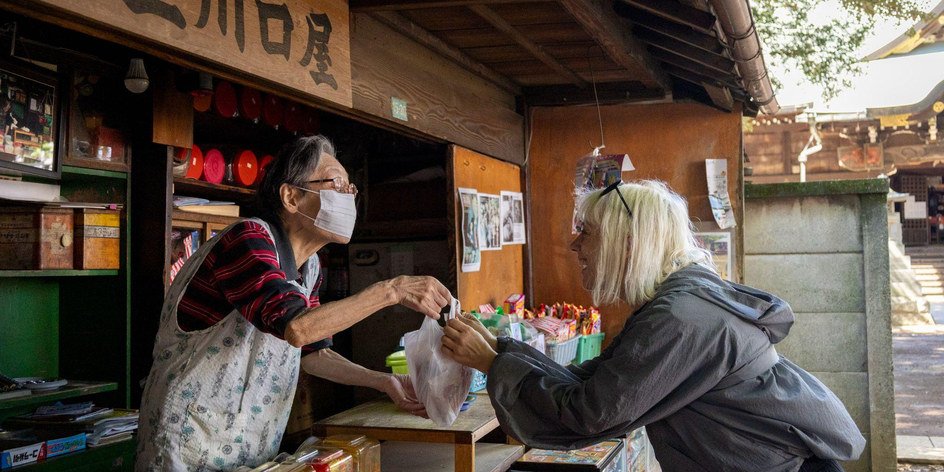
When asked why she continues to run the store, Uchiyama san said, “Standing here every day, the conversations with my customers really inspire me.” She knows the prices of all her traditional snacks by heart, deftly calculating the total for each guest. Even when foreign customers visit, the English she's picked up through her work flows naturally into conversation: “This is a rice cracker,” or “We have about 100 varieties.” Conversations like these with the shopkeeper are one of the joys of visiting a dagashi shop — and here, it is Uchiyama san, still behind the counter at 86, who welcomes you.
Senbei in Sugamo
From Zoshigaya, a short ride on the Toden Arakawa Line, Tokyo's last remaining municipal streetcar line, takes you to Koshinzuka Station, near the northern entrance of the “Sugamo Jizo Dori Shopping Street” (from here, Jizo Dori), which stretches for about 780 meters.
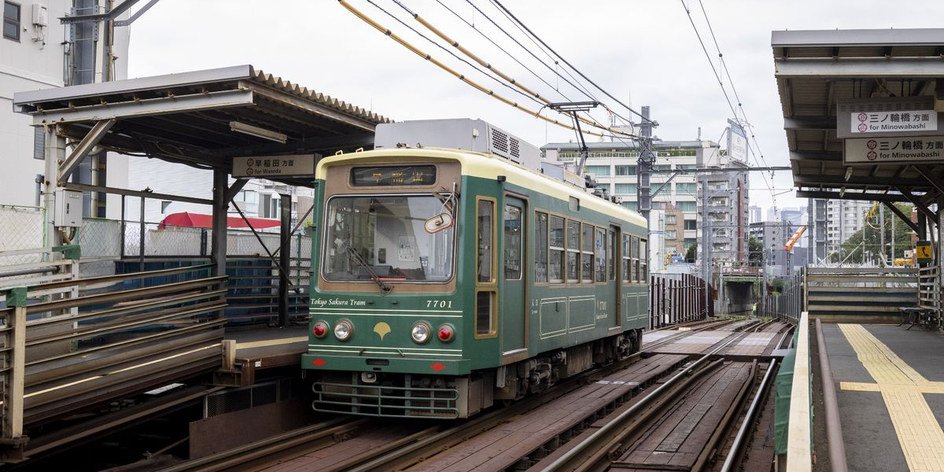
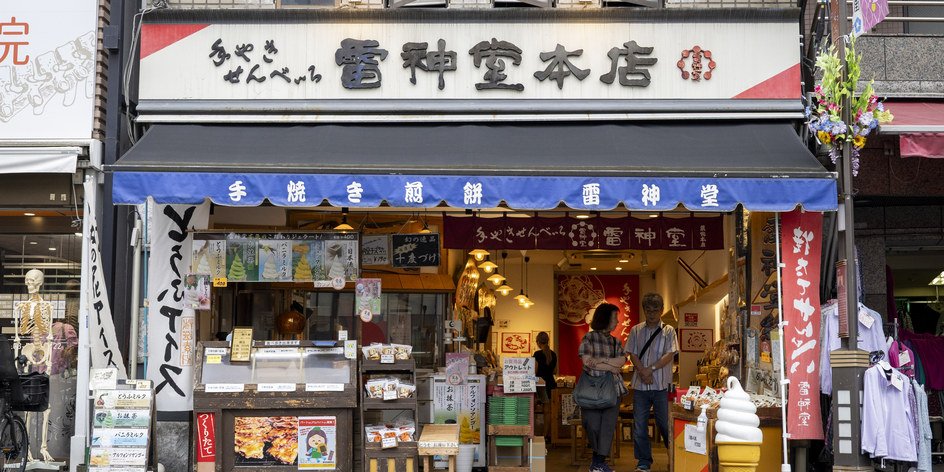
Along the Jizo Dori is Koganji Temple, popularly known as Togenuki Jizoson, which attracts many visitors seeking healing from illnesses and other blessings. Bustling with older worshippers and shoppers, Jizo Dori is also nicknamed “Harajuku for Grandmas,” a playful comparison to Harajuku, the Shibuya City district popular with young people. Yet the street’s nostalgic, old-town atmosphere offers plenty of fun for visitors of all ages. Jizo Dori is lined with an unbroken row of old-fashioned diners, shops selling traditional Japanese accessories and Western-style clothing, stores offering Japanese confections such as mame daifuku, and shops selling traditional rice crackers, called “senbei.” One of these is Raijindo.
Senbei have long been enjoyed across Japan, but soy sauce-flavored senbei have a close connection to Edo. Rice crackers made in the areas around Edo were originally seasoned with salt. From the 18th century, soy sauce brewing flourished near Tokyo, in what is now Chiba Prefecture, and the rich koikuchi soy sauce suited to Edo tastes became essential to the city's cooking, from soba to sushi and tempura. Toward the end of the Edo period, people began brushing grilled rice crackers with soy sauce, and soy sauce senbei spread as an everyday snack in and around Edo. The aroma of soy sauce rising from a freshly grilled cracker is one of the flavors that connects today's Tokyo with its Edo past.
1,000 Hand-Baked Rice Crackers a Day
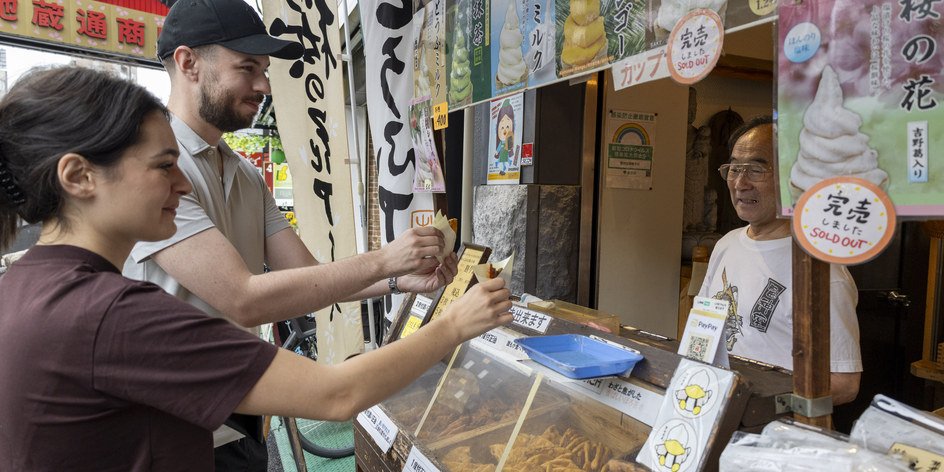
Raijindo has several locations, mostly clustered in the Tokyo area, but Sugamo Raijindo is the brand's main store. Loyal customers and passersby regularly drift in through the shop's open storefront, drawn by the savory aroma of soy sauce and the sight of artisans hand-baking senbei; they say they bake about 1,000 rice crackers per day during busy times. You can pick up packs of various senbei to enjoy later, or pick up freshly baked, bite-sized crackers to enjoy right away from a street-facing stall that forms part of Raijindo's exterior.
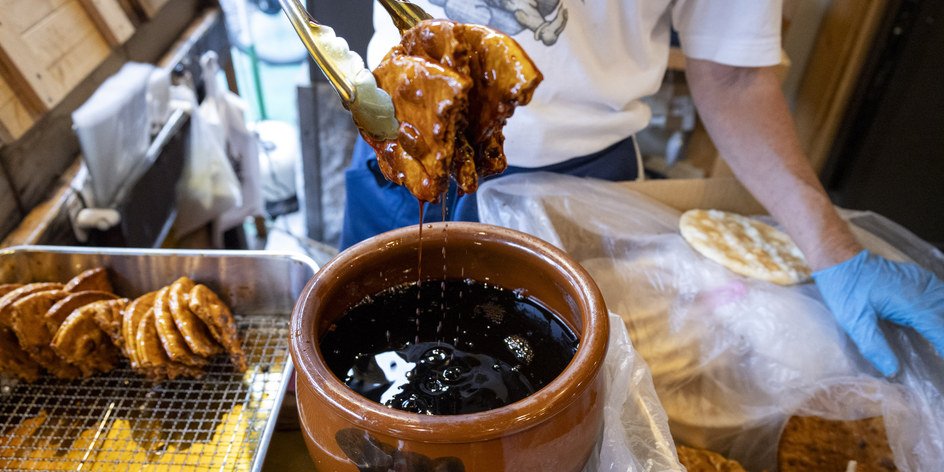
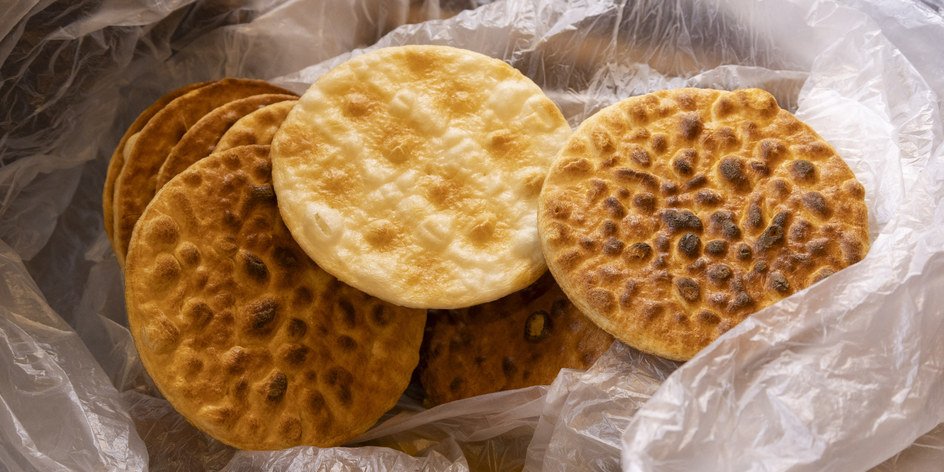
The rice used for Raijindo's senbei is “Haenuki,” a non-glutinous variety grown in Yamagata Prefecture. Just as when making mochi (traditional Japanese rice cakes), the rice is steamed and pounded. Then, it is rolled out thinly, shaped, and sun-dried. The senbei produced on premises are the plain-baked variety. To add flavor, they are dipped in a thick, soy sauce-based marinade. When fresh off the grill, the senbei are warm and have a rich soy sauce aroma, and if you chew them slowly you can taste the natural sweetness of the rice. For both the freshly baked crackers and the packs, you can choose the level of flavor based on the number of dips in the marinade, ranging from one to darkly-lacquered, 10-dip crackers.
Inside, the store also carries individually wrapped senbei. In addition to the dip-count varieties, there are thick-baked crackers, thin-baked crackers, ones topped with dried natto (fermented soybeans), and ones very generously sprinkled with chili pepper. For a fun souvenir or novel gift, you can choose your favorites and pack them into a box shaped like the store itself. A small speaker in the front corner of the shop regularly plays crunchy chewing sounds; an element that is a bit surprising at first but soon blends into the overall senbei shopping experience. Foreign tourists, intrigued by the shop's inviting atmosphere, keep coming in one after another. There is even a bench near the entrance, adjacent to the stall selling freshly baked senbei, that encourages guests to take a break while they enjoy their snacks.
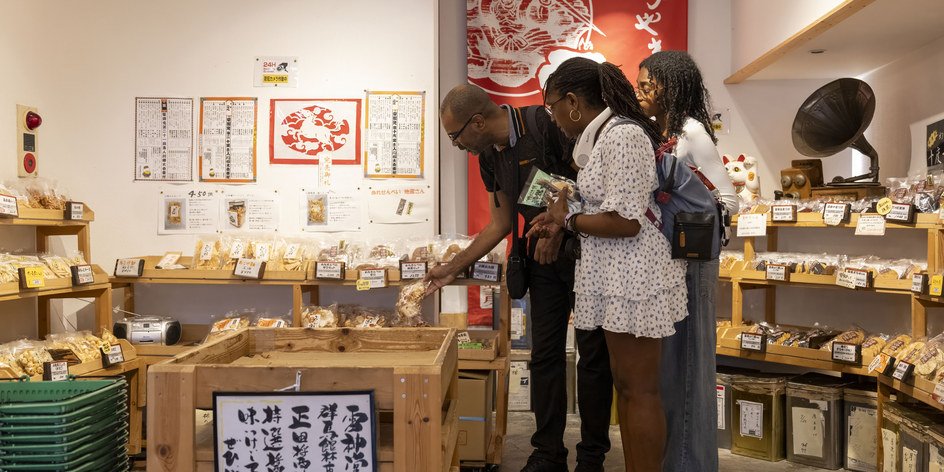
Store manager Mitsuo Hirano said one of the items customers reach for often is “Nurekari Mochi,” made by drying freshly baked, piping-hot senbei dipped in soy sauce for five days so the flavor penetrates all the way through, resulting in a moist, savory treat. The bite-sized pieces come in a large bag, and they are easy to snack on.
Jizo Dori is also home to shops selling mame daifuku, the bean-studded variation on the daifuku that became popular in Edo. From dagashi chosen coin by coin to senbei warm from the grill, Tokyo's long-loved sweets are simple, yet each carries a piece of the city's food culture. Japan's capital has endless varieties of diversions and gourmet food, but sometimes the travel memories that stay with you are the shared, small moments. So the next time you are in Tokyo, be sure to stop by a dagashi shop or a senbei store — pick out a few dagashi by hand, try a rice cracker still warm from the grill, and enjoy the simple sweets that have been making people here happy for generations.
Tokyo offers many other cuisines and a rich food culture — please explore them with GO TOKYO Gourmet.
Kamikawaguchiya
Address
3-15-20, Zoshigaya, Toshima City, Tokyo (on the grounds of Zoshigaya Kishimojin Temple)
Raijindo Sugamo Main Store
Address
3-21-15, Sugamo, Toshima City, Tokyo
To learn more about
you can press “copy” and paste on search engine