
Shochu Cocktails: Tokyo’s Cutting-Edge Bars


Sushi, tempura, soba, and ramen. If you visit Tokyo, there are countless delicacies you’ll want to try.
But Tokyo isn’t just a food mecca. It is also home to an established and deep bar culture, from lively watering holes to tranquil spaces where people seek out moments of peace. Beginning about a decade ago, Tokyo’s bars began attracting global attention for their uniquely evolved, high level of craftsmanship. This includes ice so clear it seems to vanish when liquid is poured over it, masterful shaking techniques, and meticulous bartending. Today, interest is focused not only on mixology but also on the distinct atmospheres of each bar and their original cocktails, many of which make the most of ingredients unique to Japan.
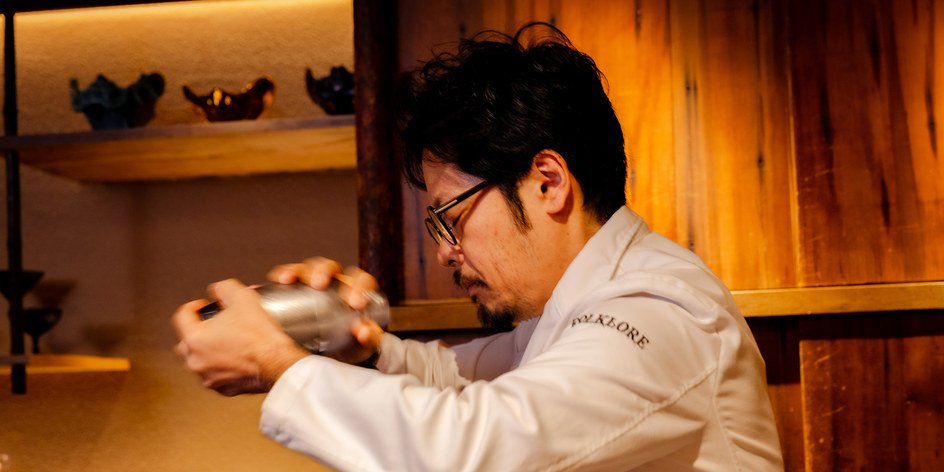
One such bar is “FOLKLORE,” a cocktail establishment that treats Japan’s national spirits - such as sake, shochu, and Okinawa’s awamori - on the same level as spirits from around the world, blending them into innovative - and distinctly Tokyo - cocktails.
FOLKLORE is located about half a kilometer south of Tokyo Station, beneath an elevated train track. Entered through an iconic brick arch built during the Meiji period, this 300-meter-long stretch houses a variety of dining establishments. Quietly nestled in one corner, FOLKLORE is reinterpreting Japan’s national spirits through mixology. Often incorporating glassware and ingredients that evoke the terroir of their regions of origin, the bar also dabbles with Western spirits to create a new style of Japanese cocktails.
Your FOLKLORE journey begins by stepping through a small lattice door reminiscent of a “nijiriguchi,” the low entrance to a traditional tea room, which opens onto a quiet Japanese interior far removed from the bustling streets of Tokyo, evoking a sense of wabi-sabi, the Japanese aesthetic that finds beauty in transience and imperfection.
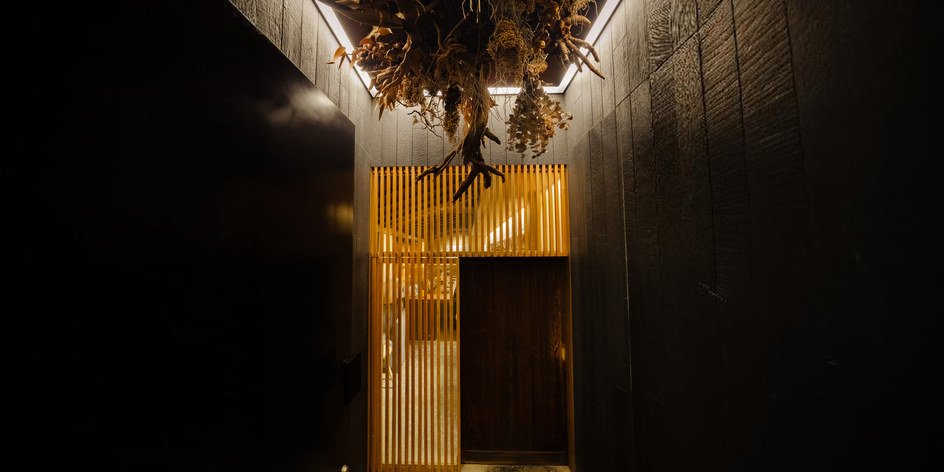
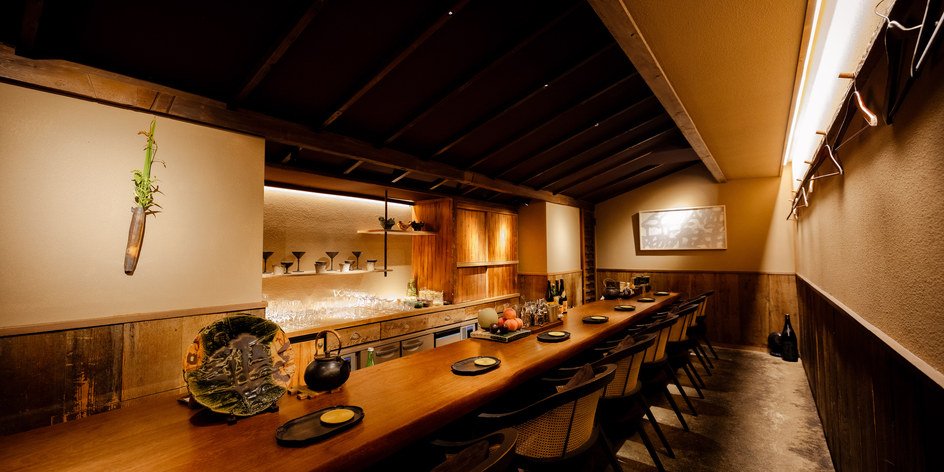
Owner-bartender Shuzo Nagumo’s path to opening FOLKLORE began in 2018 when he had the opportunity to create cocktails using authentic shochu at an event. At the time, few bartenders were seriously exploring shochu cocktails, but he received an unexpectedly enthusiastic - and surprised - response from the distillers and liquor store representatives present at the occasion. This convinced him of the spirit’s potential.
“Our team’s mission is to ‘turn every liquid into a cocktail,’” said Nagumo. “It’s about unlocking the endless possibilities of blended drinks and delivering new value. Timing and the spirit of the times are crucial in this endeavor, and looking back, I believe that this was the perfect moment.”
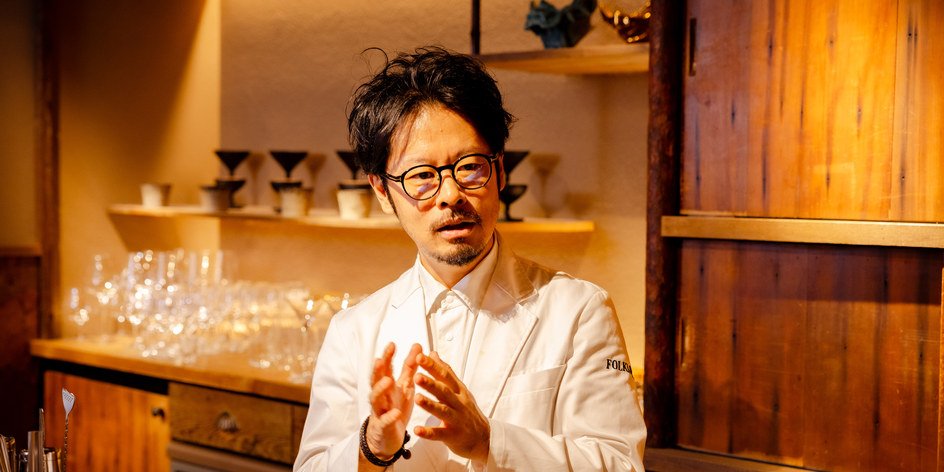
But even if the zeitgeist was aligned, there was much research to be done. Nagumo traveled to shochu distilleries across Japan to deepen his knowledge, gain insight into its production, and deeply engage with the flavors and aromas of this traditional Japanese spirit. Aiming to establish shochu cocktails not merely as a passing trend but as an enduring part of the culture, he opened FOLKLORE, a venue where guests can enjoy them at any time.
Currently, international visitors make up 70% to 80% of FOLKLORE’s clientele. After tasting shochu cocktails, these guests often express a desire to learn more about the spirit, which hasn’t yet gained wide recognition abroad like Japanese sake. They note that while shochu is a distilled liquor, it is distinct from mezcal, tequila, gin, or rum. Many say they have never had anything like it.
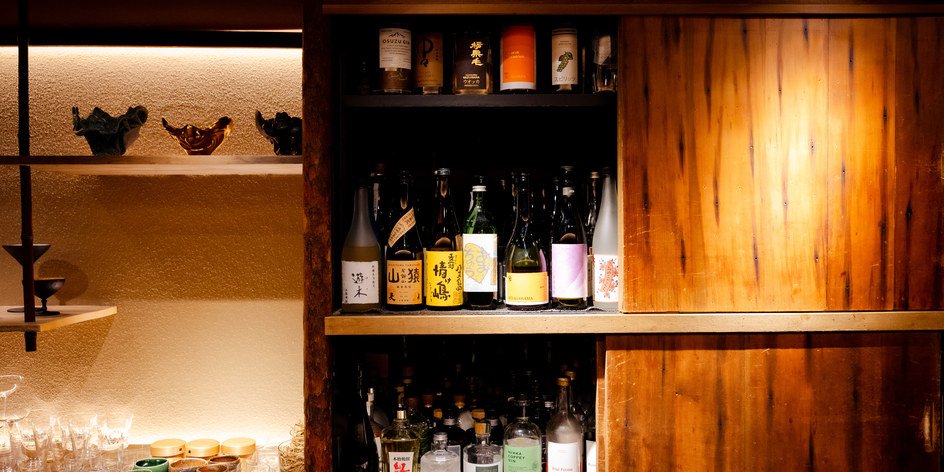
Authentic Shochu, a Complicated Perfection
What is thought of as “authentic shochu” is made via a distillation process using koji mold, which is also used to make miso and sake and was designated Japan’s “national fungus” by the Brewing Society of Japan in 2006. In terms of international recognition, Japan’s “traditional sake brewing method,” which covers shochu as well, was inscribed on the UNESCO List of Intangible Cultural Heritage in 2024.
But accolades and designations aside, what makes authentic shochu so appealing when used in cocktails?
“There is a wide variety of raw ingredients,” said Nagumo, “such as sweet potatoes, barley, rice, and brown sugar, and there are different distillation methods, including vacuum and atmospheric. Even when it comes to sweet potatoes alone, there are many varieties. I believe the complexity arising from these differences in ingredients and production is what makes authentic shochu so appealing. Other spirits tend to be simpler. Understanding that complexity is fascinating and allows for creativity. But at the same time, it’s also a challenge and mastery of shochu is difficult. That’s why it’s essential to pursue the essence of each spirit, seeking out the unique flavors that can only be achieved with a particular shochu.”
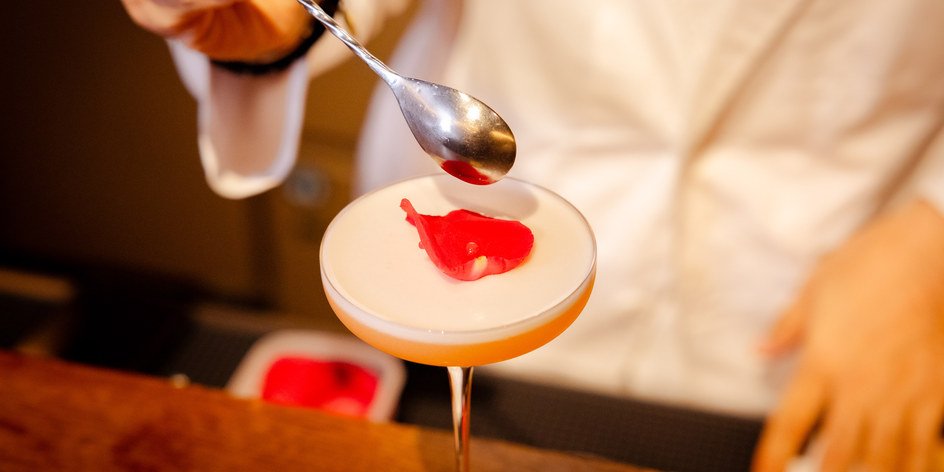
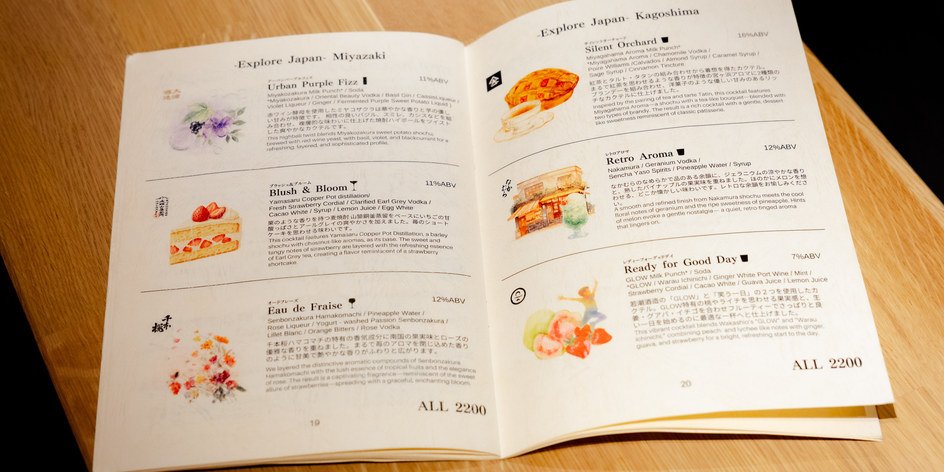
For example, “Yamasaru” is a barley shochu from Miyazaki Prefecture, whose chestnut-like aroma is enhanced when combined with Earl Grey and strawberry cordial, creating a cocktail reminiscent of a shortcake.
Kagoshima Prefecture’s “Miyagahama Aroma” is a sweet potato shochu with hints of black tea. When combined with pear eau-de-vie (a European fruit brandy) and vodka infused with chamomile, it creates a libation akin to tarte Tatin, the famous French apple pastry. FOLKLORE’s handcrafted menu features illustrations that convey the flavor profiles of their cocktails, making it intuitively easy to understand regardless of language.
The Tale of “Tokyo Shimazake”
Nagumo has also turned his attention to shochu produced in Tokyo itself.
These varieties are produced in the Izu Islands, an archipelago of volcanic islands that stretches south from Tokyo Bay and makes up Tokyo’s island region. The shochu produced on these islands is characterized by the exclusive use of barley koji (steamed barley inoculated with koji mold), domestically grown sweet potatoes, and water sourced from within the Izu Islands themselves. The various shochus’ distinctive characteristics include the toasty aroma of barley, a fresh, herbaceous scent, and a soft, light mouthfeel. The origin of these particular spirits dates back to the Edo period (lasting for about 260 years from 1603), when sweet potatoes, a famine-relief crop promoted by the shogunate, were already being cultivated on Hachijojima Island. A merchant from Kagoshima Prefecture - exiled there when it was still a place of banishment - saw their potential, sent home for a still and seedlings of a variety better suited to the purpose, and taught the islanders how to distill shochu. Because rice was scarce on the islands, barley koji took the place of the rice koji used on the mainland, and that is the style that took root. Reflecting their recent popularity, “Tokyo Shimazake,” as these island shochus came to be called, was designated by Japan’s National Tax Agency as a geographical indication (GI) in 2024.
“Even though we simply say ‘made in Tokyo,’ every brand has its own distinct character,” said Nagumo. “I want more people to know about the unique spirits being produced here. Just as we say, ‘In Japan, we serve Japanese spirits,’ there’s a compelling argument that ‘Tokyo bars should use Tokyo spirits.’ These drinks have a rich history and there is a sense of the extraordinary - of a remote, hidden locale - embedded in their story that makes people want to visit the islands themselves.”
Nagumo first took notice of these spirits at an authentic shochu event. “Back then, nobody was calling them Tokyo Shimazake yet, but I was surprised to learn that authentic shochu was being made in Tokyo, too, and I was drawn to how distinctive it is,” he said. “Aogashima and Hachijojima in particular have a completely different climate from mainland Tokyo. They are remote islands, so it’s a unique environment. You’re still in Tokyo, yet you feel very close to nature, and Aogashima is practically a hidden frontier. It reminds me of the Orkney Islands at the northern tip of Scotland, an essential name in whisky where distillers make the most of local ingredients. On Aogashima, shochu is made at the island’s shared distillery, a bit like absinthe [an herbal spirit] in Switzerland, and even with the same stills, different makers produce different flavors. That’s a rare and fascinating culture you won’t find even in Kagoshima.”
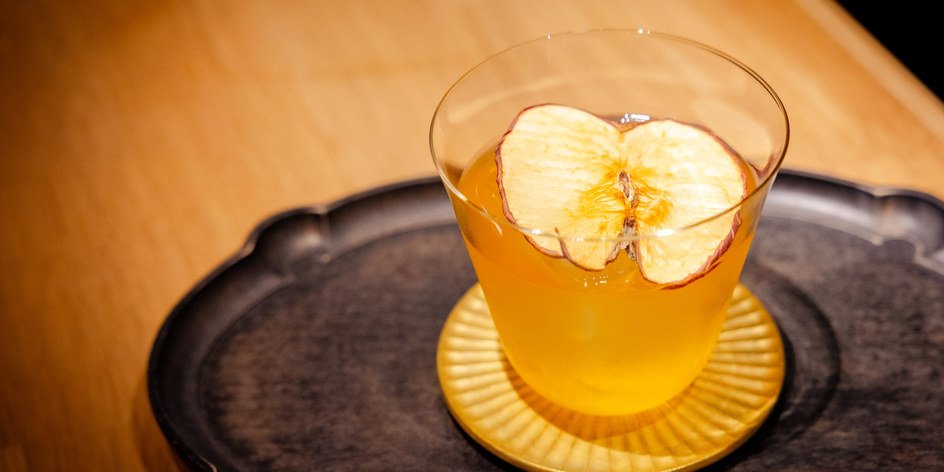
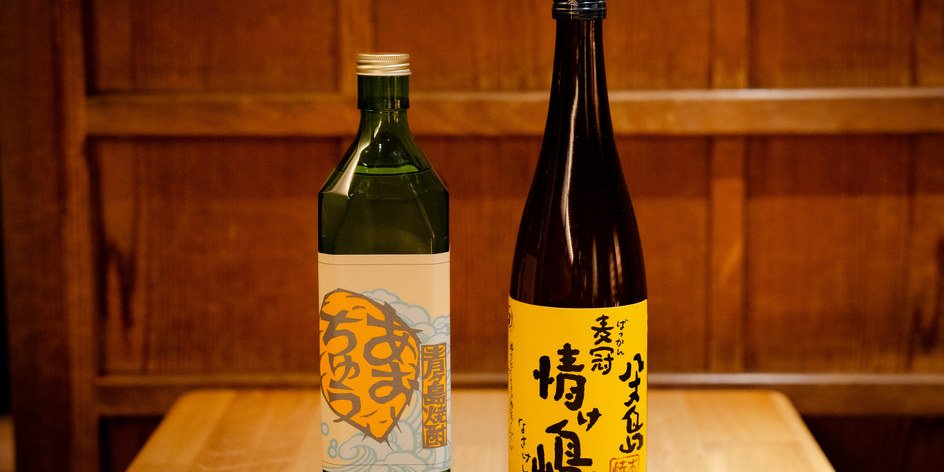
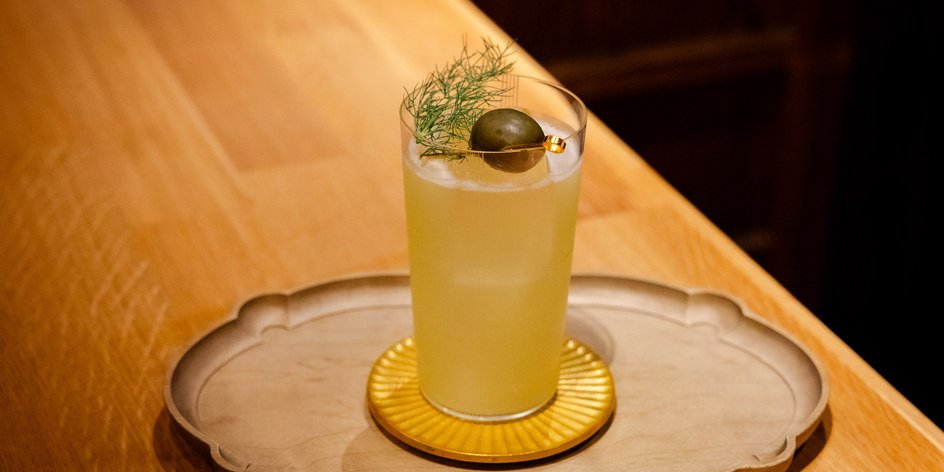
For this article, Nagumo created two cocktails with Tokyo Shimazake, a sweet potato shochu and a barley shochu, as counterparts to the Kyushu shochus he also works with. The first uses “Aochu,” a sweet potato shochu from the island of Aogashima. “I highlighted the vegetal notes - reminiscent of celery or radish greens - and the olive-like flavor found in Aochu,” said Nagumo. “To provide the essential acidity, I used homemade olive vinegar syrup and citric acid instead of lemon to create a complex, layered profile without introducing any off-flavors.”
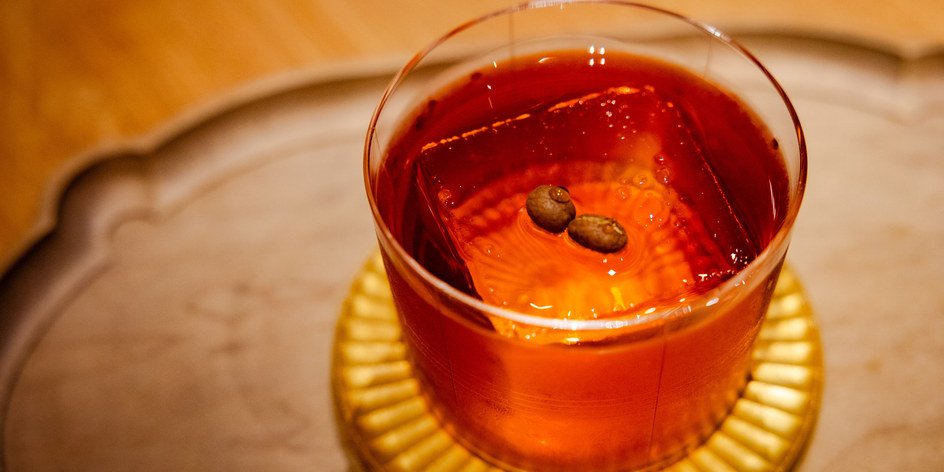
“Bakkan Nasakejima,” a barley shochu from Hachijojima Island, has a savory, toasted aroma that Nagumo leveraged to create the “Baccaroni” cocktail, a twist on the globally popular Negroni. “By combining this shochu with smoky mezcal, sherry that retains its fermented character, and coffee liqueur for richness, I crafted a flavor profile that appeals to both Japanese and international palates.” When Aochu or Bakkan Nasakejima is on hand, guests may be able to ask for these cocktails.
From Tokyo’s Islands to the World
Nagumo imagines a future where authentic shochu becomes as well-known around the world as mezcal or tequila. But he also hopes that, even if it attracts global appeal, the Japanese will continue to appreciate and make use of this distinct part of their brewing culture.
Looking further ahead, he even envisions shochu-inspired trips to Tokyo’s islands, many of which offer stunning natural surroundings.
“I wonder if we could create a tour to visit the islands’ distilleries, just like touring distilleries in Scotland,” said Nagumo. “Actually, there is no reason this couldn’t happen.”
Tokyo is mostly known as a dense, sprawling metropolis, but it also has a deep brewing culture and areas of rich, natural beauty. FOLKLORE is one of the city’s new bars that are helping overseas visitors - and more than a few Japanese guests - discover a side of the city they didn’t know about. The vibrant nightlife of Japan’s capital can be a portal to its islands and the cutting edge of mixology. Set off for a whole new world of taste.
Tokyo offers many other cuisines and a rich food culture — please explore them with GO TOKYO Gourmet.
FOLKLORE
Shuzo Nagumo
Born in 1980, Nagumo moved to the U.K. in 2007, where he gained a wide range of experience, and returned to Japan in 2008. In 2009, he founded Spirits & Sharing Co., and now operates multiple bars in Japan and abroad, including “Mixology Salon” in Ginza, Tokyo, which features a concept centered on tea and cocktails, and “memento mori” in Toranomon, Tokyo, which features a concept centered on cacao and botanicals. He is active in a wide range of fields, including menu development and bar production.
Address
Hibiya OKUROJI G27, 1-7-1 Uchisaiwaicho, Chiyoda-ku, Tokyo 100-0011
http://spirits-sharing.com/free/folklore (Japanese Only)
To learn more about
you can press “copy” and paste on search engine