
Kanpyo Maki: Classic Seafood-Free Tokyo Sushi


For many foreign visitors to Japan, the idea of sushi is inseparable from seafood, with nigiri sushi—in which sashimi is placed atop a mound of hand-pressed, vinegared rice—often being the first type that comes to mind. But nigiri sushi isn’t believed to have emerged until the 19th century, during the late Edo period. Before this, several types of sushi had been developed that didn’t involve molding the rice by hand, and some didn’t contain seafood at all. These are still popular today, but to find them made in the traditional way, you have to know where to look.
Makizushi is a type of sushi in which vinegared rice and other ingredients are wrapped in a thin seaweed sheet called ‘nori’ and then rolled into a burrito-like shape before being sliced into bite-sized pieces. Having appeared by the mid-Edo period in the 18th century, makizushi grew into a mainstream cuisine, with establishments serving it listed in contemporary guides to the city’s eateries. One form of makizushi, called ‘kanpyo maki,’ is one of Tokyo’s traditional local dishes.
A Sweet & Salty Roll with a Soy Sauce Finish
Kanpyo maki is centered around kanpyo: thin, dried strips shaved from the fruit of the bottle gourd, a member of the same family as pumpkin and squash. For kanpyo maki, the kanpyo strips are first simmered in a sweet and savory soy sauce-based broth, then rolled with vinegared rice and nori. The resultant cylinder of sushi is then cut into bite-sized pieces and consumed as-is: due to the kanpyo’s seasoning, soy sauce, wasabi and other familiar sushi condiments are generally not used.
Kanpyo maki has a soft, springy texture. As you chew, the gentle sweetness and umami of the broth spread across your palate—a simple but addictive flavor.
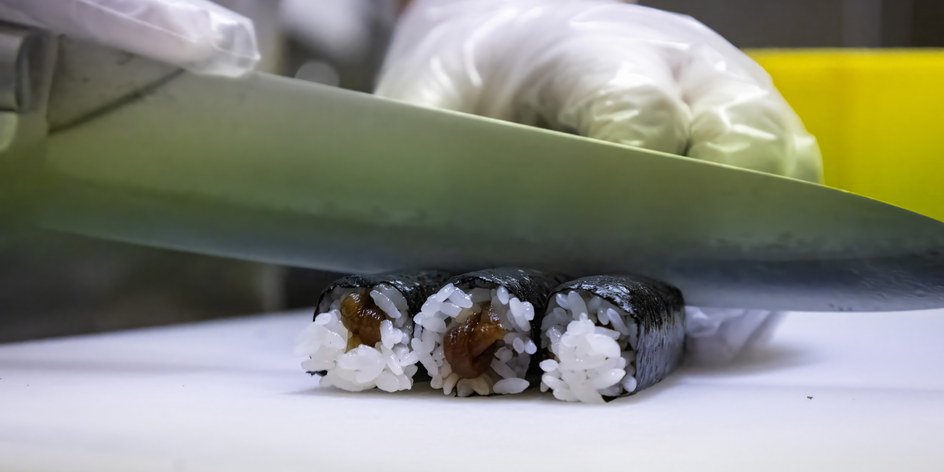
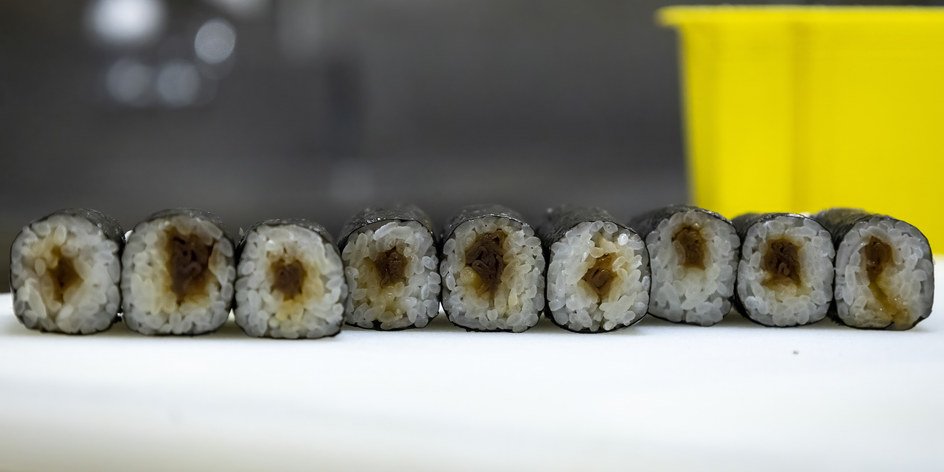
In Edomae (Tokyo-style) sushi, there is a custom of finishing a meal with kanpyo maki or a rolled Japanese omelet (‘tamagoyaki’). Indeed, kanpyo maki is an indispensable Edomae sushi delicacy.
An Edo Original
“It is said that rolled sushi originated in the Kansai region [the area including Osaka and Kyoto] and spread to Tokyo during the Edo period. While ‘futomaki’ [thick rolls] packed with a variety of ingredients were popular in Kansai, the Edo temperament viewed too many ingredients as rather gauche. This led to the popularity of ‘hosomaki’ [thin rolls] containing only a single ingredient to accompany the rice and nori, such as dried gourd strips or tuna.”
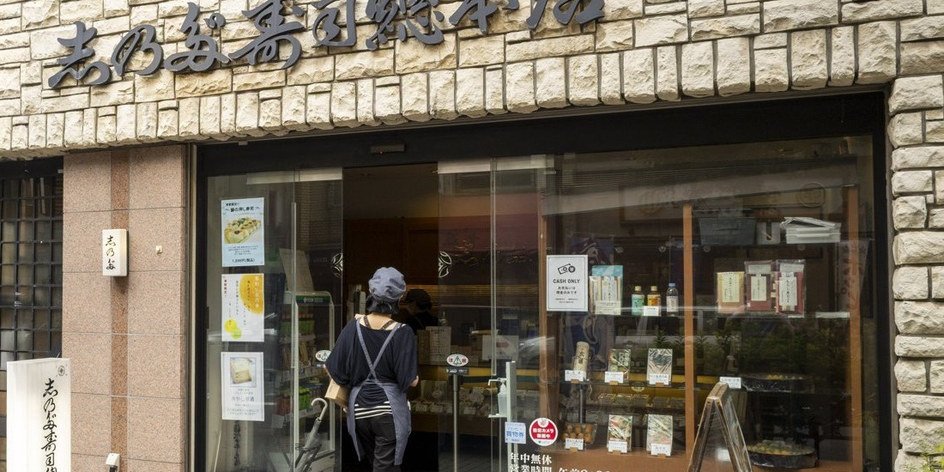
These words came from Takahiro Yoshimasu of Ningyocho Shinoda Sushi Sohonten (hereinafter “Shinoda Sushi”), a shop in Nihonbashi with a history spanning nearly 150 years. Shinoda Sushi focuses on kanpyo maki, which held a special place among Edo’s various sushi rolls.
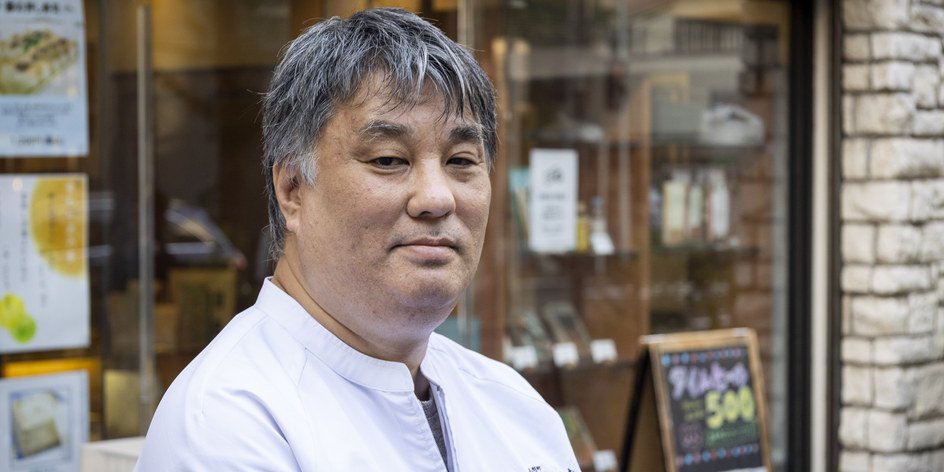
Takahiro Yoshimasu, fifth-generation owner of Shinoda Sushi
Kanpyo maki’s position was prominent enough that it came to be considered the default type of rolled sushi in Edo. According to Morisada Manko, a record of customs compiled by Kitagawa Morisada in the late Edo period, rolled sushi in Edo was called ‘nori-maki’ and contained only kanpyo.
A dish whose simplicity belies its lengthy preparation, kanpyo maki remains a favorite among the people of Tokyo, and at Shinoda Sushi, it is still made the old-fashioned way.
Days of Preparation Behind the Final Roll
Since there’s only one type of filling, assembling kanpyo maki is very simple. However, at Shinoda Sushi, preparing the kanpyo alone takes three to four days.
First, the well-dried kanpyo is rinsed briefly under water and sprinkled with salt, which is hand-rubbed in. After a night of refrigeration, the strips are boiled the next day in hot water for 20 to 40 minutes, until the desired firmness is reached.
Next, the excess moisture is thoroughly squeezed out before the strips are simmered with soy sauce and sugar. Once cooled, the kanpyo strips are placed in a refrigerator to rest for two to three more days as the flavors meld, not unlike how chilis or stews often improve with time.
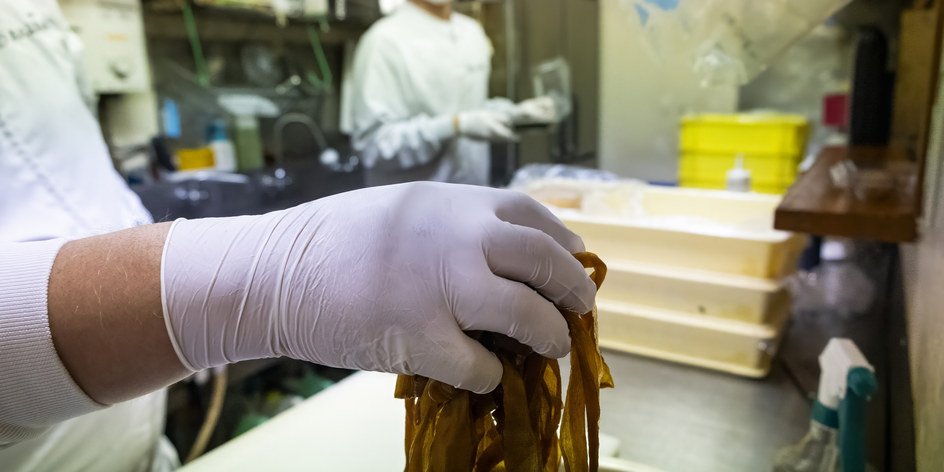
Kanpyo strips after simmering in soy sauce and sugar
“As it rests,” explained Yoshimasu san, “the sharp saltiness of the soy sauce mellows out.”
Next is the brief final act in which the sushi rolls are shaped. A sheet of nori seaweed is placed on a bamboo rolling mat called a ‘makisu’ and topped with a layer of vinegared rice. A few kanpyo strips are laid along the center, and then the chef deftly rolls the makisu over itself, shaping the cylindrical kanpyo maki.
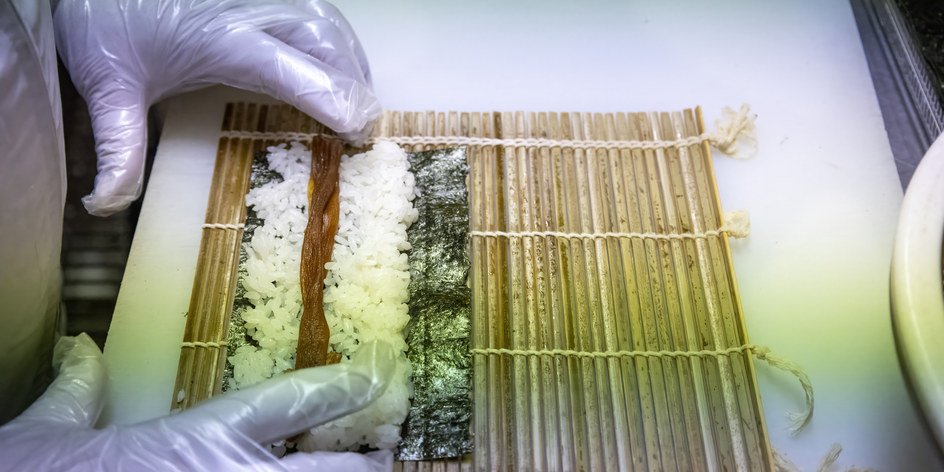
Kanpyo strips laid along the vinegared rice on a makisu
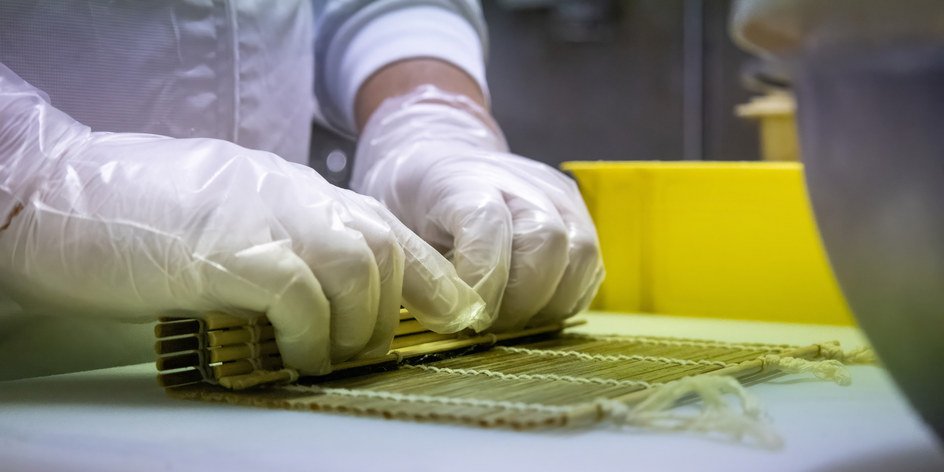
Rolling the makisu to shape the kanpyo maki
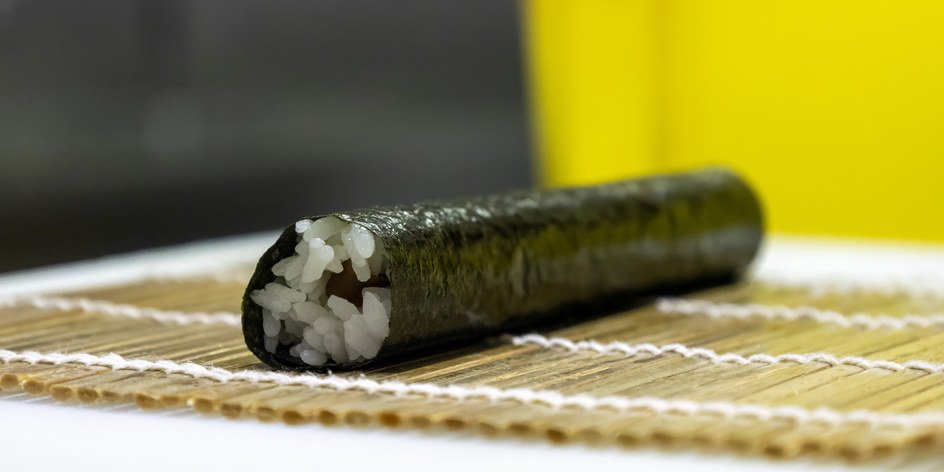
A finished roll of kanpyo maki
Shinoda Sushi is a storefront shop that specializes in takeout, and it uses a type of nori that is suited to being eaten some time after the sushi is rolled. Once complete, the kanpyo maki is sliced into three bite-sized pieces and packed into a paper box.
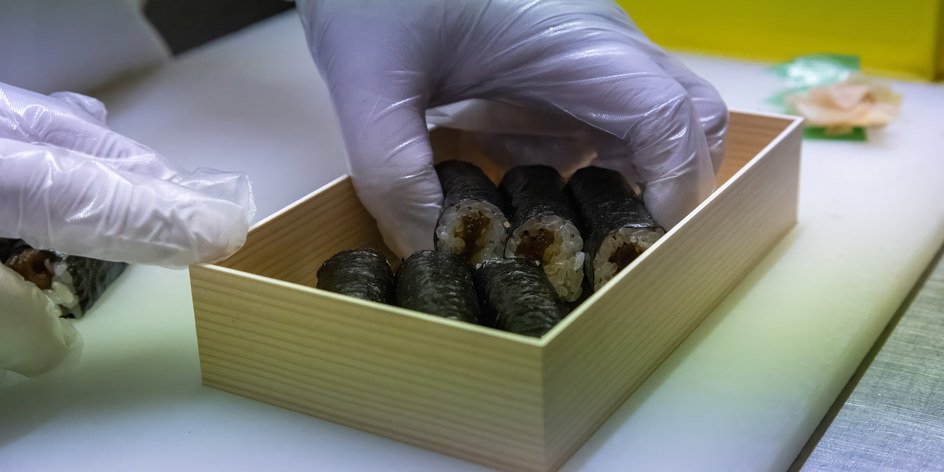
Kanpyo maki packed into a takeout box
The Perfect Snack for a Trip to the Theater
Kanpyo maki is also traditionally paired with ‘inarizushi,’ or vinegared rice in deep-fried tofu pouches that have been simmered in soy sauce and sugar.
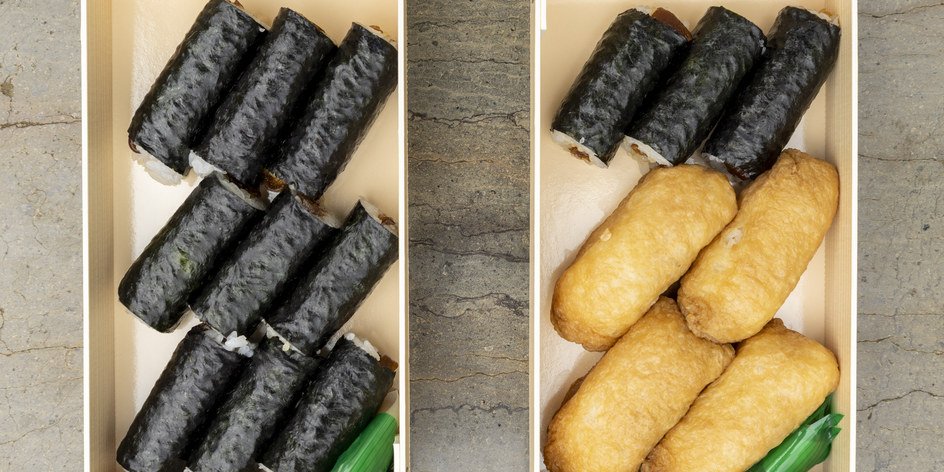
This combination is known as ‘Sukeroku Sushi,’ a name originating from the traditional Japanese theater art of Kabuki.
“There is a heroine named Agemaki in the famous Kabuki play ‘Sukeroku,’” explained Yoshimasu san. “It is said that because her name combines the characters for ‘age’ [fried tofu] and ‘maki’ [rolled sushi], the combination came to be known as ‘Sukeroku Sushi.’”
Shinoda Sushi’s neighborhood of Ningyocho in Nihonbashi has deep ties to the theater world stretching back to the Edo period, when sushi itself became associated with the performing arts.
“It was very common for theatergoers to eat sushi before a performance or to take a selection along as a packed meal,” said Yoshimasu san. “Even today, customers often stop by to buy some on their way to the nearby Meijiza theater.”
Easy to eat by hand and delicious even when cold, kanpyo maki and inarizushi remain the perfect accompaniment for taking in a play.
Vegetarian-Friendly Sushi
Today, Tokyo’s international tourists are also enjoying this traditional fare. At Shinoda Sushi, guests from overseas account for about 20 percent of the customer base, with many coming specifically for the kanpyo maki and inarizushi. The shop has taken steps to accommodate them, such as providing information sheets with English descriptions.
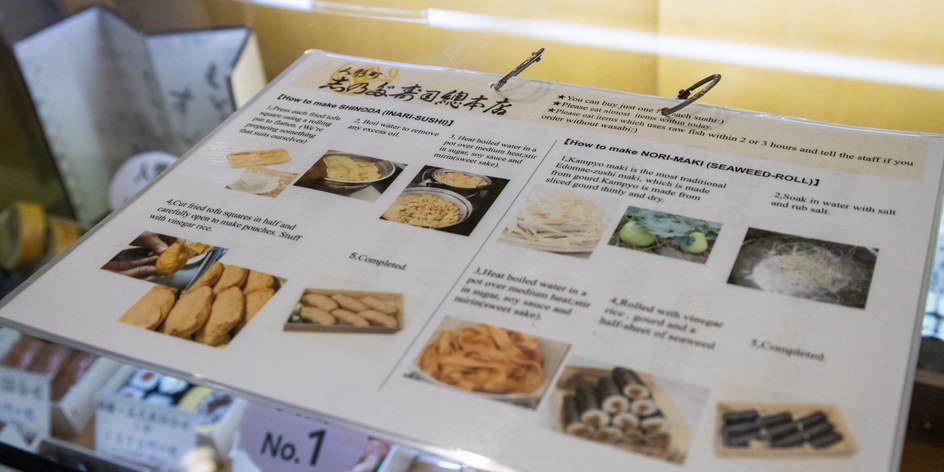
Another aspect that appeals to many international customers is that the kanpyo maki and inarizushi at Shinoda Sushi contain no animal-derived ingredients, including in their seasonings, making them suitable for vegetarians.
Kanpyo maki offers a flavor completely distinct from the raw-fish nigiri sushi that many foreign visitors picture when they think of sushi. In Tokyo, you can purchase kanpyo maki not only at Shinoda Sushi but also at various other shops, including those in department stores. The history of Edomae cuisine lives on in this distinctly Tokyo style of sushi roll.
Why not pick up a bento box, spread it out in a nearby park, and, as you nibble on the sweet-and-salty kanpyo maki, spare a thought for the people of Edo who enjoyed the same flavors in a very different time?
Tokyo offers many other cuisines and a rich food culture — please explore them with GO TOKYO Gourmet.
Ningyocho Shinoda Sushi Sohonten
Takahiro Yoshimasu
Fifth-generation owner, Ningyocho Shinoda Sushi Sohonten
Takahiro Yoshimasu is the fifth-generation owner of Ningyocho Shinoda Sushi Sohonten, founded in 1877. The shop traces its roots to an inarizushi stall opened after the Meiji Restoration by its founder, a former samurai of the Hiroshima domain stationed in Edo. Today, Yoshimasu carries on the flavors the shop has served since its founding, including Sukeroku Sushi, the combination of inarizushi and kanpyo maki.
Address
2-10-10 Nihonbashi Ningyocho, Chuo City, Tokyo
https://www.shinodazushi.co.jp/(Japanese Only)
To learn more about
you can press “copy” and paste on search engine