
Eat Local in Tokyo: A New Side of the City


From the observation decks of the 634-meter Tokyo Skytree, you can enjoy panoramic views that show an endless expanse of buildings, railway lines, expressways, parks and even mountain ranges on the horizon. From that vantage point, it is impossible not to appreciate how far Tokyo stretches in every direction.
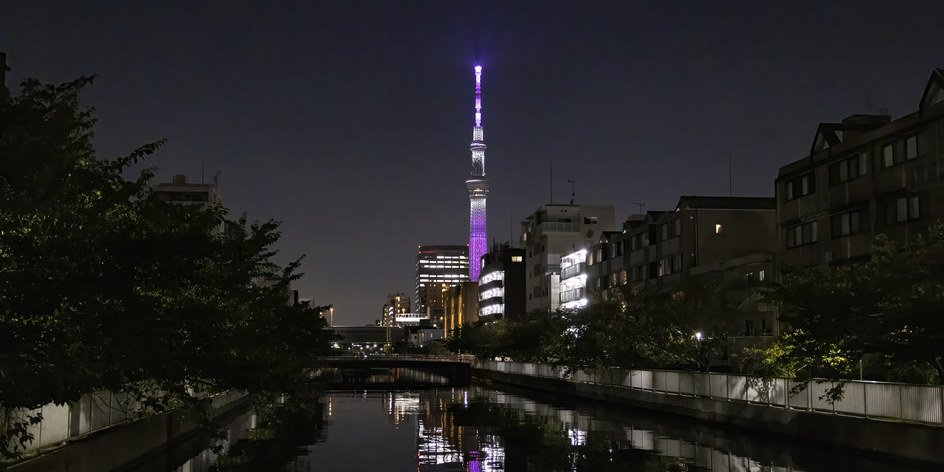
As dusk falls, Tokyo Skytree is illuminated in colors that shift from evening to evening. But despite the modernity of the tower, right at its feet lies a traditional old town neighborhood dominated by narrow alleys and low-rise homes.
In this cityscape, where urban Tokyo’s old and new intersect, stands a down-to-earth establishment called “Oshiage Yoshikatsu” (hereinafter “Yoshikatsu”). But unlike many eateries, Yoshikatsu’s unique focus quietly shows, day after day, the diversity and depth of the capital’s agriculture and beverage production.
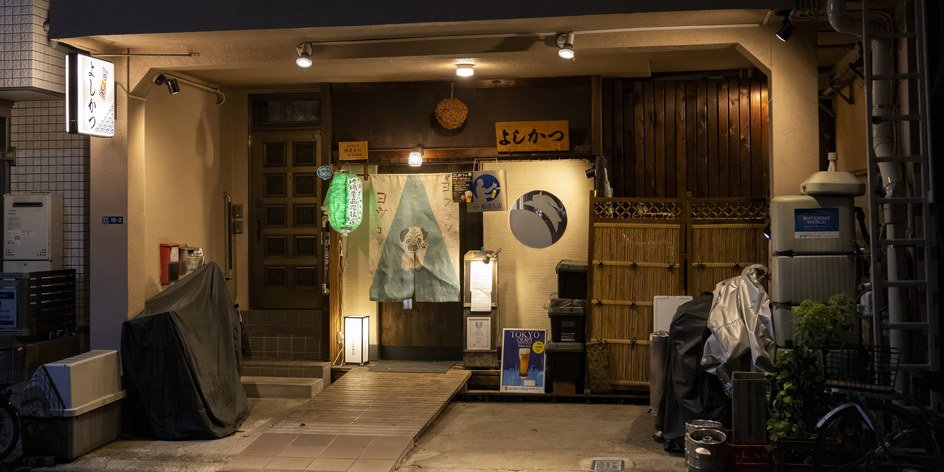
The entrance of Oshiage Yoshikatsu
Yoshikatsu is an ‘izakaya,’ a sort of informal Japanese pub where people gather to drink and share small plates of food, similar to Spanish tapas restaurants. A ‘noren’ curtain hangs at Yoshikatsu’s entrance in a residential neighborhood, and once you step inside, the understated but thoughtful wooden interior contrasts with the fast-paced image many people hold of Tokyo.
But what makes this establishment truly unique is its almost exclusive use of Tokyo-sourced ingredients and local flavors. Unbeknownst to most international visitors and even many Japanese guests, Tokyo has a long history of agricultural production and brewing, one that is evolving to this very day through both public and private efforts. A meal at Yoshikatsu brings you into contact with a part of this metropolis that is easy to miss, but very rewarding to experience.
Sake, Shochu & Wine… All from Tokyo
Right inside of Yoshikatsu’s inviting exterior and adjacent to the entrance where guests must exchange their shoes for indoor slippers is a tall, glass-fronted refrigerator lined with bottles of sake. Looking at the labels, you see names like “Kinkon,” “Soten,” “Tamajiman”—all brands by Tokyo breweries, some of which have been producing for over 300 years.
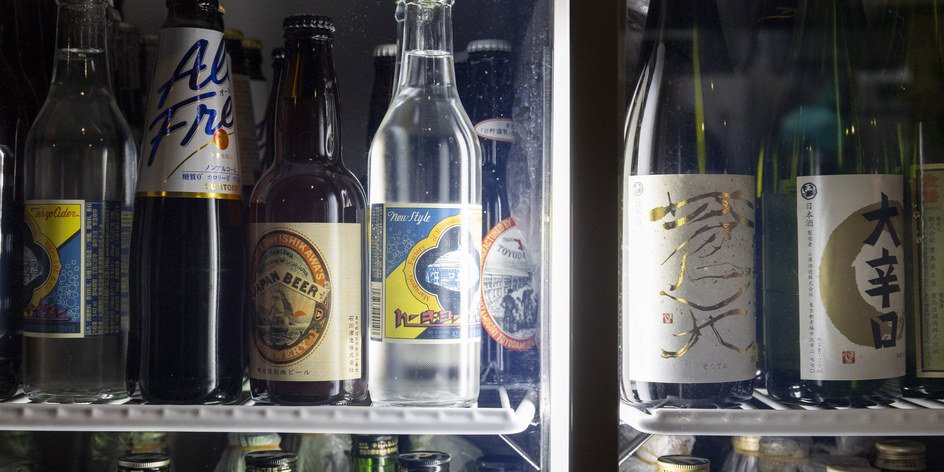
Tokyo-made sake, beer and other drinks line the glass-fronted refrigerator
There are Tokyo vintages and shochu as well, although those fermentations are relative newcomers to the capital’s brewing scene. According to a 2022 survey by Japan’s National Tax Agency, Tokyo has nine wineries, including urban businesses that don’t have their own vineyards but produce with grapes sourced from other prefectures. But somewhat surprisingly, the opposite also happens. A vintage called ‘Setagaya Merlot’ is made entirely with grapes from Tokyo’s Setagaya City in a Yamanashi Prefecture winery. This wine can be found at Yoshikatsu as well.
Shochu produced in Tokyo includes varieties made on Aogashima, a small volcanic island in the Pacific Ocean, approximately 360 kilometers south of the central city, and one of the islands of Tokyo. Rounding out the drink selection are Tokyo-produced gin, rum and craft beers. But Yoshikatsu’s commitment to Tokyo products is even more apparent when looking into its cuisine.
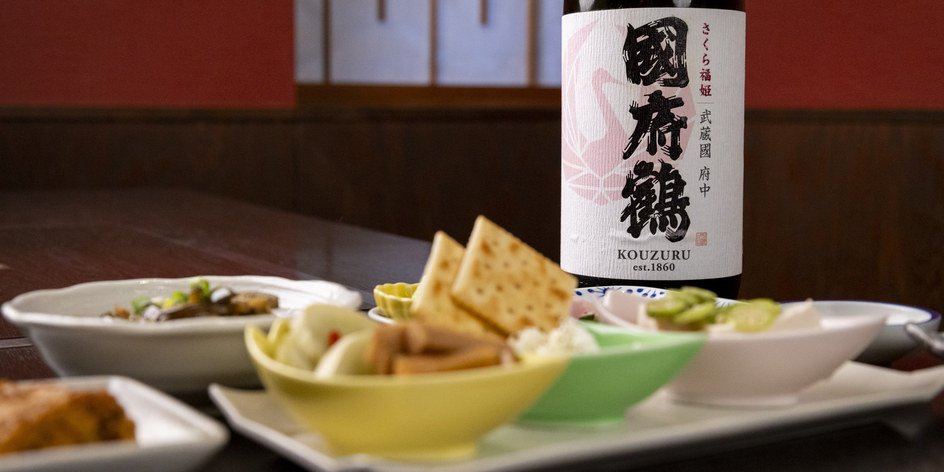
Kouzuru, a sake brewed in Fuchu, Tokyo, served with small plates
A Holistic Search for Tokyo-made
Tokyo is centered around Tokyo Bay and its growth over the centuries is inseparable from its relationship to the ocean. Like certain shochus, much of Yoshikatsu’s seafood comes from islands under Tokyo’s jurisdiction. This includes sashimi platters often adorned with ‘Kinmedai’ (splendid alfonsino) and ‘Madai’ (red sea bream). Kinmedai, with its red skin, is prized for the sweetness of its fat and its rich umami, while madai, with its darker skin, offers a delicate sweetness and a firm texture.
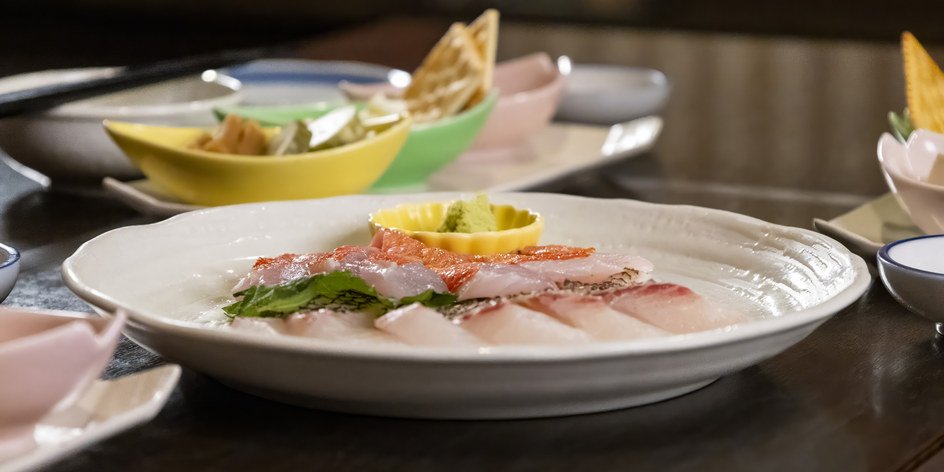
A sashimi platter featuring fish from Tokyo’s islands
For land-based protein, the meat used in Yoshikatsu’s ‘gyunabe’ (beef hot pot) is Akikawa Beef, a ‘Kuroge Wagyu’ (Japanese Black Cattle) breed raised in Tokyo that is served in a miso-based broth, similar to sukiyaki. Akikawa Beef is known for its fine, tender texture, deep umami and the sweet aroma of its fat. For the pork and tofu dish, the meat used is “TOKYO X,” a brand of pork specifically developed by the Tokyo Metropolitan Government, with moist, tender meat and fat that has a refined sweetness and melts in the mouth.
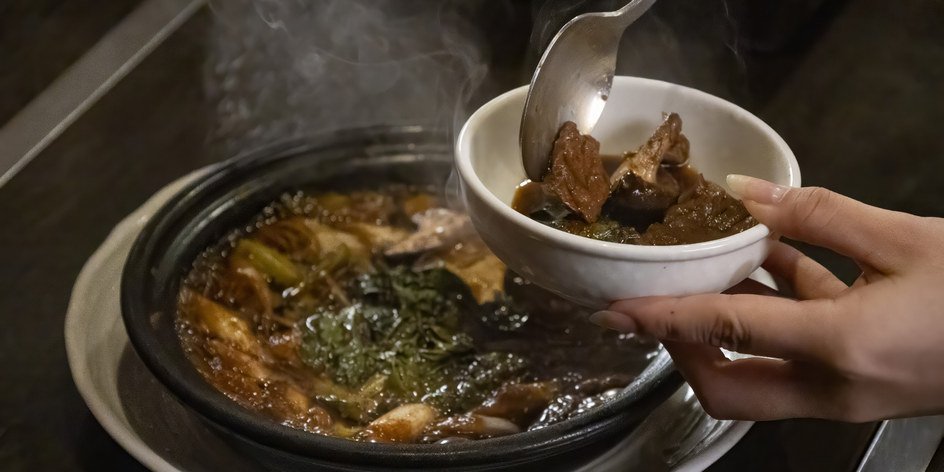
Gyunabe (beef hot pot) served in a miso-based broth
The seasonings and aromatics used in the dishes are also sourced from Tokyo, from soy sauce, miso, salt, vinegar & Worcestershire sauce to wasabi. Even the wheat flour is produced in Tokyo. Katsuhiko Sato, owner of Yoshikatsu, recalls that when he came across a Tokyo-made sauce, it was not too sweet, a little spicy and rich in umami and color, and he instinctively felt, “This is the taste of Tokyo.”
“I found some Tokyo-grown soybeans and asked a tofu maker to turn them into tofu for me,” said Sato san. “But the amount I asked for was too small, so his shop wouldn’t do it. I decided to do it myself, and since then I’ve been making tofu by extracting milk from soybeans.”
This is just one story from Sato san, who has spent many years diligently seeking out Tokyo-made ingredients.
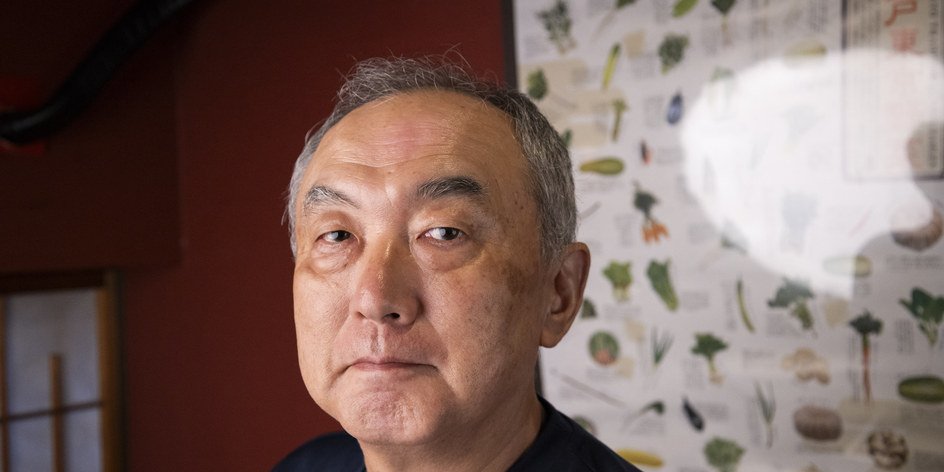
Katsuhiko Sato, owner of Yoshikatsu
The breadth of Tokyo’s agriculture and food production may come as a surprise to those who associate the metropolis exclusively with urban districts like Shibuya, Asakusa and Ginza. The country of Japan itself, being among the most densely populated large states in the world, relies on imports for many of its staples like wheat and soybeans.
But wheat and soybeans are both, in fact, grown in Tokyo and the city’s productions, many stretching back to the Edo period or before, have always played an important, if not recognized, part in feeding its people. Behind Sato san’s steadfast commitment to Tokyo produce lies a deep desire to sustain agriculture within the urban landscape.
Local Production for Local Consumption
Katsuhiko Sato was born in Tokyo’s Nerima City, a bit outside the urban core and, at that time, an environment where farmland was close at hand. As a university student, he studied animal science and, upon graduating, worked at a typical Tokyo supermarket. He noticed that despite the fact that the city had its own agriculture, hardly any Tokyo-grown vegetables were available on the shelves.
Finding this situation incongruous, Sato san began to shift his career to the food and beverage industry. After opening his own restaurant, he started to show, through his cuisine, the reality of the agriculture that exists within the urban landscape. A turning point that led Sato san to begin incorporating ‘Edo-Tokyo vegetables’ in his cooking was an encounter with the ‘Terajima eggplant,’ a rare vegetable grown in Tokyo’s Sumida City.
The Appeal of Edo-Tokyo Vegetables
Edo-Tokyo vegetables are traditional varieties that preserve the produce culture of Tokyo from the Edo period through the mid-20th century. More than 50 varieties are currently registered, including the ‘Kameido Daikon’ (a radish with white leaf stalks) and the ‘Magome Han-shiro Cucumber’ (which is pale green at the top and white on the lower half).
“Compared to the eggplants commonly found on the market today, the Terajima eggplant is smaller and has firm, dense flesh,” said Sato san. “While it softens when cooked, the skin remains tough. I realized that unless you fully understand these characteristics upon preparation, you won’t be able to create a delicious dish.”
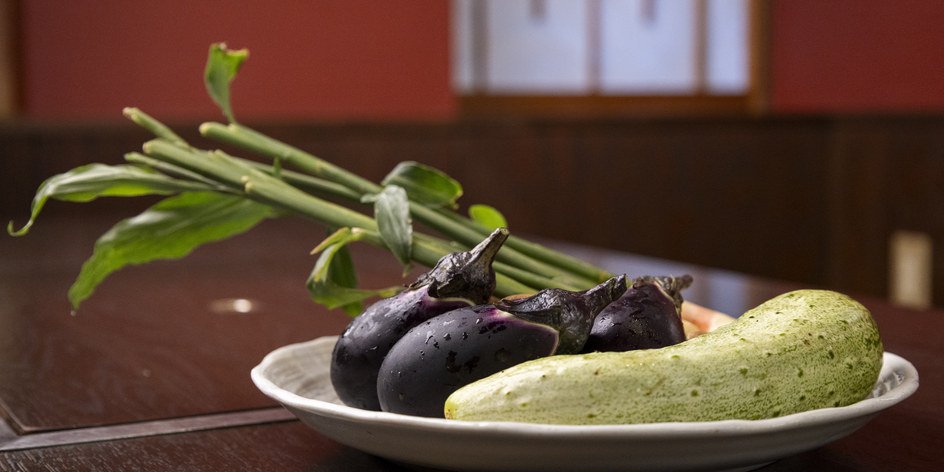
Edo-Tokyo vegetables
As Sato san’s knowledge of Edo-Tokyo vegetables and their cooking methods deepened, he came to be called an “Edo-Tokyo Vegetable Storyteller.”
But sourcing these unique kinds of produce is not an easy task.
“Even if you go to a large wholesale market where professionals in the food service and distribution industries gather, it’s hard to find Edo-Tokyo vegetables,” said Sato san. “That’s why I go to farmers’ markets where growers directly sell their produce.”
Sato san’s trips to farmers’ markets across Tokyo brought him into contact with other small-batch, capital-region crops like ginger, soybeans and rice.
“Just like with soybeans, this is how we managed to track down Tokyo-grown products that didn’t show up in data searches,” said Sato san.
Local Tokyo Food & Overseas Interest
At Yoshikatsu, foreign tourists often make up more than half of the customer base. In addition to its proximity to Tokyo Skytree, Sato san believes that the restaurant’s concept as a ‘Tokyo Local Foods’ spot helps attract travelers, many of whom are inspired by the modern ‘Farm to Table’ and ‘Eat Local’ movements.
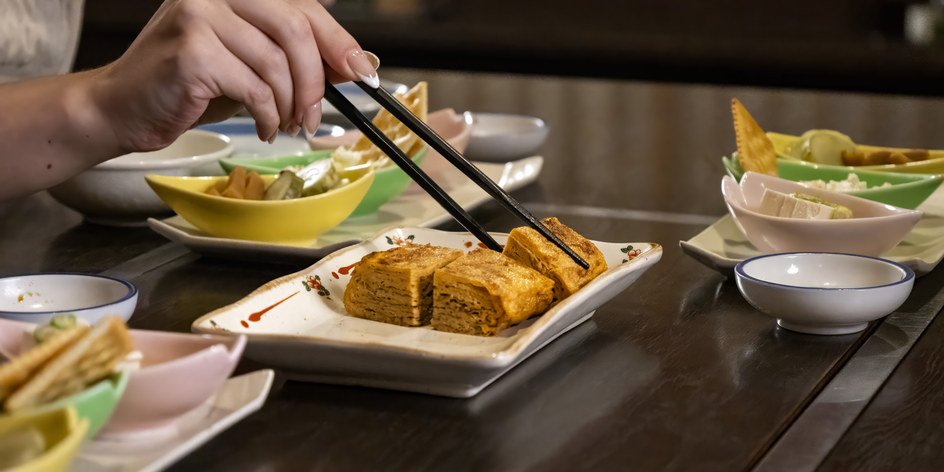
Tamagoyaki (Japanese rolled omelet) and small side dishes
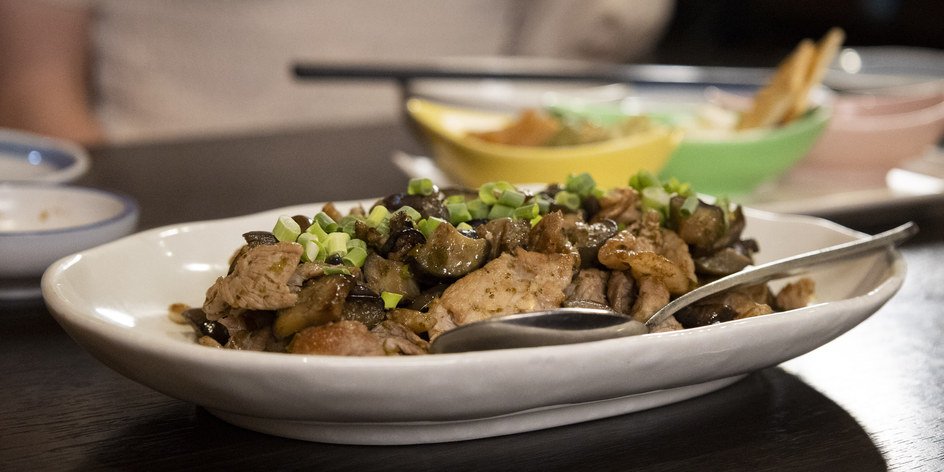
A dish made with Tokyo ingredients
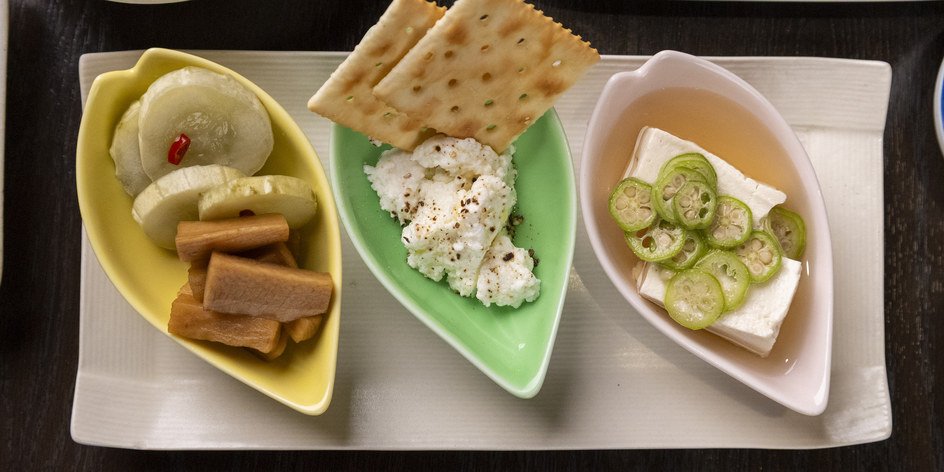
An assortment of small appetizers
As Sato san explains, the term ‘Tokyo Local Foods’ actually has two meanings. First, it refers to the opportunity to enjoy dishes that have long been beloved in Japan’s capital, such as beef hot pot and ‘monjayaki’ (a Tokyo comfort food of runny wheat-flour batter mixed with chopped cabbage and other ingredients, grilled on a hot iron griddle).
As discussed, it also means using ingredients that are grown, caught, or produced in Tokyo. Yoshikatsu’s monjayaki, which many customers order to finish their meals, fulfills both senses of the term. And as more people have gotten into Tokyo Local Foods, some have even taken culinary journeys of their own.
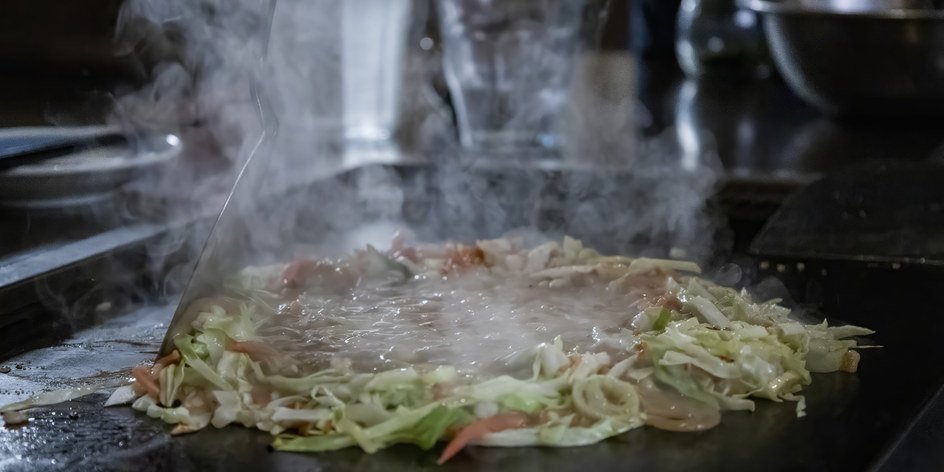
Monjayaki cooking on the griddle
“Lately, we’ve had foreign guests who’ve visited Tokyo’s islands,” said Sato san. “When I point to the fish delivered from there on a map and explain, they are delighted when they realize it is a place they are already familiar with.”
All of this has contributed to a feedback loop, in which travelers visit the restaurant, post about the food and dining experience, and inspire other travelers to visit as well.
The Significance of Choosing Made in Tokyo
People and goods converge on Tokyo from all over the world. But the city also has its own farmers, fishers and brewers. And there are cooks like Sato san who turn what they produce into dishes, so that Tokyo-grown ingredients reach the table as one of the elements that make up the city’s food culture.
Choosing Tokyo-made supports these people, producers and cooks alike, helping to ensure that the city’s agricultural heritage, and the food culture built on it, is passed on to the next generation. But the benefits don’t stop with food production. Farmland within the city is important for self-sufficiency, including from a disaster preparedness perspective in which normal supply lines to the capital may be disrupted.
Visiting restaurants like Yoshikatsu that are committed to Tokyo-made cuisine, or farmers’ markets where you can interact directly with local producers and their products, can serve as gateways to discovering another side of Tokyo, a part of the city’s heritage that still perseveres.
Tokyo offers many other cuisines and a rich food culture — please explore them with GO TOKYO Gourmet.
Oshiage Yoshikatsu
Katsuhiko Sato
Owner, Oshiage Yoshikatsu
Born in Nerima City, Tokyo, Katsuhiko Sato studied animal science at university and worked at a supermarket before moving into the restaurant business. He opened a monjayaki shop in Sumida City in 1994 and moved to the current location in Oshiage in 2001. Since around 2009, he has been cooking with Edo-Tokyo vegetables in earnest, and is known as an "Edo-Tokyo Vegetable Storyteller" who shares the appeal of Tokyo-grown ingredients.
Address
5-10-2 Narihira, Sumida City, Tokyo

Tokyo Food: Discover the Ingredients Grown in Tokyo
To learn more about
you can press “copy” and paste on search engine