
The Evolution of Modern Tempura


From the street stalls of Edo to today’s Tokyo restaurants, tempura has remained a popular dish in Japan’s largest city. Its origins are said to date back to the mid-Edo period, during the An’ei era of 1772-81. The street-food tempura at the time used Edo-mae seafood, meaning fish that was caught in Edo Bay (now Tokyo Bay) , like conger eel, shiba shrimp, kohada (young herring), small clams, and Japanese flying squid. The batter of the time, consisting of lightly beaten flour, was typically applied thickly to make the pieces look bigger before they were deep-fried in sesame oil. By the latter part of the Edo period during the 19th Century, specialty tempura restaurants had emerged, but the dish remained primarily focused on seafood.
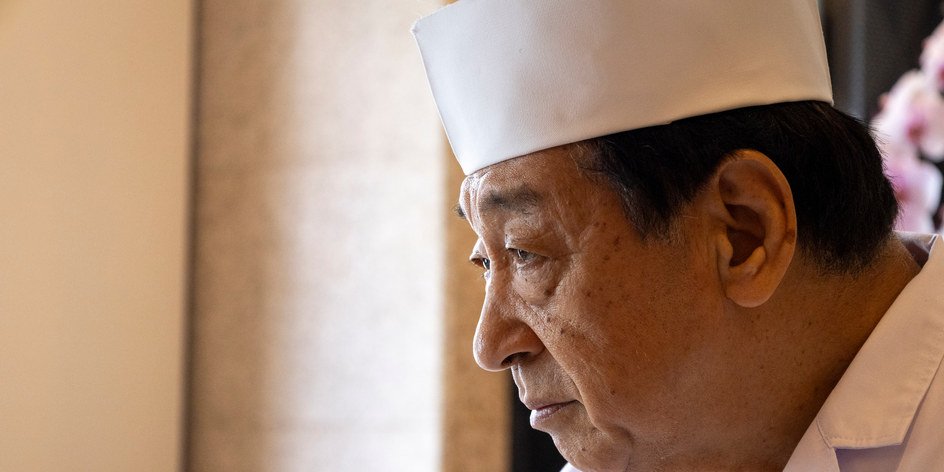
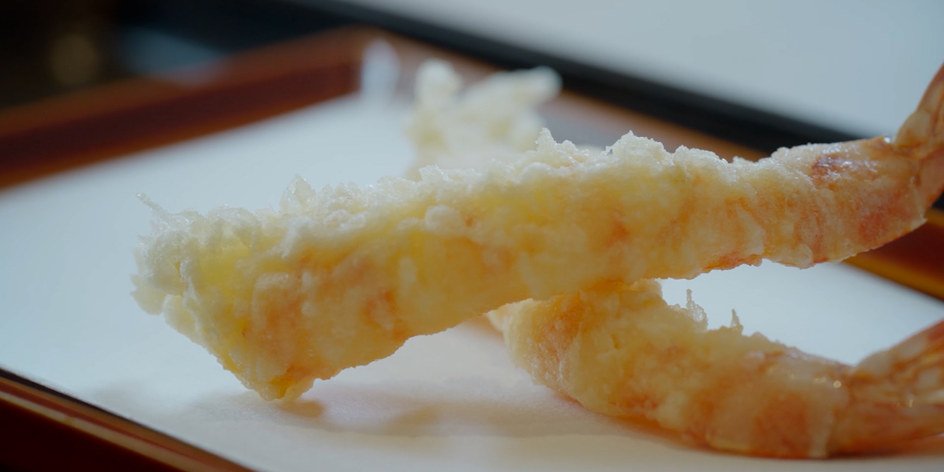
At today’s tempura restaurants, however, diners can expect seasonal vegetable dishes alongside seafood. The batter has also become thinner, allowing tempura to be enjoyed as part of a course that showcases the natural colors and flavors of the ingredients without being overpowered by their coating. This evolution of tempura is actually more recent than one might expect. In Tokyo, Fumio Kondo is among the chefs who helped drive this transformation during the latter half of the 20th century.
Kondo san was born in the difficult, post-war era of 1947. At the age of 18 he joined the prestigious Yamanoue Hotel in Tokyo’s central Chiyoda City, which was popular with celebrities and writers. Diligent and hardworking, Kondo san was promoted to head chef of the hotel’s “Tempura and Japanese Cuisine Yamanoue” division when he was just 23. But despite the impressive position, it was hardly a dream job.
“At the time,” said Kondo san, “the tempura division was struggling with poor sales and failing to turn a profit; within the company, it was viewed as a burden. So I resolved to focus entirely on tempura and transform it. I realized that no matter how high-quality the ingredients were, tempura with a thick batter was lacking in both aroma and visual appeal. I decided to switch to a thin batter that would allow the ingredient’s natural flavors to shine through, and to also incorporate a wide variety of seasonal vegetables.”
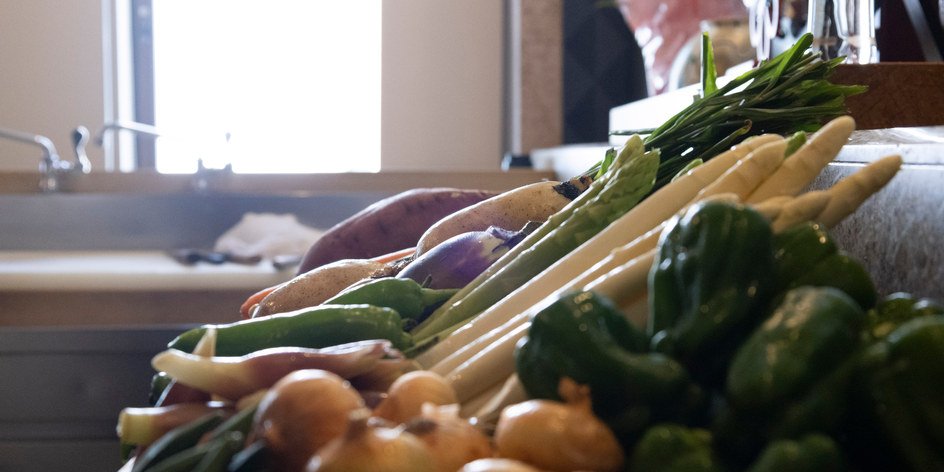
The catalyst for this was fresh green asparagus, which was still relatively uncommon in Japan in the early 1970s. Kondo san had recently tasted it for the first time, and immediately sensed it was well-suited for tempura. For him, its flavor resembled a wild mountain vegetable and he suspected a light, thin batter would nicely complement it, as well as other seasonal produce.
“The crisp ‘snap’ when you break asparagus by hand is a way to gauge its freshness and moisture content,” said Kondo san. “If it has lost its freshness, it goes limp and cannot be split this way. To truly understand the inherent flavors of these vegetables, I began by visiting growing regions on my days off to taste them raw, straight from the ground. Asparagus, in particular, is far more delicious immediately after being harvested. Factors like texture, crispness, the surrounding environment and its water - these are things you simply cannot understand without visiting the fields. Even now, I still make a point to visit farms, considering the best way to deep-fry the vegetables based on their specific environments."
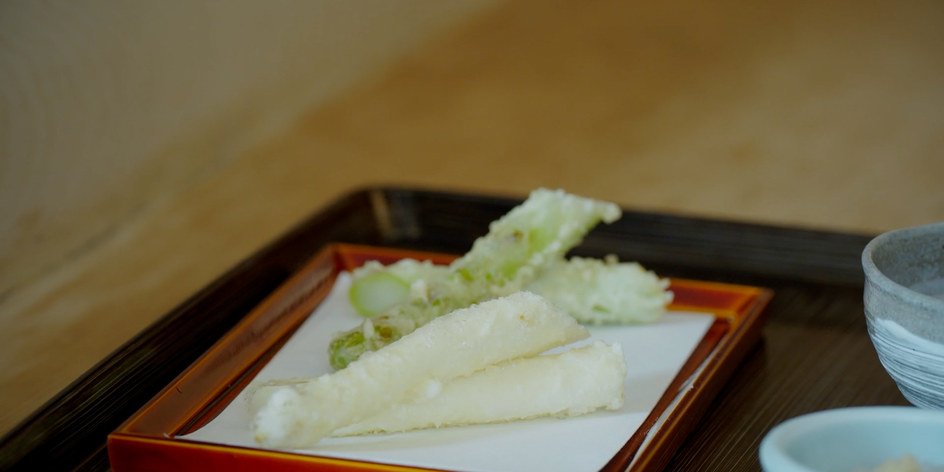
Kondo san’s approach helped redefine tempura. It was now no longer merely a deep-fried food, but a dish that was calibrated through a variety of techniques from careful heat control to batter application with the specific ingredients - seafood and produce alike - in mind. Prized ocean delicacies like kuruma prawns would now be served alongside a wide array of seasonal vegetables, like asparagus, broad beans, and bamboo shoots coated with a light batter designed to accentuate the natural flavors of each ingredient. Over two decades, Kondo san’s style of tempura garnered acclaim, drawing a following throughout Japanese society.
Residual Heat Cooking and “Sweet Potato Tempura”
In 1991, Kondo san opened his own restaurant for the first time, “Tempura Kondo” in Ginza, where he continued his innovations around this signature Japanese cuisine. One of his foundational ideas is that while tempura is considered a deep-fried dish, it actually is just as much a steamed type of food. The seafood or produce, wrapped in a thin batter and immersed in hot oil, are effectively encased and then steamed by their own natural moisture. Even after being removed from the oil, they continue to cook via residual heat, bringing out their umami flavor profile.
Carefully calibrating the oil temperature, battering and residual heat lead to Tempura Kondo’s signature “Sweet Potato Tempura” dish, something that almost all customers are sure to order.
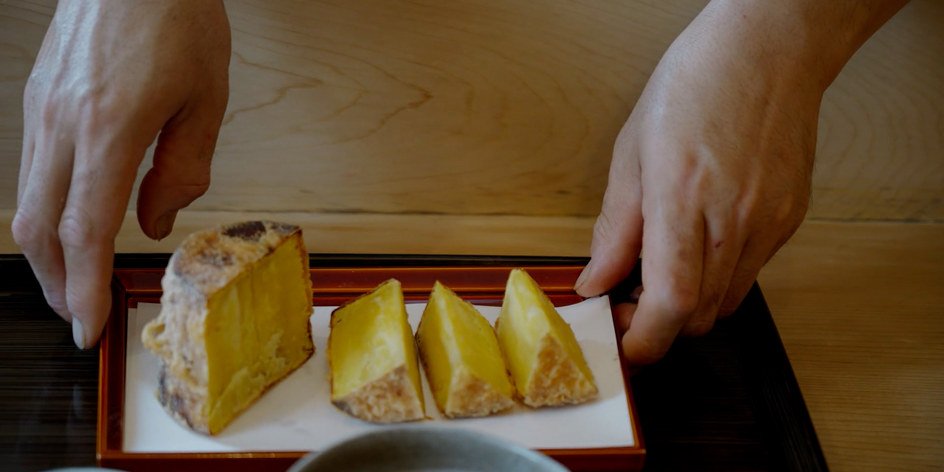
“I never considered sweet potato tempura delicious,” said Kondo san. “And so, I had never served it at my restaurant. But one day while eating a roasted sweet potato, I wondered, ‘If roasted sweet potatoes are this delicious, why is the tempura version so bad?’ So I decided, ‘Well then! I’ll make something that’s even better than a roasted sweet potato.’ What I came up with was frying the sweet potatoes whole for 30 minutes, then wrapping them in paper and letting the residual heat finish the job.”
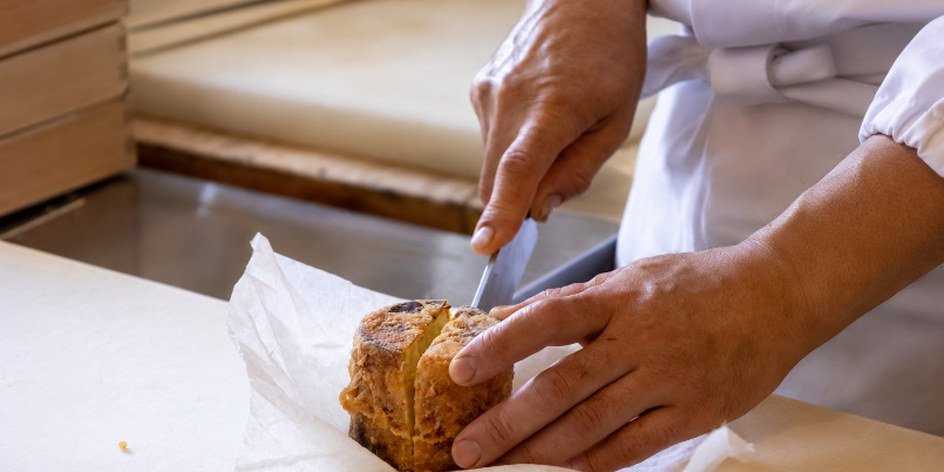
Developing the proper method came with several challenges. If you cook large, cylindrical sweet potatoes of about 7 to 10 cm until they’re perfectly done inside, the surface will be overcooked and lose its flavor. Kondo san eventually settled on frying the sweet potatoes in oil at 170°C for a half hour, then removing and immediately wrapping them in paper to allow slow steaming via residual heat. This technique ensures the heat penetrates all the way to the center of the sweet potatoes, creating a fluffy texture and a delicate, sweet aroma without charring the outside. This original method was a sharp break with convention as harnessing residual heat for cooking had
previously been considered taboo.
All-sense Frying
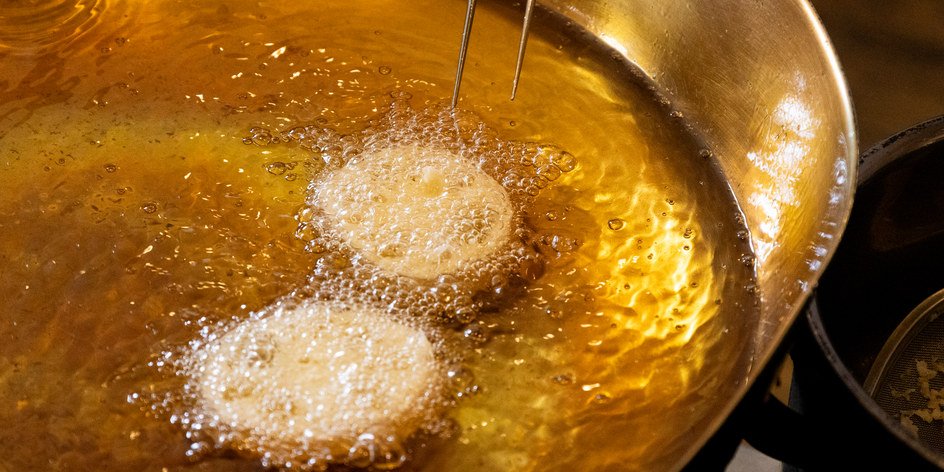
But simply immersing the ingredients for a determined length of time at a certain temperature won’t necessarily result in delicious tempura. The dish depends on the quality of the seasonal ingredients and on observing them throughout the cooking process via all senses. The sizzling, the aroma, the feel via cooking chopsticks and the look of the oil reacting with the batter guide Kondo san and other tempura masters’ precise decisions around timing and heat. And like an expert steak chef will not cut a roasting piece of beef to check how well-done it is, a proper tempura chef would never pierce the frying seafood or produce with a skewer to determine if it is done. In an inverse of letting juice escape from a cooking steak, piercing tempura allows oil to seep past the batter barrier, rendering the dish greasy.
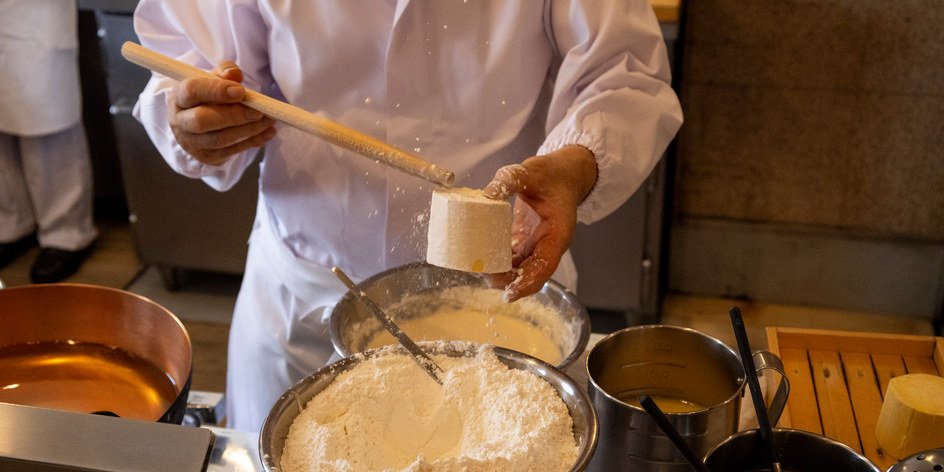
“How you coat the ingredients is also crucial,” said Kondo san, pointing out that it’s no good if the batter falls apart. “You have to cover them properly with flour and shake off any excess. That ensures the batter adheres well, creating air pockets between the batter and the flour. The moisture naturally present in the ingredients is released into these air pockets and held in place by the batter.”
Kondo san also turned his innovation to carrot tempura to address the smell and texture complaints from the many people who dislike the vegetable. Through trial and error, he settled on slicing them extremely thinly before frying.
“When vegetables are cut, their chemical composition changes as a self-defense mechanism,” said Kondo san. “So, we can harness that power to bring out their umami. Carrots, in particular, have the characteristic of becoming sweeter when cut into very small pieces.”
The moment the mass of battered, thin slices hits the hot oil, they fan out across the pan in a brilliant burst - a sight that some customers have compared to fireworks. The oil temperature at the moment of entry is crucial; if it is too high or too low, the ideal texture cannot be achieved.
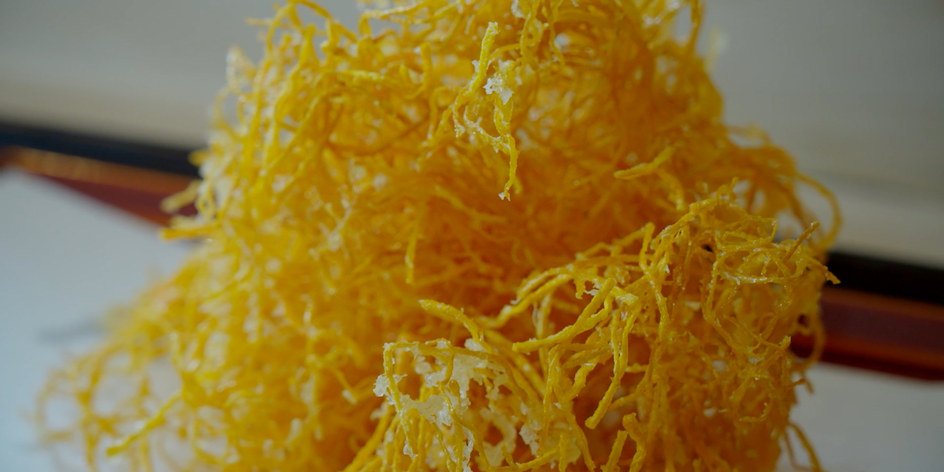
Kondo san added that the idea of slicing carrots extremely thinly was inspired by the confectionery work he did during his time at Yamanoue Hotel. “Without a clear vision, it is impossible to make high-quality food. Imagining the joy on my guests’ faces is what drives me to create better dishes.”
In keeping with Japan’s strong ‘waste not, want not’ tradition of “mottainai”, the vegetable trimmings aren't discarded either.
"Since we charge for our cuisine, we must remove any parts that aren't especially delicious,” said Kondo san. "Customers pay for carefully curated ingredients, so it is our job to provide the very best. Of course, we make sure to use the remaining parts for our own staff meals."
The restaurant’s commitment to organic vegetables also stems from the belief that it is the chef’s responsibility to ensure the diners’ safety and peace of mind, and Kondo san’s trips to the agricultural areas from which Kondo Tempura sources sometimes go even deeper than an understanding of the soil and water. For example, the restaurant contracts directly with farmers who grow bamboo shoots in Kyoto’s nutrient-rich fields, also called “Kyoto red soil.”
Running a Restaurant in Ginza
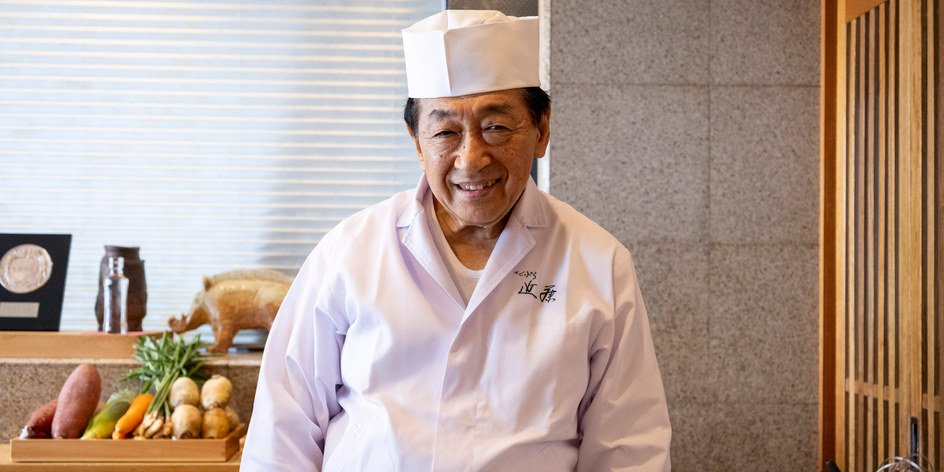
Tempura Kondo’s innovation is very much at home in Ginza, one of Tokyo’s well-known dining districts, attracting chefs and diners from across Japan and around the world. Kondo san’s over 60 years of experience has led him to believe that tempura is a cuisine in which the chef’s open preparation and cooking creates a sort of invitation for guests. As such, he still stands behind the counter day and night, frying (or steaming as he might say) tempura. Often, he conducts preliminary consultations to understand each guest’s dietary preferences and restrictions and adapts, such as providing a seafood-free course for vegetarians.
Today, as they have for 35 years, guests from all over the world gather at the counter around Kondo san. They watch intently as he silently prepares and fries tempura before placing it before them. And whether they know it or are blissfully unaware, when they dig in they are participating in the evolution of this cuisine. A traditional Tokyo meal that like the city itself, has diversified and grown in complexity over time.
Tokyo offers many other cuisines and a rich food culture — please explore them with GO TOKYO Gourmet.
Tempura Kondo
Fumio Kondo
Born in Tokyo in 1947. At age 18, he joined the “Yamanoue Hotel” in the capital’s Chiyoda City. At age 23, he became head chef at the hotel’s “Tempura and Japanese Cuisine Yamanoue” division, where he honed his skills for the next two decades. In 1991, he struck out on his own and opened “Tempura Kondo” in Ginza. With 60 years of experience as a master craftsman, he continues to lead the tempura world with innovative ideas and is dedicated to nurturing the next generation of chefs. Guided by his belief that “tempura is a dish through which the chef invites the guest,” he stands behind the counter day and night. In 2019, he became the first tempura chef to be awarded the title of “Contemporary Master Craftsman.”
Address
9th Floor, Sakaguchi Building, 5-5-13 Ginza, Chuo City, Tokyo
https://tempura-kondo.com/en/
To learn more about
you can press “copy” and paste on search engine