
Tokyo Station: The Gateway to “Ekiben” Culture


As the central hub for Japan’s capital, Tokyo Station serves as a gateway to the rest of the country and, for many, an introduction to Japan itself. Its massive terminal handles various Shinkansen bullet train routes, as well as JR East commuter and limited-express services and the Tokyo Metro Marunouchi subway line, all linked by a labyrinth of concourses, underground passageways and shopping centers. And in many of Tokyo Station’s stores, a special kind of Japanese bento, or lunchbox, is waiting for busy travelers.
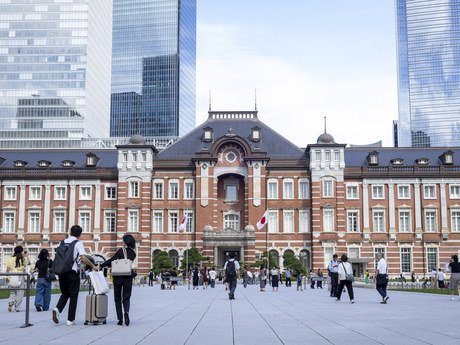
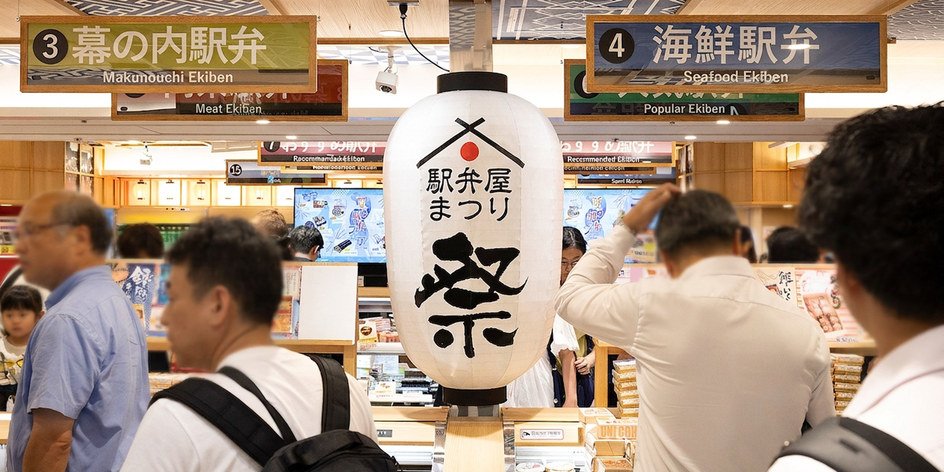
This is the ekiben, a particular kind of meal made for consumption on a train, whose name is an amalgamation of the aforementioned “bento” and “eki,” the Japanese word for station. And just inside Tokyo Station’s historic, brick-architecture Marunouchi Entrance is the “Ekibenya Matsuri Gransta Tokyo” store, also referred to as Ekibenya Matsuri, on the first floor inside the ticket gates. Ekibenya Matsuri stocks a particularly wide selection of ekiben and opens at 5:30 a.m. every morning to welcome passengers taking the first 6:00 a.m. Shinkansen trains.
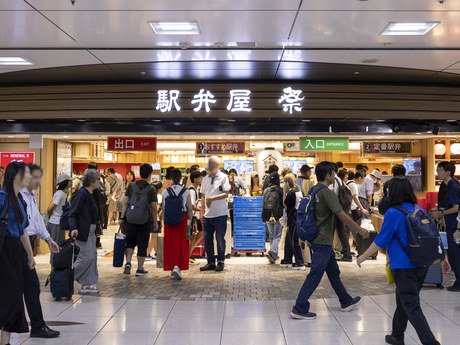
Ekibenya Matsuri offers approximately 150 varieties of ekiben, representing different Japanese regional cuisines. Even upon opening at dawn, about 70 percent of the selection is available. To consistently provide such options, ekiben arrive at the station in a variety of ways: by truck before dawn from factories in the Tokyo metropolitan area, by courier from more distant regions, and even in spare space on Shinkansen trains. The result is a line-up you will not find in the regions themselves. An ekiben from Toyama or Tottori normally means traveling to Toyama or Tottori; here they sit side by side on the same shelf, because Tokyo Station is where the trains for the whole country begin and end.
Tokyo Station, of course, has plenty of convenience stores selling onigiri rice balls or regular bentos that can satisfy hunger while in transit, but what stores like Ekibenya Matsuri offer is a fun shopping experience that allows customers to pick a meal to complement their upcoming trip. Selecting and enjoying an ekiben, in other words, is not merely a takeout meal experience. It is a unique part of Japanese train and food culture.
Wait for the reveal: The visual art of ekiben
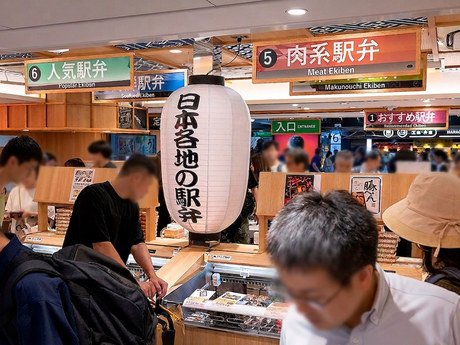
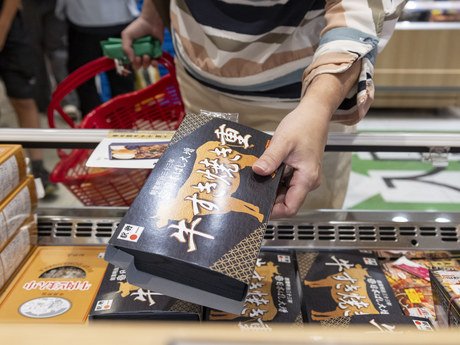
Ekibenya Matsuri is divided into several different sections with particular types of ekiben, clearly demarcated in Japanese and English, with the area at the store’s center near the entrance displaying a selection of frequently chosen ekiben. You may notice here a key difference between ekiben and most of the bento boxes sold at convenience stores or food halls: ekiben boxes are wrapped in decorative paper, making it impossible to see the meal you are purchasing.
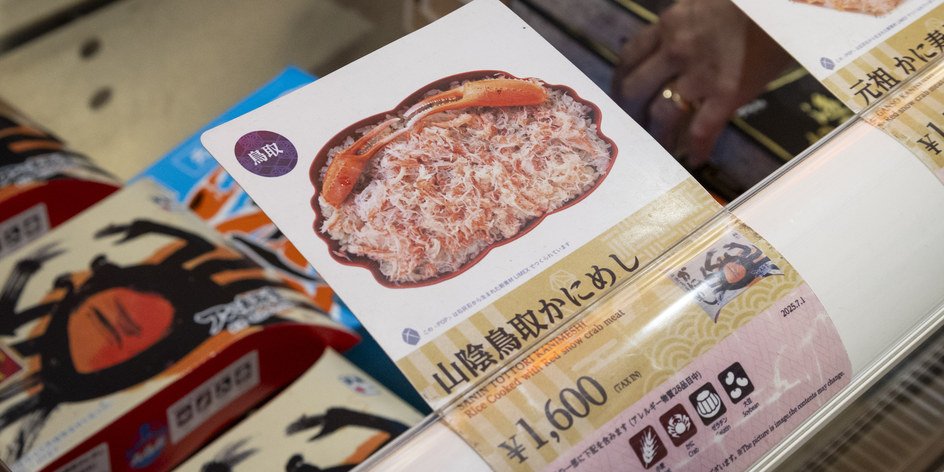
People choosing an ekiben are usually in a hurry, so it would be more practical to see the contents, just as you can with a convenience store bento. The paper is used anyway, and for a reason. “There’s a cultural tradition that part of the fun of an ekiben is imagining what’s inside and feeling anticipation as you open the lid,” explained Hiroshi Torikai of the bento division of JR East Cross Station, the JR East group company that operates Ekibenya Matsuri. Even so, photos are displayed at the sales counter for customers who find it difficult to choose without seeing the meal.
Far from being merely utilitarian, the paper draped over ekiben, called kakegami, is an art form unto itself. In addition to menu descriptions, kakegami may display illustrations of famous places and historic sites, or contemporary characters from popular culture. Some ekiben producers change kakegami designs regularly, whereas other designs have remained unchanged for decades. An extension of Japan’s long tradition of illustration, from woodblock prints to modern animated films, kakegami is often collected by foreigners and Japanese alike, with some wrappings dating back more than a century preserved in museums or other institutions.
Kakegami is typically wrapped tightly around its ekiben and affixed with a minimal amount of adhesive, somewhat reminiscent of a properly fitted kimono. As such, it is relatively easy to remove without tearing if you want to save yours as a memento.
Your mobile meal
Unlike most bento for which you must make sure to grab utensils, an ekiben has everything you need inside. Once you have removed the kakegami, you will find chopsticks and/or a spoon, depending on the type of meal, and a wet tissue for wiping your hands before or after, all packed into the box.
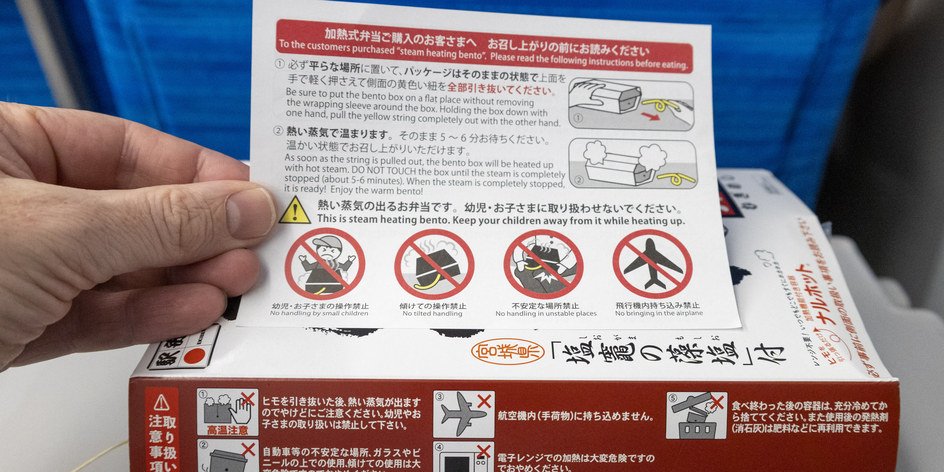
Since the late 1980s, certain ekiben have even contained a self-heating mechanism, activated by a pull string which releases water into calcium oxide inside special packets lining the bottom of the container. These types of ekiben contain instruction sheets — typically in English as well as Japanese — that also let you know how long to wait after activation so your meal can heat properly. But keep in mind that self-heating ekiben are not permitted on airplanes.
While ekiben are informal and there are no rules regarding how to consume one, Japanese passengers tend to get settled into their seats and wait for the train to depart before digging in. The one accompanying item to purchase is a drink, usually available at the shop in which you choose the ekiben or via station platform vending machines. Many Japanese view train trips as an appropriate time to take a break, and consumption of beer and other adult beverages alongside ekiben is a common indulgence.
Local specialties & regional cuisine
As ekiben culture spread across Japan following the expansion of the country’s rail services, the cuisines of various regions began to be reflected in their ekiben menus, containers and kakegami. Today, many of the ekiben available on store shelves showcase the specialties and regional dishes of Tokyo and other parts of Japan. The origins of these meals speak to Japanese history and customs, providing a delicious way to further understand the country.
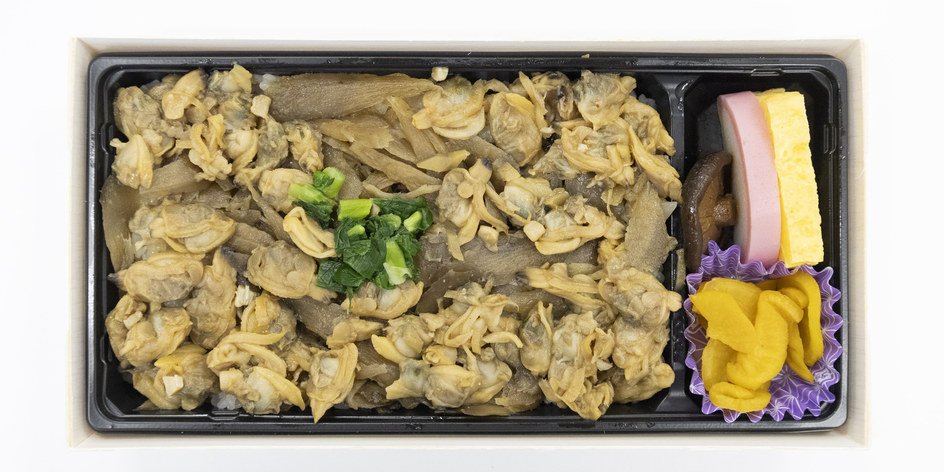
Tokyo’s own cooking is part of that line-up. For example, a “Fukagawa Meshi” ekiben consists of a serving of Fukagawa-ni — a Tokyo regional dish of clams simmered in sweet miso and ginger — served over a bed of rice. The kakegami explains the dish’s origins, stating, “During the Edo period [lasting for about 260 years from 1603], … Fukagawa Meshi was devised so that fishermen could eat quickly between busy spells of fishing.”
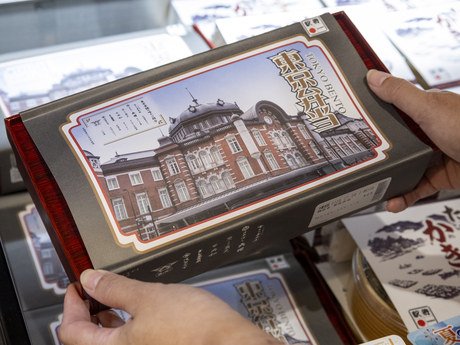
The “Tokyo Bento,” which features an iconic photo of the aforementioned Marunouchi Entrance to Tokyo Station, is a collection of flavors from seven of the city’s long-established restaurants — among them Asakusa Imahan, Uokyu, Shimbashi Tamakiya and Funawa — giving travelers a chance to sample the unique delicacies of the metropolis.
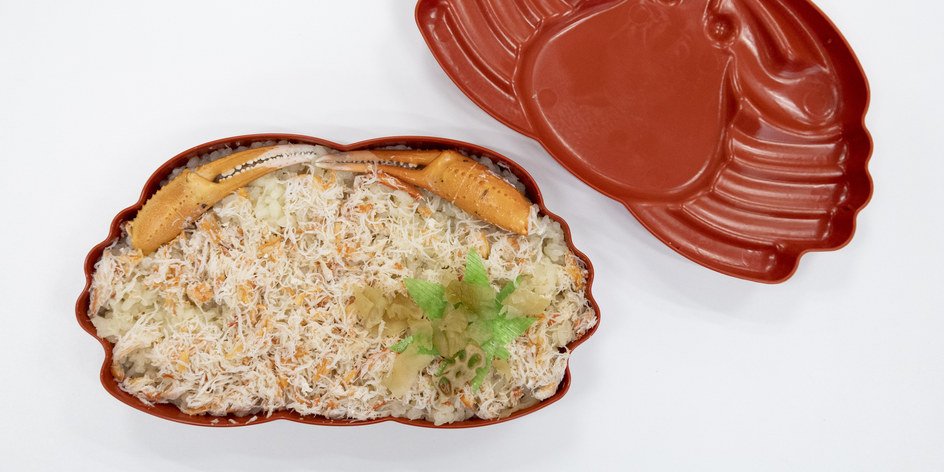
Sometimes, the regional representation comes through in the ekiben’s shape, such as the “San’in Tottori Kani-meshi,” which features a crab dish from Tottori Prefecture in an eye-catching, crab-shaped container. This particular ekiben was developed by the Abe Tottori-do company, founded in 1910, which drew inspiration from zugani-meshi, a local dish made with river crab. Furthermore, the roots of Toyama Prefecture’s “Masu-no-Sushi” — a pressed sushi made with cherry salmon and rice wrapped in bamboo grass — are said to lie in the ayu (a type of river fish common in Japan) sushi that local Edo period samurai would present to their lords. It is reported that Masu-no-Sushi was already being sold as an ekiben as early as 1912, one of the many ekiben varieties with histories spanning over 100 years. Neither prefecture is anywhere near Tokyo, which is part of what makes finding them on the same shelf worth the browsing time.
Ekiben: What has changed and what remains the same
So, when did the tradition of Japanese ekiben begin?
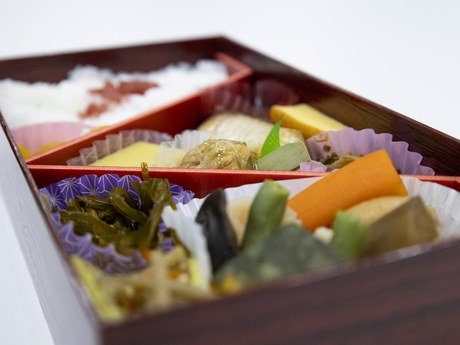
There isn’t agreement about when the first “ekiben” became available, but there are various theories, including one which asserts that the first ekiben was sold at Tochigi Prefecture’s Utsunomiya Station in 1885, supposedly containing rice balls and pickled daikon radish wrapped in a bamboo sheath. In 1889, a two-tiered makunouchi bento (a still-popular type containing rice with small samples of fish, meat, pickles, eggs and vegetables) was sold as an ekiben at Himeji Station in Hyogo Prefecture. It is said that the use of wrapping paper over its thin wooden folding box marked the beginning of kakegami, ekiben wrapping paper.
While the kakegami and many of the delicacies in ekiben persist, where and how they have been sold and to whom has changed quite significantly over a more than 140-year history. Tokyo Station itself is younger than the ekiben — it opened in 1914, nearly three decades after those first lunchboxes at Utsunomiya — but as the rail network grew around it, it became the place where the ekiben of the whole country converge.
Ekiben were first mostly hawked by vendors standing on station platforms, who hung a wooden crate or basket full of the lunchboxes from their necks on a strap. They would then peddle their product up and down the boarding area, calling out, “Bento! Bento!” Passengers would open the windows of their idling trains and purchase their meals, like an early, rail-based drive-through system. This vending style seems to have continued into the 1960s.
But it was during this decade of fast modernization that steam locomotives began to be replaced with electric and diesel trains, shortening stopping times. The spread of air-conditioning on limited-express trains led to windows that couldn’t be opened, further limiting these kinds of transactions. Ekiben sales shifted to kiosks on the platforms or inside the station, as well as onboard the trains themselves. The sight of salespeople pushing carts through Shinkansen carriages, calling out, “How about a bento box and tea, a sandwich and coffee, or some cold ice cream?” became one of the iconic scenes of rail travel from the late 1960s through the early 2000s.
But such scenes gradually became less common in the new century, and since 2019, opportunities to buy ekiben on board trains have become almost nonexistent. This is because more passengers have opted to purchase their meals and drinks at convenience stores or station kiosks ahead of bringing them on board, leading to a significant drop in onboard sales that led to most train lines abandoning this type of service.
While there is a good degree of nostalgia for the iconic, on-board sales, the popularity of ekiben has merely shifted, not disappeared. The emergence of large-scale specialty shops like Ekibenya Matsuri has made it possible to choose from a wider variety of ekiben than was ever available at one location, a pleasure that has captured Japanese people and foreign tourists alike. And since it is now possible to buy various ekiben at any time inside the station gates, “we’re seeing commuters - not just tourists - buying ekiben as part of their daily lunch routine, such as businesspeople purchasing several of the same ekiben at once,” said Torikai.
Which ekiben is right for you?
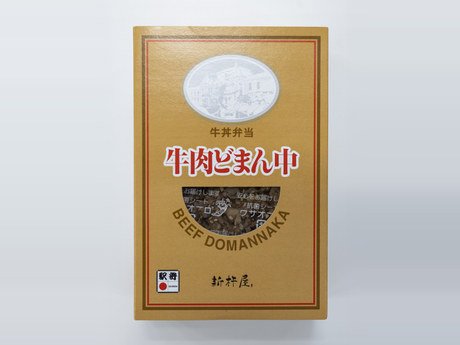
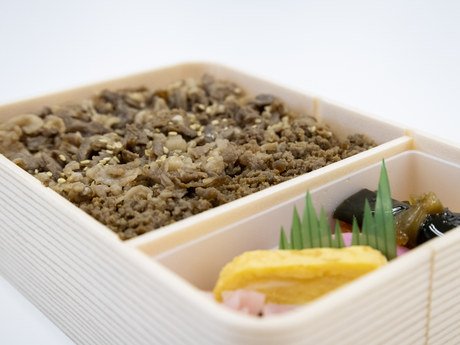
The range is easiest to see through a few examples. One ekiben often chosen at Ekibenya Matsuri, according to Torikai, is “Gyuniku Domannaka,” which layers sweet-and-savory simmered beef and seasoned ground beef over a bed of rice. It was introduced in 1993 by the third-generation owner of Shinkineya, a long-established ekiben maker at Yonezawa Station in Yamagata Prefecture. Word of it spread among businesspeople using the Shinkansen, and it is now sold and known across the country.
Another long-running ekiben is the “Chicken Bento,” which debuted in 1964 to coincide with the opening of the Tokaido Shinkansen, Japan’s first bullet train line. This long-seller is a combination of tomato-flavored rice, scrambled eggs, fried chicken and salad, complete with packaging whose colors and design are reminiscent of a child’s lunch box.
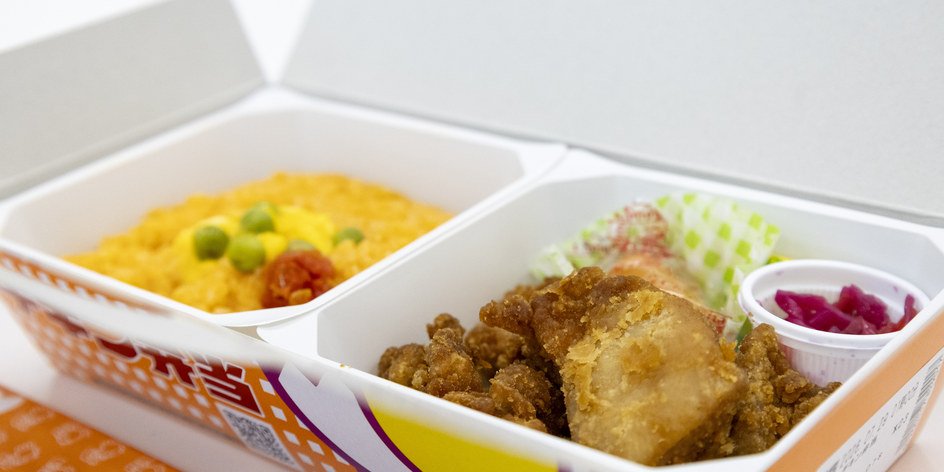
There are countless other appealing ekiben — too many to list here — that have risen to fame for a variety of reasons. Sometimes, it is scarcity, such as “Nori Noriben” from Koriyama in Fukushima Prefecture, a seaweed-topped rice meal that is known among ekiben aficionados for being hard to come by. On the other hand, “Engawa Oshi-zushi” from Niigata City, pressed sushi made with engawa, the fatty muscle along the fin of a flatfish, has drawn wide attention through social media.
And then there is the influence of foreign tourists, many of whom are discovering the unique culture of ekiben due to their deep interest in all things Japanese. It appears that the popularity of ekiben among visitors to Japan has increased from around 2023. The ekiben industry has responded in kind, with Ekibenya Matsuri displaying allergy information as pictograms at its sales counters. Torikai also notes that some ekiben carry scannable codes on the kakegami that link to a multilingual page listing the ingredients.
The word “bento” is now commonly found in English dictionaries, a testament to how Japanese concepts are spreading worldwide. The specific “ekiben” is a category particularly worth noting for its history and mobile manner of consumption. You can take one aboard a Shinkansen or limited-express train to experience it the traditional way, or bring it back to your hotel with a cup of hot tea, or enjoy it in a park with friends. Given Japan’s long culinary history, ekiben is a rather new type of cuisine that nevertheless is deeply tied to Japanese culture. And the easiest place to begin is Tokyo Station, where the ekiben of the whole country are gathered under one roof, open every day of the year from 5:30 a.m. to 10 p.m. If Tokyo is on your itinerary, set aside a little extra time inside the gates — you are sure to find several you want to try.
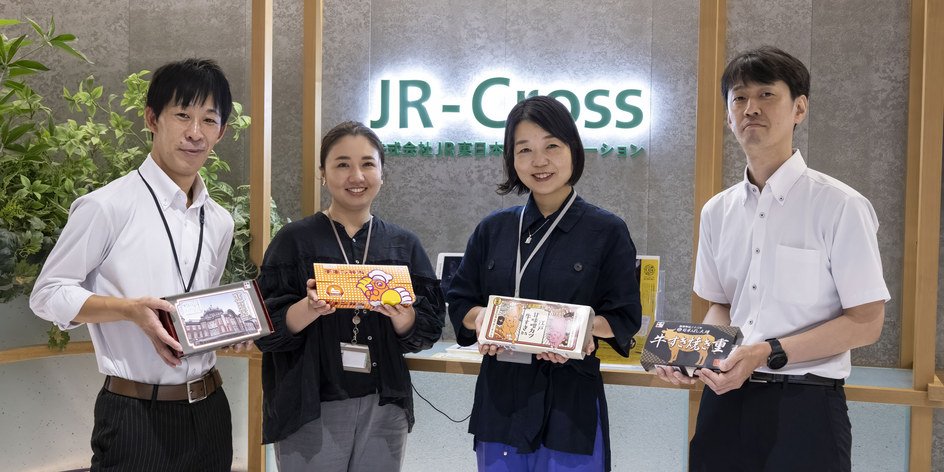
Staff of the bento division of JR East Cross Station pose with ekiben at their office in Shinjuku, Tokyo.
Tokyo offers many other cuisines and a rich food culture — please explore them with GO TOKYO Gourmet.
To learn more about
you can press “copy” and paste on search engine