
Responsible Tourism in Tokyo: A Guide


As Tokyo’s popularity as an international destination has grown in recent years, the impact on its dining scene has been palpable. Much of this is welcome as an influx of visitors from around the world is being introduced to the city’s diverse cuisine while supporting its restaurant industry.
But Tokyo is nothing if not a punctual metropolis, and by knowing a bit about the city’s schedule, its unspoken customs and even the accessible infrastructure for luggage that most foreigners are unaware of, guests can both enhance their own experiences and make things easier for the restaurants that host them. And in the tradition of a culture that loves to adopt concepts and then forge them into something distinctly Japanese, a new word has emerged for responsible tourism among guests. This is “touristship,” an amalgamation of tourism and citizenship. And under this mindset of travel in which guests form equal partnerships with local communities, visitors - the vast majority of whom want to leave a good impression - have a unique opportunity to become ambassadors for their homelands, showing the best side of their cultures to the hardworking people who keep Tokyo afloat.
The term touristship was coined by the CEO and founder of the eponymous Touristship General Incorporated Association (Touristship), which works with over 20 public and private tourism, accommodation and commerce organizations across Japan. Touristship serves as a kind of bridge between Japanese restaurants, shops and services and foreign guests, simultaneously collecting information and disseminating behavioral tips that foster harmonious interactions. In Tokyo, the learnings typically revolve around space, timing and expectations.
Understanding Tokyo Spacetime
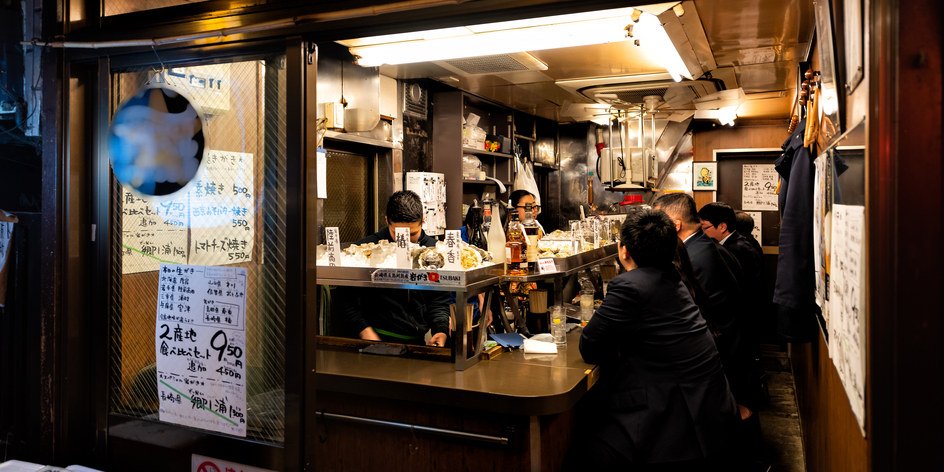
Most restaurants are small businesses that purchase ingredients daily according to the number of bookings or expected guest levels. Even more so than densely-populated international cities like New York, Paris or Beijing, Tokyo establishments have limited space. This is part of the charm of the city’s eateries, as it is fun to observe the ingenious utilitarian storage solutions at different spots, ranging from in-table compartments for utensils to mini pantries nestled under stairwells. But creative uses of space aside, the city can only function as it does due to schedules and punctuality. A no-show, even for a busy restaurant with plenty of business, has an outsized impact due to purchases and preparations that were surely put in motion with just that particular party in mind. And even if the meal was paid for ahead of time and the absence won’t affect the establishment’s bottom line, the strong Japanese culture of waste aversion, or “mottainai” will leave the chef and staff with a deflated feeling.
While most visitors to Tokyo will understand that a no-show or last-minute cancellation should be avoided, punctuality is a bit more difficult, explained Nanami Haruta, Touristship’s community partnership manager.
“There are some cultures where they think, ‘It’s okay to be 15 to 30 minutes late,’ but this isn’t normal in Japan,” said Haruta.

In America and Europe, for example, being a bit late to social engagements is often considered polite, so as not to pressure your hosts. But in Tokyo - where “on time” for a business meeting actually means about five minutes early, and trains almost always leave right on schedule - punctuality is highly valued. Many of the city’s restaurants are also nestled on quiet backstreets and can be difficult to find, even with a mobile phone and a map app, so it is a good idea to always build in some extra time.
But sometimes, life happens. If you know you will be late for a reservation, or if your party size changes unexpectedly, the best thing is to inform the restaurant as quickly as possible. If this can’t be done online and there is a language barrier, it might be a nice idea to ask your hotel’s front desk for assistance. Touristship is essentially practicing thoughtful communication.
Tokyo’s punctuality extends to its office worker lunchtimes, with the peak period running from around noon to 1 p.m. One easy way to practice touristship is simply to shift your lunch a little earlier or later than this busy window. As a traveler, you probably want to take a more leisurely meal than a salaried worker on a timeframe and arriving at a quieter hour makes for a better experience for your hosts as well, and may give you both more opportunity to interact. Dinner tends to be busiest from around 6 to 8 p.m., so shifting your evening meal a little earlier or later is also a nice idea.
Wisdom through Observation
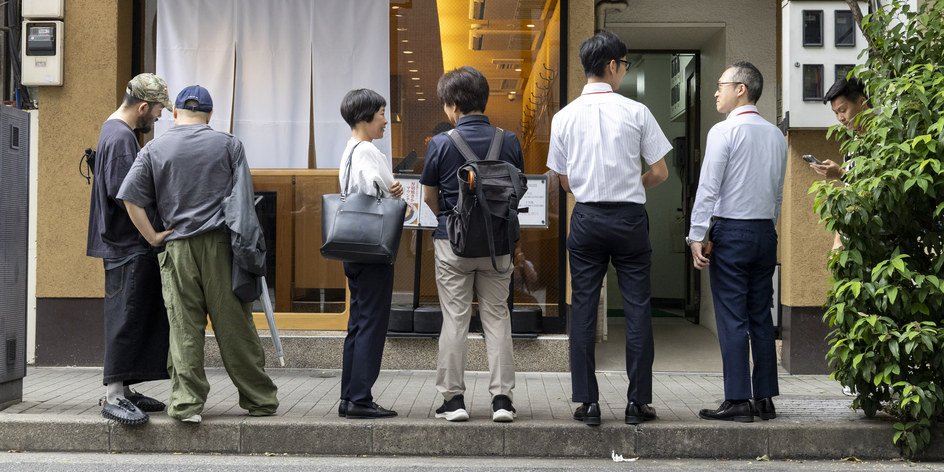
Another consideration is the nature of the eatery you happen to be at, in terms of length of stay and customer makeup. As with so many things in Tokyo, locals follow unspoken customs that can be opaque to an outsider. But this can be solved with a little observation. For instance, in a busy ramen restaurant that has a line to enter, guests are expected to clear out as soon as they have finished their meals so the next party can be served. At popular spots or in crowded areas, parties are generally expected to clear out after an hour and a half to two hours. That is plenty of time to relax and enjoy a meal, though it may feel short to anyone used to lingering over a table.
Restaurants and coffee shops also have unspoken customs regarding orders. At an eatery, each guest is expected to order a meal, so, for instance, three visitors sharing a bowl of ramen “just to try it,” is not a good look. And at a coffee shop, each guest is expected to have at least one beverage. At an izakaya, meanwhile, each guest is usually served a small dish called otoshi, which is added to the bill automatically - think of it as something closer to a table charge than an unexpected extra. These expectations are, again, based upon limited space and time.
And then there are the Japanese guests themselves. Just about any restaurant in Tokyo owes much of its business to longstanding local regulars. Central to the city’s culture, they often have particular places where they like to sit and regular times when they arrive. A fun thing to do is look for these people, who may be considered a type of “restaurant elder” and can be spotted by their demeanor and how the chef or staff interact more casually with them than other customers. In social situations, the Japanese call certain personalities that set the tone “mood makers,” and this is certainly true of restaurant regulars. A smile, a friendly nod, and asking where to sit if you are not guided to a seat upon entry (which can be accomplished through gestures) are fantastic ways to settle into the atmosphere of a restaurant.


Luggage & Lockers
Another space-related issue is guests entering confined Tokyo restaurants with bulky luggage. But much of this is simply due to visitors being unaware of the infrastructure that already exists to solve exactly this problem.
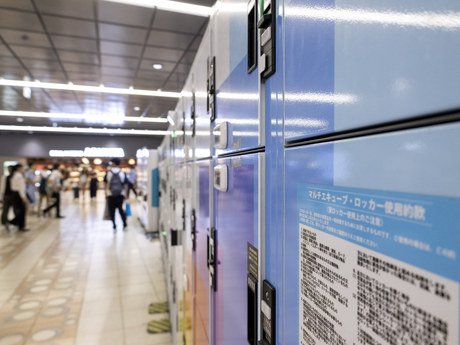
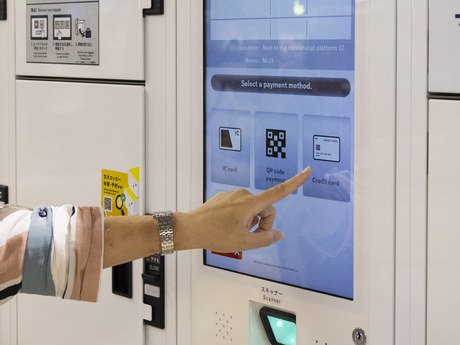
Storage lockers are widely available in Tokyo subway and train stations, in a range of sizes. Safe, clean and intuitive to use (typically via a touch-screen pictorial guide) they are a fantastic way to move about the city unobstructed.
But if not near a station, “there are even storage companies that specialize in serving international visitors,” said Haruta, citing several app-based private companies that let people reserve temporary storage at stores throughout the city. And virtually all of Tokyo’s famous “konbini” convenience stores, as well as the front desks of hotels, double as postal depots for luggage. A full-sized suitcase can be sent on to your next destination, be it another Tokyo hotel or an accommodation in another city. Reflective of Tokyo’s transportation infrastructure in general, these services are highly reliable and allow users to enjoy their train rides and restaurant visits hassle free - yet most visitors to Tokyo don’t know about them.
Become a Master Guest
Learning just a few Japanese phrases, such as arigato (thank you), oishii (delicious), itadakimasu (a respectful saying of gratitude before starting to eat) and gochisosama deshita (an expression of thanks after finishing) will be much appreciated by a restaurant’s staff. And while tipping is not a thing in Japan, a small gift - omiyage - is a lovely way to show appreciation if you feel inclined.
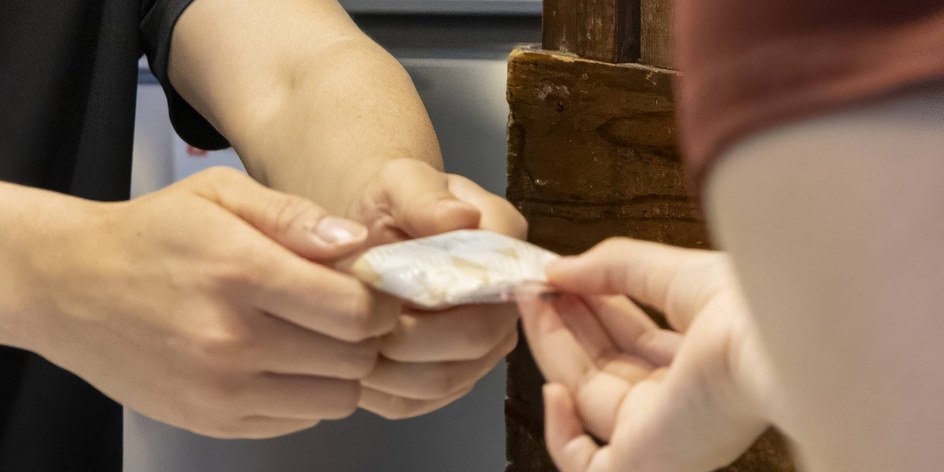
While not expected from visitors and by no means required to be a great guest, bestowing a small gift, like a single wrapped snack or treat, is a culturally appropriate way to show appreciation that is sure to be well received. Such morsels can be easily found in Tokyo’s major train stations, where specialty stores sell packs of individually wrapped cookies, snacks and sweets. Haruta described how a visitor from Sweden, at the end of a Touristship event, gave everyone a piece of Swedish candy as a thank you gift.
“I thought it was a wonderful way of showing appreciation,” said Haruta. “Although we don’t have a tipping culture in Japan, it was very special for everyone to receive a little gift from this person’s home country.”
At a basic level, all hospitality involves being attuned to the feelings of guests, and being a gracious visitor involves awareness of the host’s expectations. In Tokyo, however, sensitivity to others arguably takes on an even higher priority. The restaurant scene that keeps this enormous, dynamic city afloat rests on a shared understanding of space, timing and behavior that visitors - quite understandably - can find a bit confusing. But with a bit of forethought and planning, it is possible to become a positive ambassador for your country and culture, both blending into the life of Japan’s capital and enriching it with your presence. A little touristship goes a long way.
Nanami Haruta
Secretariat, Touristship General Incorporated Association
Director / Community Partnership Manager, Touristship Global Inc.
Born in Hokkaido. She first became involved in Touristship’s activities in 2020, while still a student at Kanagawa University. In 2024 she joined the Touristship General Incorporated Association as its first full-time employee. Based mainly in the Kanto region, she handles liaison with local governments and runs the association’s own events, including those at Sensoji Temple, while also speaking at lectures for nationally licensed tour guides and giving talks at universities.
To learn more about
you can press “copy” and paste on search engine