
The Essence of Edomae Sushi: The Craft Behind the Sophistication


Edo-style, or "Edomae," sushi is a culinary tradition that developed about more than about 200 years ago in the city of Edo — what is now Tokyo. Tied to the layout of the city itself, Edomae means “in front of Edo” and refers to Edo Bay (now Tokyo Bay), describing sushi made with the seafood caught there. During the Edo period, when there were no facilities for refrigerating or freezing raw fish, creative sushi combinations were born through the ingenuity of artisans whose innovations often flowed from the era’s limitations. It was during this time that the popular nigiri sushi type — bite-sized mounds of vinegared rice topped with seafood and other ingredients — developed the form we recognize today.
But rather than simply draping fresh fish onto rice, Edo-period cooks employed techniques such as curing the seafood with salt, vinegar, or kelp, and marinating it in soy sauce. And although sushi is often still thought of as a primarily fresh-fish-based cuisine, many types of still-popular nigiri use aged and matured seafood prepared through methods developed hundreds of years ago. These techniques not only brought out the umami of the seafood — a deep, rich flavor associated with Japanese cuisine — but also served as essential means of preservation. A deep dive into Edomae sushi often challenges assumptions about Japan’s most recognizable cuisine, whose development and artistry run much deeper than simply combining raw seafood and rice.
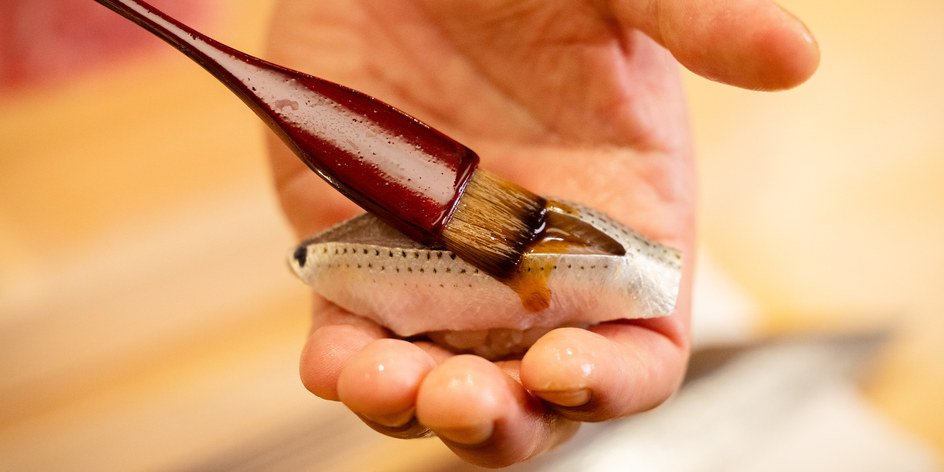
Nihonbashi, the setting for this story, has flourished as a hub of commerce, logistics, and entertainment since the Edo period. The neighborhood surrounds the eponymous 17th-century Nihonbashi bridge, which once had an adjacent fish market. Although the market has moved on, the area is still lined with nori (seaweed) and seafood wholesalers, as well as long-established sushi restaurants that preserve the atmosphere of an old downtown district. One such establishment, in the Nihonbashi Kakigaracho enclave, is Nihonbashi Kakigaracho Sugita (hereafter, Sugita), which specializes in traditional Edomae cuisine.
For chef Takaaki Sugita, Edomae carries a further meaning: an aesthetic encompassing meticulous craftsmanship and refined grace — from the preparation of ingredients to the final act of shaping each piece in front of guests, when the fish and other toppings are placed upon the rice and plated.
A good metaphor for this aesthetic can be found in the kimono of the Edo period. Although many may appear plain at first glance, closer inspection reveals beautiful small patterns, designs, or exquisite motifs along the lining. This understated, unflashy elegance is, to Sugita, the essence of Edomae’s iki, or spirit.
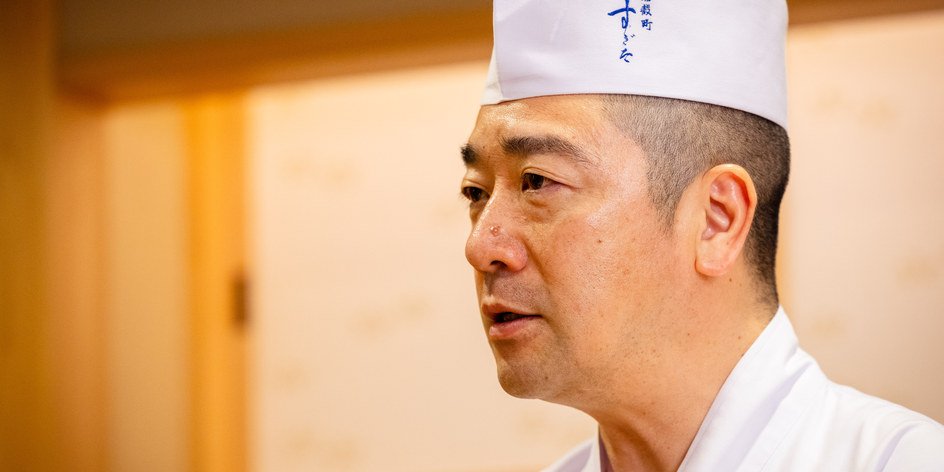
"With Edomae sushi, too, we don’t add any flashy decorations on top of the fish," said Sugita. "It’s usually straightforward — just the seafood and vinegared rice. And although we simply brush it with soy sauce, there is actually a great deal of work going on behind the scenes. I believe that’s where the aesthetic cherished by the people of Edo truly lies."
Sugita’s goal is to present guests with traditional, refined Edomae sushi born from the harmony of fine ingredients — prepared with meticulous Edo-style craftsmanship, down to the balanced vinegared rice — a creation perfected only after repeated trial and error.
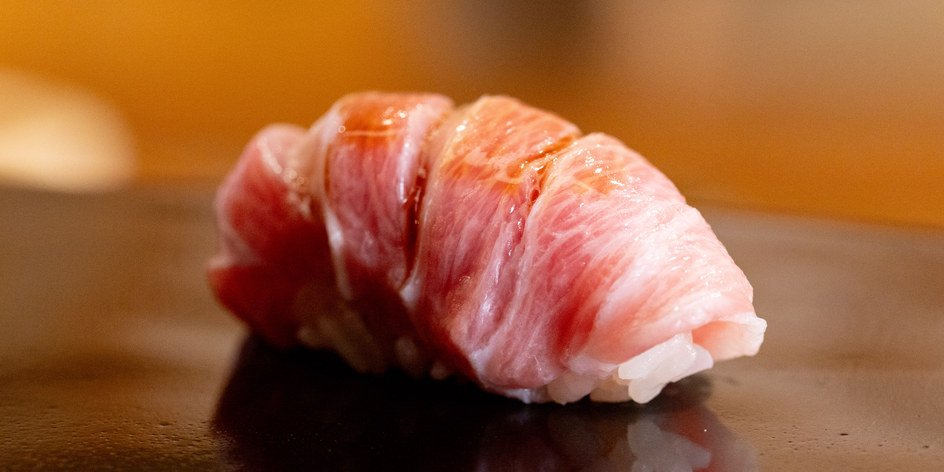
Edomae Cuisine and the Art of Kohada
A prime example of this behind-the-scenes preparation is kohada (gizzard shad), a silver-skinned fish indispensable to Edomae sushi. While kohada is not particularly tasty eaten plain, it is transformed through careful work: it is first salted to draw out any fishy odor and excess moisture, thereby concentrating its umami. It is then marinated in vinegar and left to rest, resulting in a delicate flavor with a deep, lingering aftertaste.
Because it embodies the essence of these traditional Edo-style techniques, kohada is emblematic of the "Sugita" style. At Sugita, it is always served first — the initial piece of nigiri that sets the tone for the rest of the meal.
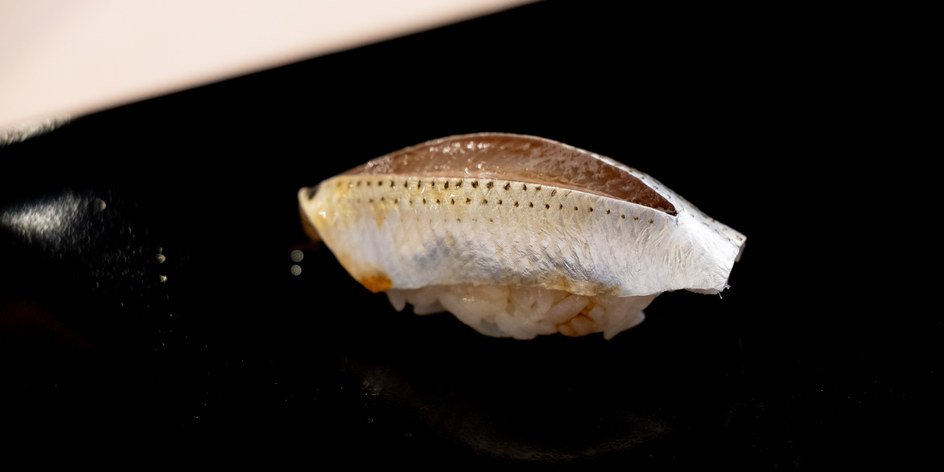
"Kohada is the epitome of Edomae sushi and a symbol of Edomae technique. It embodies all the fundamental skills of a sushi chef — filleting small fish, salting them, and letting them rest," said Sugita. "Since these are small fish handled almost exclusively by sushi restaurants, I believe we must cherish and preserve these techniques so they are never lost."
A Foundation of Rice
Though often overlooked, the vinegared rice that forms the basis of sushi is, to Sugita, just as important as the fish — and he devotes himself wholeheartedly to its preparation every day. The rice used at Sugita is primarily Koshihikari from Niigata Prefecture. But Sugita prefers aged Koshihikari to freshly harvested stock, sometimes even using rice that has been stored for six months to over a year.
The reason is that aged rice tends to absorb vinegar better and is less prone to stickiness, making it easier to craft into a firm, springy texture with well-defined contours. This deepens the harmony — in both taste and texture — with the toppings.
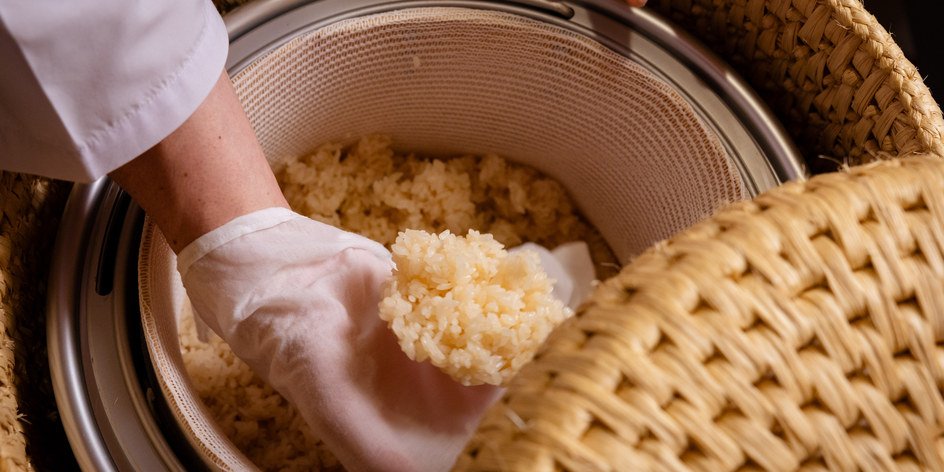
The selected rice is first rinsed carefully, then soaked for an extended time at a low temperature before being cooked in a traditional hagama, a wide-rimmed pot long used for rice in Japan. Throughout the cooking, the heat is meticulously monitored and adjusted to prevent excessive starch release and to achieve the desired texture. This is a multi-sensory exercise: listening intently to the rising steam for the slightest change in sound, and assessing the aroma throughout the process.
The result is an ideal sushi rice that is neither too sticky nor too hard, with a firm texture that extends to the surface of each grain. Sugita considers the rice the most critical element in determining the final flavor and mouthfeel of the sushi.
"Many people think of sushi as a dish designed to make the fish taste good, but it’s not that simple," said Sugita. "If the goal were simply to bring out a good flavor in the fish, that could be achieved in Japanese, French, or Italian cuisine. Preparing fish for sushi isn’t just about making the fish taste good on its own; the fundamental premise is that it will be eaten together with vinegared rice. It’s a method of preparation specific to sushi, focused on how well the seafood complements its counterpart."
According to Sugita, Edomae sushi is not "a dish that brings out the flavor of the fish on its own," but rather "a dish that is complete only when it becomes one with the vinegared rice." For this reason, Sugita regards the preparation that takes place beforehand as the most important part of Edomae sushi. The nigiri performed in front of the customer — when the fish and other toppings are deftly added to the shaped portions of rice — is of course also important, but only as the final touch. By that point, the primary work that determines the success of the sushi has already been done.
Toyosu— The Market Behind the Counter
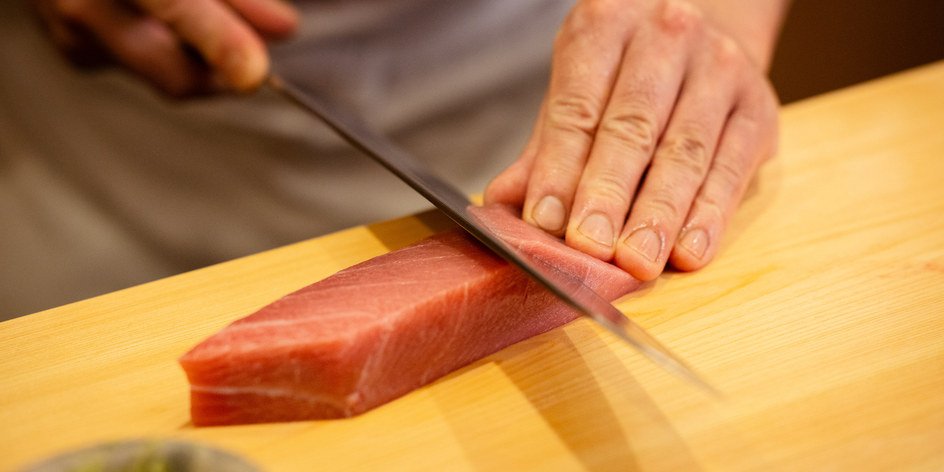
Today, the sushi at Sugita is supported by the Toyosu Fish Market, located just a short distance from the restaurant. As one of the world’s largest seafood markets, Toyosu handles an overwhelming variety and volume of seafood shipped in from fishing grounds across Japan, and is a hub for top-tier professionals with a keen eye for quality. Every morning, Sugita visits Toyosu in person — just as generations of Nihonbashi sushi masters before him made their daily pilgrimage to the market.
"What’s amazing about Toyosu is that expert middlemen carefully select, from that overwhelming volume of fish, the ones suited to each individual restaurant," explained Sugita. "Overflowing with all kinds of information, Toyosu brims with vitality — early in the morning, it’s probably one of the liveliest places in Tokyo. Of course I go there to procure fish, but another reason is that it gives me a great deal of energy. The middlemen who handle seafood from all over the country know about fish we’ve never even heard of. So, for example, even when rough waters on the Sea of Japan mean nothing is being caught there, they’ll tell me, ‘There’s a similar kind of fish from the Pacific that’s really delicious.’ Their range of options is astonishing."
A Sushi Chef, in This Life or the Next
Somewhat surprisingly, Sugita said that his inspiration to pursue a sushi career was a TV drama he watched in middle school. This miniseries was set in a traditional downtown neighborhood and featured a sushi chef as its protagonist. The chef’s coolness through the ups and downs of his restaurant made Sugita want to become a sushi master himself.
"Having devoted myself entirely to sushi since I was 16," said Sugita, laughing, "I feel I’m now a sushi chef through and through. Even if I were reborn two or three times, I’d still become a sushi chef."
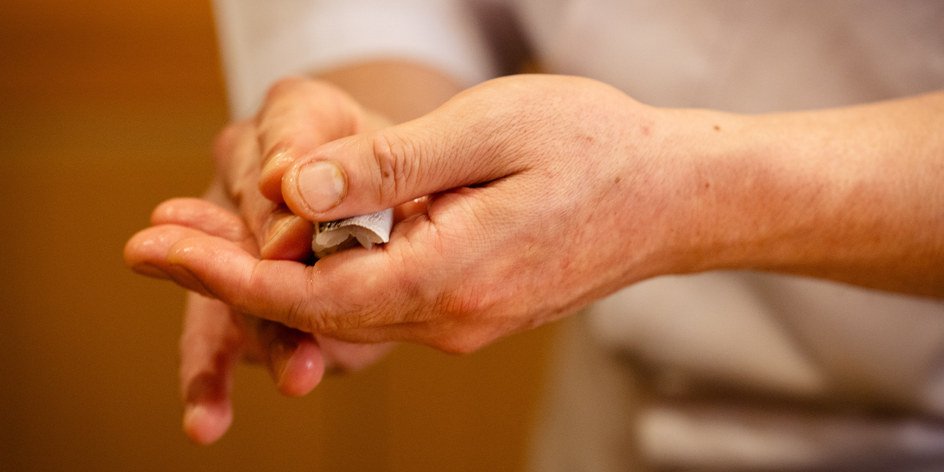
Sugita’s pursuit of sushi now extends even to the beauty of his own movements. Being a sushi chef means the customers are right in front of you; it is a craft performed largely in the open, and even if you try to hide it, your true self will show through. That is why Sugita said he always tries to maintain the mindset of a performer.
With the sushi counter as his stage, the master’s movements should be beautiful. For his graceful gestures, Sugita has drawn on the dignified bearing of tea ceremony masters. The result is a nigiri-and-plating performance that is part of the meal itself — yet another way Edomae sushi engages the senses and becomes a holistic experience beyond the boundaries often associated with fine dining.
Sushi as a Gateway to Japan
But grace and culinary mastery aside, another major attraction of Sugita is the chef’s welcoming personality and ever-present smile. It is this hospitality that puts first-time guests at ease, including those from overseas.
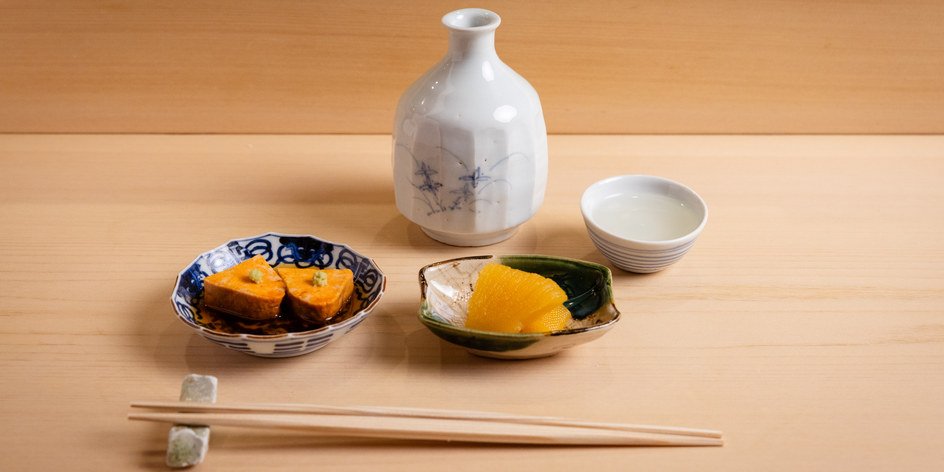
"I’ve heard that in recent years, nearly 90% of international visitors to Japan go to a sushi restaurant," said Sugita. "Perhaps this is because sushi is a relatively accessible dish, prepared right in front of you."
"I believe sushi is the gateway to Japanese food culture," Sugita continued. "While it’s certainly important for guests to relax and enjoy their own experience, I feel it’s best if international guests come to our restaurant viewing sushi as their first step toward enjoying Japanese food culture. And since they’ve taken the trouble to sit at the counter facing me, even if they don’t understand the language, I hope they’ll fully enjoy the world of sushi through the universal communication of delicious food."
Tokyo offers many other cuisines and a rich food culture — please explore them with GO TOKYO Gourmet.
Nihonbashi Kakigaracho Sugita
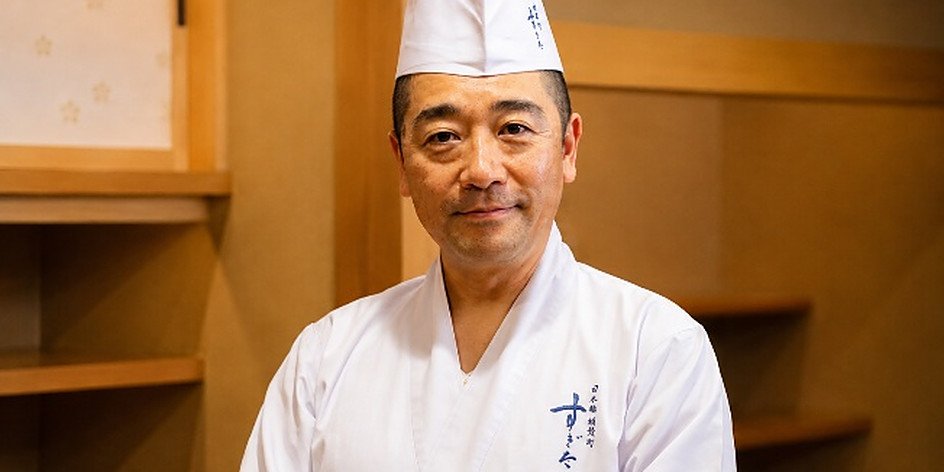
Takaaki Sugita
Chef
Born in Chiba Prefecture in 1973, Takaaki Sugita trained for 12 years at the famous, now-closed Miyako Sushi, founded in 1887 during the Meiji period. He struck out on his own in 2004, opening Nihonbashi Tachibanacho Miyako Sushi. In 2015, he relocated to Nihonbashi Kakigaracho and opened Nihonbashi Kakigaracho Sugita. While cherishing the traditional techniques of Edomae sushi, he continually pursues harmony between the sushi toppings and the vinegared rice.
Address
View Heights Nihonbashi Kakigaracho 1F, 1-33-6 Nihonbashi Kakigaracho, Chuo-ku, Tokyo 103-0014
To learn more about
you can press “copy” and paste on search engine